Told me not to come with と言う
Grammar Explanation: Quoting and reporting with と and って
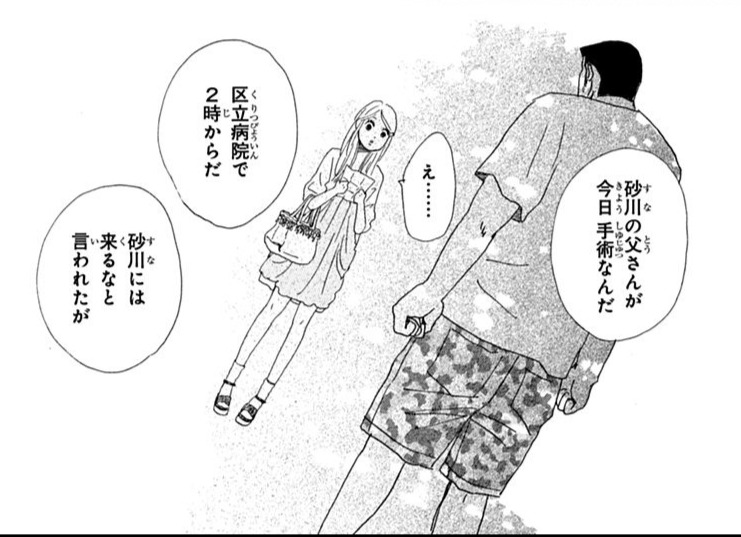
Takeo and Yamato go out on a date for Yamato’s birthday. They have a great time spending the day together, but when Yamato asks Takeo what his friend Sunakawa is doing, Takeo becomes silent. He says Suna helped him plan the date’s events, and Takeo gives her the tickets to the date’s finale. He tells Yamato to take a friend, because he needs to go be with Suna.
- 猛男:
- 「砂川の父さんが今日手術なんだ」
- “Suna's dad is having surgery today.”
- 大和:
- 「え……」
- “Eh......”
- 猛男:
- 「区立病院で2時からだ」
- “It's at the municipal hospital at 2 o'clock.”
- 猛男:
- 「砂川には来るなと言われたが」
- “Suna told me not to come, but...”
- Literal: “Suna told me, 'Don't come', but...”
Key Points
- Verb dictionary form + な gives a blunt negative command: 来るな means “don’t come” or “don’t show up.”
- Takeo is reporting Suna’s instruction, not directly ordering Yamato or anyone else in the scene.
- 来るなと言われた literally means “I was told, ‘Don’t come.’”
- Because 言われた is receptive, the person who received the instruction is Takeo.
- 砂川には means “by Suna / from Suna” here: Suna is the one who told Takeo not to come.
- The は adds contrast, setting up Takeo’s conflict between what Suna said and what Takeo still feels he should do.
- The line ends with が, the “but…” that matches the English translation.
- Takeo does not finish the next clause aloud here, but the scene implies something like “Suna told me not to come, but I need to go.”
Vocabulary
今日 (Today)
今日 means today. In formal writing, it can also mean the present day or current era.
手術 (Surgery)
手術 means surgery, a medical procedure performed with instruments to treat an illness or injury.
区立 (municipal)
区立 describes a facility or organization run by a municipal ward.
病院 (Hospital)
病院 means a hospital where doctors diagnose and treat sick or injured patients.
来る (To come)
来る means to come or move toward the speaker or the place being discussed.
See Also
- Grammar: Quoting and reporting with と and って
- Grammar: The prohibitive な
- Grammar: Receptive verbs with 〜れる
- Future entry: Past tense with 〜た・〜だ
- Grammar: The copula だ
- Grammar: Marking the topic with は and も
- Kanji: Hands and skill with 手
- Kanji: Now and the present with 今