Too literal with 〜すぎる
Grammar Explanation: Too much with 〜すぎる
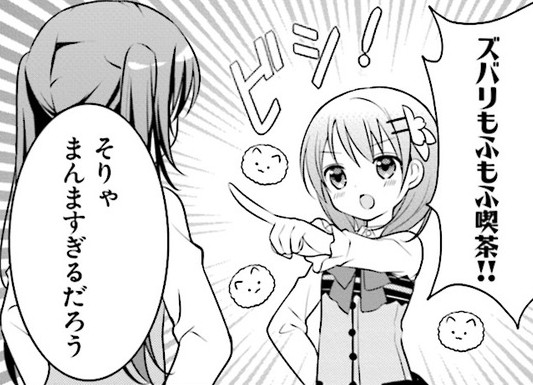
On the topic of renaming the Rabbit House café, Cocoa thinks up a name based on the café’s mascot rabbit.
- ココア:
- 「ズバリもふもふ喫茶」
- “To put it simply, the Fluffy Café.”
- リゼ:
- 「そりゃまんますぎるだろう」
- “That's too literal, isn't it?”
- Literal: “That is too much as-is, right?”
Key Points
1まんますぎる means the proposed name is too literal
- まんま means leaving something as-is, and すぎる says Cocoa’s name copies the mascot idea with excessive directness.
2A noun-like expression can precede すぎる
- The scene treats まんま as the excessive quality, so English supplies the adjective “literal”.
3だろう seeks obvious agreement
- Rize presents the criticism as something Cocoa should recognize, giving the line the force of “that’s too literal, isn’t it?”
4ズバリ introduces Cocoa’s exact answer
- Cocoa announces もふもふ喫茶 as the proposed café name, leaving a copula such as です unstated.
Vocabulary
| Word | English | Meaning |
|---|---|---|
| そりゃ | That's | そりゃ is a casual, contracted form of それは. |
| まんま | Exactly as is | まんま is a casual form of まま, “as it is”. そのまんま describes something unchanged or too literal. |
| すぎる | Too much | すぎる follows a verb stem or adjective to mean “too much” or “overly”. On its own, it means to pass by or for time to pass. It is also written 過ぎる. |
See Also
- Grammar: Too much with 〜すぎる
- Grammar: Presuming with 〜だろう and 〜でしょう
- Grammar: How casual contractions work
ご注文はうさぎですか? © its respective creators. It is used here for educational commentary.