Too much to handle on top of class representative duties with 荷が重い
Idiom Explanation: More than one can handle with 荷が重い
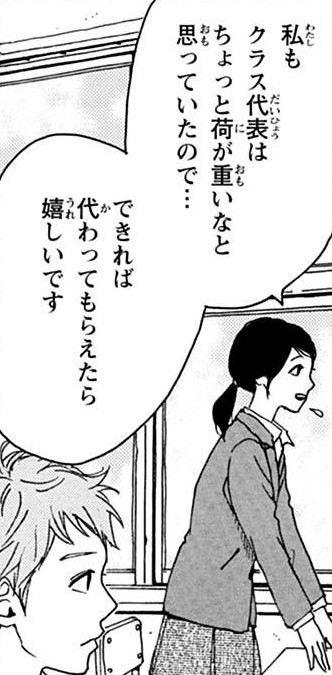
Takako and Azu tell their teacher they want to participate in the sports day relay race. The teacher points out that participants have already been decided, then one of the decided participants chimes in.
- 生徒:
- 「私もクラス代表はちょっと荷が重いなと思っていたので…」
- “I was also thinking I have too much on my plate as class representative.”
- Literal: “I was also thinking that class representative is a little heavy baggage for me...”
- 「できれば代わってもらえたら嬉しいです」
- “I'd be happy if I could switch out.”
Key Points
1荷が重い = “too much to carry” and therefore “too much to handle”
- Literally it means “the load is heavy”.
- In this scene it is figurative: being class representative already feels like too much responsibility.
2Softening with ちょっと and と思っていた
- ちょっと softens the complaint so it does not sound blunt.
- と思っていた makes it sound reflective and tentative, like “I had been thinking…”
3Why the line ends with ので…
- The ので gives a reason for the next request.
- It leads into the next line: because this feels like too much, she would like someone else to take over.
Vocabulary
私 (I)
私 means “I” or “me”. It is the standard first-person pronoun in polite speech and is also common in casual speech among women.
代表 (Representative)
代表 means a representative or spokesperson for a group.
思う (Think)
思う means to think, feel, believe, expect, or hope.
出来る (To be able to)
出来る means to be able to do something. It can also mean that something is made, completed, or comes into existence.
See Also
- Idiom: More than one can handle with 荷が重い
- Future entry: Past tense with 〜た・〜だ
- Grammar: Having someone do something with 〜てもらう
- Grammar: Quoting and reporting with と and って
- Grammar: Marking the topic with は and も
- Kanji: Privacy and self with 私
orange © its respective creators. It is used here for educational commentary.