Torn over buying a bike with いざ買うとなると
Grammar Explanation: When the time comes with いざ〜となると
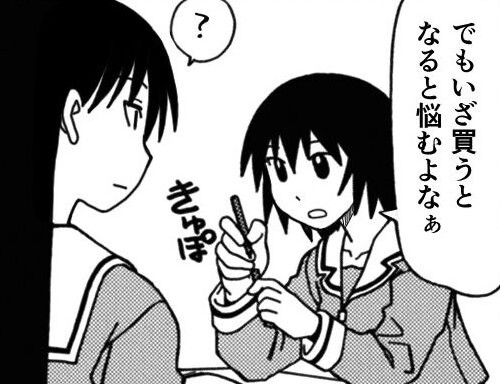
Flipping through a catalog in the classroom, Kagura tells Sakaki she wants a mountain bike and points out one she likes. She has saved up her New Year’s money and earned a little from a part-time job.
- 神楽:
- 「でもいざ買うとなると悩むよなぁ」
- “But when it actually comes to buying one, it's hard to decide.”
- Literal: “But when (it) actually becomes buying, (I) agonize, you know.”
Key Points
1いざ買うとなると = “when it actually comes to buying”
- いざ stresses that this is for real, not just talk. 買うとなると sets up the moment she actually has to buy.
- She hasn’t bought anything yet. The pattern looks at the point where talk turns into action.
- What follows is a reaction she didn’t expect from her earlier eagerness. She wanted the bike and saved for it, but now she hesitates.
2でも turns against what she just said
- Kagura has just listed her savings, so everything seems ready. でも sets up the catch that comes when she has to choose.
3悩む = “agonize over a choice”
- 悩む means worrying over something or being unable to decide. With shopping, it means going back and forth between options or over whether to buy at all.
4Musing with よなぁ
- よな asserts something while inviting agreement. The drawn-out small ぁ makes it sound like Kagura is half talking to herself.
Vocabulary
いざ (Actually, for real)
いざ marks the moment something stops being a plan and has to be done for real, as in いざ買うとなると, “when it actually comes to buying”. On its own, it’s an old-fashioned “Now then!” said before starting something.
買う (To buy)
買う is to buy something.
悩む (To worry)
悩む is to be troubled by something and keep thinking about it.
See Also
- Grammar: When the time comes with いざ〜となると
あずまんが大王 © its respective creators. It is used here for educational commentary.