Unsuitable conditions for live-in work with 住み込み
Vocabulary Explanation: Words ending in 込む
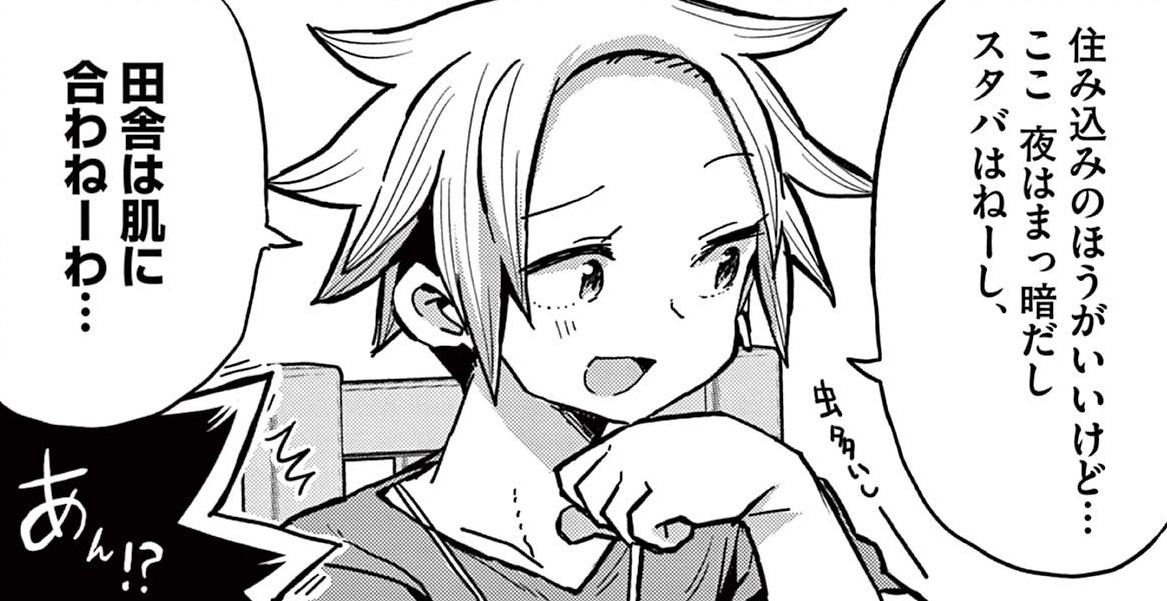
Sami answers a phone call from her uncle. He thinks his friend’s son Nishi would be a good assistant for Sami’s father. Since her father’s busy trying to meet a deadline, Sami accepts on her father’s behalf. When the assistant arrives, he’s completely unwilling to adjust to Sami’s father’s workstyle, then he stays overnight in their bed and wears Sami’s father’s clothes. After all this, Sami’s father is still willing to take Nishi on, but not as a live-in assistant.
- 西:
- 「住み込みのほうがいいけど… ここ 夜はまっ暗だしスタバはねーし、(虫多いしーーー)」
- “A live-in arrangement would be better, but... it gets pitch dark here at night, there's no Starbucks, and there are tons of bugs...”
- 「田舎わ肌に合わねーわ…」
- “Country life just doesn't suit me...”
Key Points
1住み込み = “live-in work” or “living on-site”
- Here, Nishi means a setup where he stays at the workplace instead of commuting from somewhere else.
- The translation uses “live-in” because he is talking about the work arrangement, not just where he happens to sleep.
2住み込みの方がいい = “the live-in option would be better”
- With a noun, Japanese uses の方がいい to say one option is better than another.
- The other option is left unstated. The idea is that living there would be better than coming and going.
3し piles up complaints
- Nishi rattles off one reason after another. It is pitch dark at night, there is no Starbucks, and there are lots of bugs.
- 夜は and スタバは each set up one item in the complaint list.
- The dragged-out しーーー makes him sound like he could keep whining if nobody stopped him.
4はねー and 合わねー are rough versions of ない
- スタバはねー = スタバはない. “肌に合わねー = 肌に合わない.”
- That rough ねー gives the whole complaint a blunt, bratty tone.
5肌に合う = “to suit someone”
- He is not talking about his literal skin. The phrase means a place, style, or situation feels right for you.
- So “肌に合わねーわ” is a natural way to say that country life is just not for him.
Vocabulary
夜 (Night)
夜 means night, the dark period between sunset and sunrise.
See Also
- Vocabulary: Words ending in 込む
- Grammar: More than with 〜方が and 〜より
- Grammar: Negation with 〜ない
- Grammar: Marking the topic with は and も
ぼくの魔なむすめ © its respective creators. It is used here for educational commentary.