Very different Western clothing with 洋服
Kanji Explanation: Clothing and submission with 服
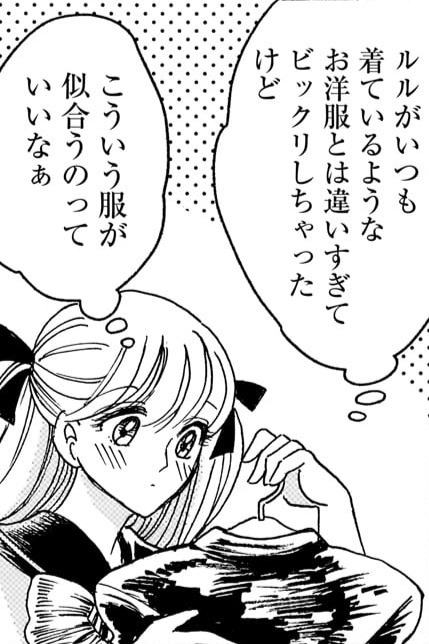
Lulu goes clothes shopping with her friends from class. The outfits at the clothing shop are glaring, but Kyouko tries one on and Lulu finds the very suited to her.
- ルル:
- 「ルルがいつも着ているようなお洋服とは違いすぎてビックリしちゃったけど」
- “They were so different from the clothes I usually wear that I was surprised, but...”
- 「こういう服が似合うのっていいなぁ」
- “It must be nice to look good in clothes like these.”
Key Points
1お洋服 means clothes here
- 洋服 refers to Western-style clothing. Lulu uses it for the outfits in the shop, then calls them 服 in the next line.
- The お adds a polite touch. Lulu also refers to herself by name, so ルルが becomes ‘I’ in the translation.
2The clothes differ from what Lulu usually wears
- ルルがいつも着ているようなお洋服 means clothes like the ones Lulu usually wears. いつも makes 着ている a habit here.
- In 〜とは違いすぎて, と marks what the shop’s clothes differ from, and は emphasizes the contrast. 違いすぎる means to differ too much; here it conveys how startlingly different they are.
3ビックリしちゃったけど leads into a compliment
- しちゃった is the casual form of してしまった. ビックリしちゃった describes Lulu’s spontaneous surprise.
- けど connects that reaction to the next line. Despite her surprise, she admires how these clothes suit Kyouko.
4似合うのっていいなぁ expresses admiration
- こういう服 means clothes like these. 服が似合う means that the clothes suit someone; the person they suit is understood from the scene.
- の turns the clause into a noun-like phrase, and って marks it as the topic, much like は. Lulu is thinking about how nice it is to look good in this kind of clothing.
- The drawn-out なぁ gives いい a wistful, admiring tone.
See Also
- Kanji: Clothing and submission with 服
- Grammar: Too much with 〜すぎる
- Grammar: Doing completely or ending up doing with 〜てしまう and 〜ちゃう
- Future entry: Giving an example with 〜ようだ
キラキラとギラギラ © its respective creators. It is used here for educational commentary.