Want to say something with 〜たい+ことがある
Grammar Explanation: Want to say or do something with 〜たい+ことがある
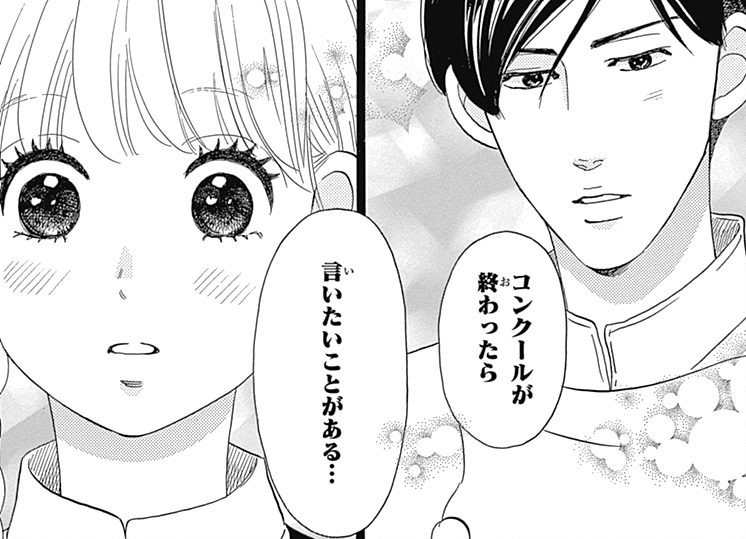
Ichinose normally shuns his inferior co-workers. When Rinko starts working at the confectionery, she unknowningly becomes Ichinose’s muse. Even after learning of her boyfriend, Ichinose still convinces Rinko to spend long hours helping him prepare for an upcoming competition. He plans to confess his feelings to Rinko after he wins the competition.
- 一之瀬:
- 「コンクールが終わったら言いたいことがある…」
- “Once the competition has ended, I want to say something.”
- Literal: “Once the competition ends, there is a thing I want to say...”
Key Points
1〜たい+ことがある = “have something I want to (do/say)”
- This pattern combines the 〜たい desire form with ことがある, literally “there is something [I] want to…”
- Here, 言いたいことがある means “I have something I want to say”.
2Indirect and anticipatory tone
- Rather than directly saying 言いたい (“I want to say”), adding ことがある makes it feel more momentous or significant.
- “I have something I want to say” hints at importance without revealing what it is.
3〜たら sets the timing
- コンクールが終わったら = “once/after the competition ends”.
- The 〜たら conditional establishes when he’ll say it (not now, but later).
Vocabulary
言う (To say)
言う means to say or tell. It can also mean to call something by a particular name.
See Also
- Grammar: Want to say or do something with 〜たい+ことがある
- Grammar: Wanting to do with 〜たい
- Future entry: If and when with 〜たら
俺物語!! © its respective creators. It is used here for educational commentary.