Wanted to you taste-test with 〜てほしかった
Grammar Explanation: Want you to do something with 〜てほしい
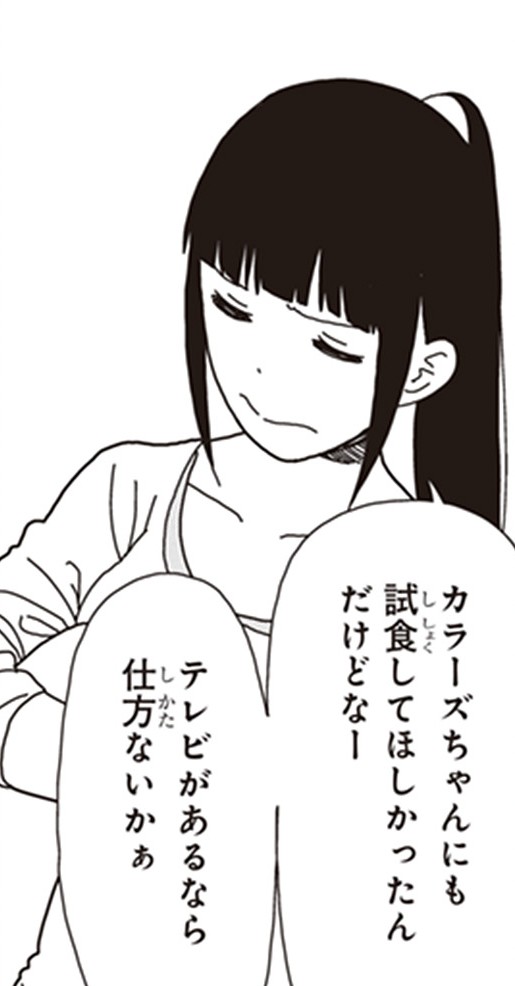
Momoka notices the trio Colors pestering a television cameraman. She intervenes to help him, telling the girls that she is heading to her family’s bakery to have taste-testing of her new type of rice ball.
- ももか:
- 「カラーズちゃんにも試食してほしかったんだけどなー」
- “I wanted you all to do some taste-testing as well, but...”
- Literal: “I wanted the Colors girls too to do taste-testing, though...”
- 「テレビがあるなら仕方ないかぁ」
- “If it's television, it can't be helped, huh?”
Key Points
1してほしかった is a past wanted action
- 試食してほしかった means Momoka wanted Colors to taste-test.
2んだけどなー trails off with regret
- んだけど sets up a contrast: she wanted them to join, but circumstances interfere.
- なー adds a lingering, disappointed tone.
- ちゃん is an affectionate, informal suffix attached to names, used mainly for children, close friends, and family members.
Vocabulary
| Word | English | Meaning |
|---|---|---|
| 試食 | Food tasting | 試食 means tasting a food to check it or offering a sample to customers. |
| ほしい | Want | ほしい describes wanting something. After a て-form verb, it means wanting someone else to do something. It is also written 欲しい. |
| テレビ | TV | テレビ is a television set, or the programs on it. |
| ある | To exist | ある is to exist or be in a place, for things and plants rather than people or animals. It also means to have something, or for an event to take place. |
| 仕方ない | It can't be helped | 仕方ない describes a situation where there is nothing else to do but accept it. |
See Also
- Grammar: Want you to do something with 〜てほしい
- Grammar: Past tense with 〜た・〜だ
- Grammar: Marking the subject with が
- Grammar: Marking the topic with は and も
- Grammar: If that's the case with なら
- Grammar: Reasoning with 〜のだ
- Grammar: But with 〜けど and 〜けれど
- Kanji: Eating and food with 食
- Kanji: Testing and trying with 試
三ツ星カラーズ © its respective creators. It is used here for educational commentary.