Wanting to be cared about with 〜たい
Grammar Explanation: Wanting to do with 〜たい
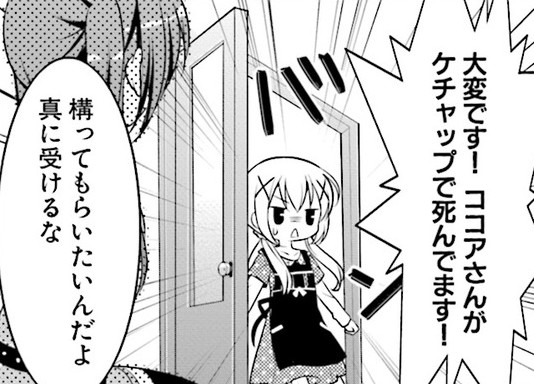
After a fight, Cocoa and Chino are finally on good terms again until Cocoa flips a pancake she’s cooking and it lands on Chino’s face. Soon after, Chino finds Cocoa face down on the table with a dying message written in ketchup.
- チノ:
- 「大変です!ココアさんがケチャップで死んでます!」
- “This is terrible! Cocoa's died in a pool of ketchup!”
- リゼ:
- 「構ってもらいたいんだよ真に受けるな」
- “She just wants attention from you, so don't take it seriously.”
- Literal: “She wants to receive being cared about, so don't take it seriously.”
Key Points
1構ってもらいたい means wanting attention from someone
- 〜てもらう presents Cocoa as receiving Chino’s attention, and たい expresses Cocoa’s desire.
2The speaker of the desire is inferred
- Rize is explaining Cocoa’s ketchup stunt, so the omitted subject of たい is Cocoa rather than Rize.
3んだよ explains the behavior
- Rize supplies wanting attention as the reason for Cocoa’s conduct, then tells Chino 真に受けるな, not to take it at face value.
4死んでます presents a result state as comic exaggeration
- The contracted form of 死んでいます describes Cocoa as lying covered in ketchup, not an actual death.
Vocabulary
| Word | English | Meaning |
|---|---|---|
| 大変 | Serious | 大変 describes something serious or hard to deal with. As an adverb, it means “very”. |
| ケチャップ | Ketchup | ケチャップ is ketchup, a red tomato sauce. |
| 死ぬ | To die | 死ぬ is to die. In casual speech, 死んじゃう exaggerates a hardship: “it’ll kill me”. |
| 構う | To pay attention to | 構う is to pay attention to someone or fuss over them. 構ってもらいたい means wanting someone’s attention. With a negative, it means “I don’t mind”. |
| 真に受ける | To take seriously | 真に受ける is to believe something that was not meant seriously. |
See Also
- Grammar: Wanting to do with 〜たい
- Grammar: Having someone do something with 〜てもらう
- Grammar: Ongoing actions and resulting states with 〜ている
- Grammar: Polite style with です and ます
- Grammar: Want you to do something with 〜てほしい
- Kanji: Death and dying with 死
ご注文はうさぎですか? © its respective creators. It is used here for educational commentary.