Wanting to photograph means with 〜たがる
Grammar Explanation: Someone else's desire with 〜たがる
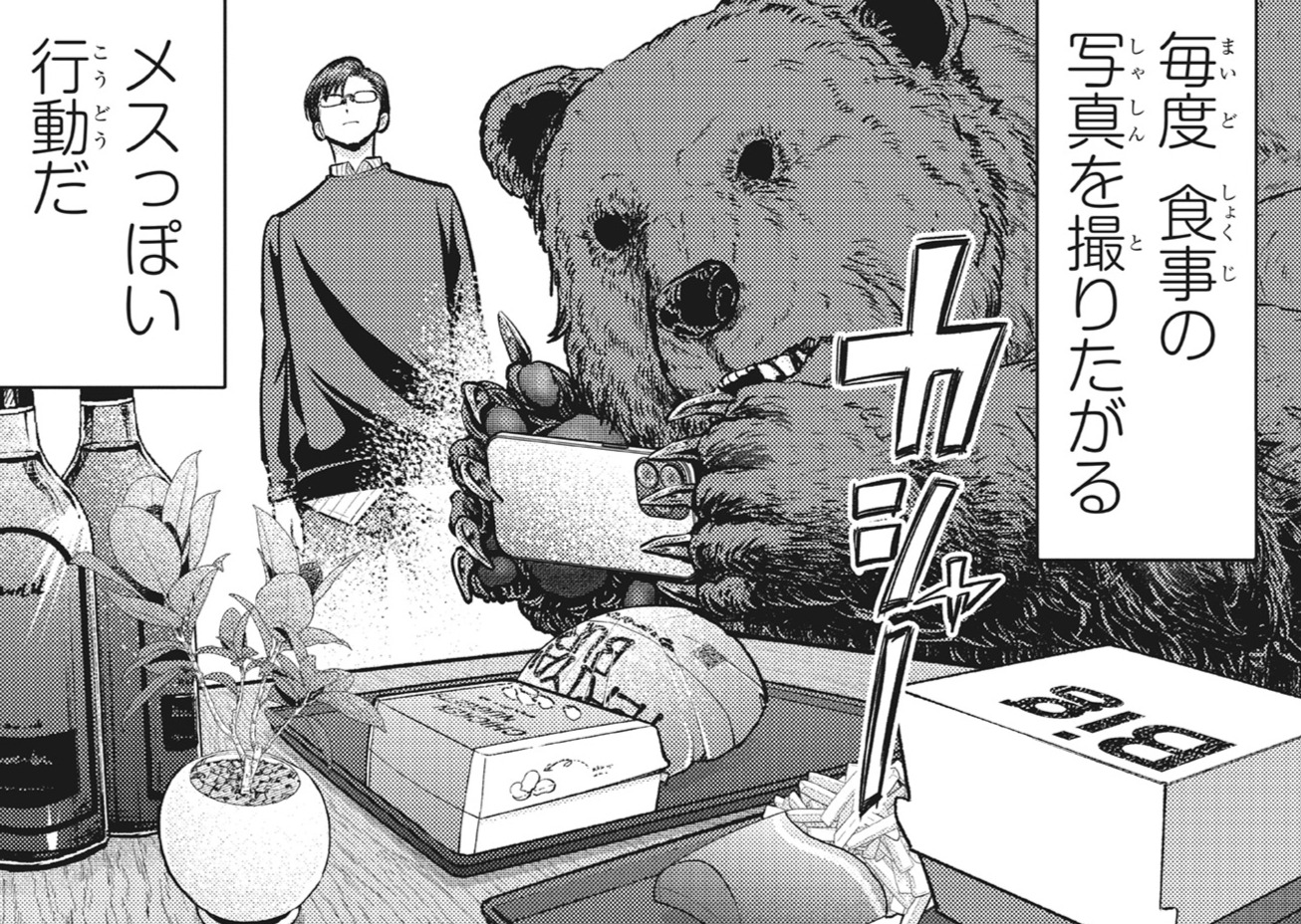
Kumada observes the bear that’s been living in his apartment for a while now, trying to determine from its personality traits whether it’s male or female.
- (熊田):
- 「毎度 食事の写真を撮りたがる」
- “It always wants to take photos of its meals.”
- 「メスっぽい行動だ」
- “That's pretty feminine behavior.”
Key Points
1撮りたがる reports a desire inferred from behavior
- 撮りたい loses the final い and takes がる to form 撮りたがる.
- Kumada infers the bear’s desire from its repeated behavior.
2毎度 and bare たがる describe a repeated tendency
- 毎度 means every time, so the line says the bear wants to take a photo at each meal.
3The bear remains the unspoken subject of both observations
- The fuller first sentence is この熊は毎度食事の写真を撮りたがる.
- メスっぽい describes an animal as seeming female, so Kumada treats that habit as evidence about the bear’s sex.
Vocabulary
毎度 (Every time)
毎度 means every time or on each occasion. In customer service, 毎度ありがとうございます is a familiar way to thank someone for their continued patronage.
写真 (Photograph)
写真 is a picture taken with a camera.
たがる (To want to)
たがる follows a verb stem to show that someone else seems to want to do something.
メス (Female)
メス is a female animal. It is also written 雌.
行動 (Action)
行動 means action or behavior, especially something done toward a purpose.
See Also
- Grammar: Someone else's desire with 〜たがる
- Grammar: Marking the direct object with を
- Grammar: The copula だ
- Kanji: Eating and food with 食
- Kanji: Going and carrying out with 行
- Kanji: Matters and events with 事
- Kanji: Measures and degrees with 度
- Kanji: Motion and activation with 動
くまぐらし © its respective creators. It is used here for educational commentary.