Watch the kid properly with ちゃんと
Vocabulary Explanation: Do it properly with ちゃんと
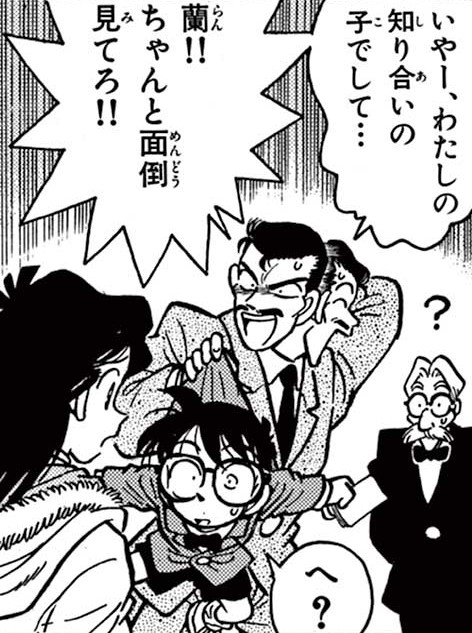
Conan and Ran end up with Kogoro investigating a kidnapping case. As Kogoro questions the butler, Conan steps in with his own questions. The butler asks who the child is.
- 小五郎:
- 「いやー、わたしの知り合いの子でして…」
- “Well, it's the child of an acquaintance, and...”
- 「蘭!! ちゃんと面倒見てろ!!」
- “Ran! Properly look after him!”
Key Points
- Here ちゃんと tells Ran to watch Conan attentively and responsibly, not just casually keep an eye on him.
- In commands, ちゃんと often means do it correctly or do it the proper way.
- 面倒見てろ comes from 面倒見ていろ.
- The shortened 〜てろ sounds blunt and forceful, which fits Kogoro barking an order at Ran.
- The person being looked after is not repeated, but it clearly means Conan.
- Japanese often leaves that object unstated when the situation already makes it obvious.
Vocabulary
| Word | English | Meaning |
|---|---|---|
| いや | false | いや is used to deny something or to hesitate, like “no” or “well…”. It also describes something unpleasant or unwanted, often written 嫌. |
| わたし | I | わたし is the most common word for “I”, used by anyone in polite speech and by women in casual speech. It is also written 私. |
| 知り合い | Acquaintance | 知り合い is someone you know. |
| 子 | Child | 子 is a child. It also means a young person or a young animal. |
| ちゃんと | Properly | ちゃんと describes doing something correctly and with care, the way it should be done. |
| 面倒 | Trouble | 面倒 means trouble, bother, or something difficult to deal with. It can also mean caring for someone or something. |
| 見る | To see | 見る is to see, look at, or watch something. It also means to check or judge something, or to look after someone, as in 面倒を見る. |
See Also
- Vocabulary: Do it properly with ちゃんと
- Grammar: The plain imperative
- Kanji: Childhood and small things with 子
- Kanji: Faces and surfaces with 面
- Kanji: Joining and fitting with 合
- Kanji: Seeing and viewpoints with 見