Why is it you're here with いんの
Grammar Explanation: Contracting いる+の to いんの
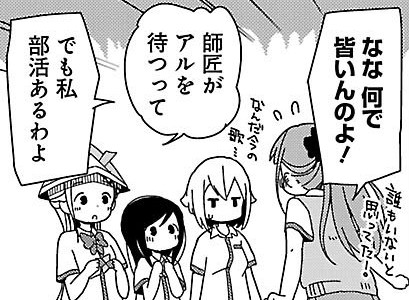
Aru returns to her classroom after club. Expecting the classroom to be empty, she’s singing a song about herself as she enters the room. There, she finds her friends idling away the time.
- アル:
- 「なな 何で皆いんのよ!(誰もいないと思ってた!)」
- “Wh- why is it that you all are here?! (I was thinking no one was here!)”
- Literal: “Wh- why is everyone here?! (I thought no one was here!)”
- なこ:
- 「(なんだ今の歌…)」
- “(What was with that song just now...)”
- ソトカ:
- 「師匠がアルを待つって」
- “Master said she'd wait for you.”
- アル:
- 「でも私部活あるわよ」
- “But I'm in a club!”
Note: Sotoka refers to Bocchi as 師匠.
Key Points
1いんの = contracted いるの
- 皆いんの is a casual spoken contraction of 皆いるの.
2のよ gives emotional explanatory force
- Sentence-final の adds an explanatory “how come…?” feeling.
- よ makes Aru’s reaction more forceful and expressive.
Vocabulary
思う (Think)
思う means to think, feel, believe, expect, or hope.
師匠 (Master)
師匠 means a master or teacher in an art, craft, or trade learned through apprenticeship.
私 (I)
私 means “I” or “me”. It is the standard first-person pronoun in polite speech and is also common in casual speech among women.
部活 (Club activities)
部活, short for 部活動, means a school club activity. It includes sports and cultural clubs that meet outside class.
See Also
- Grammar: Contracting いる+の to いんの
- Future entry: Past tense with 〜た・〜だ
- Grammar: Reasoning with 〜のだ
- Grammar: Quoting and reporting with と and って
- Kanji: Living and lively movement with 活
- Kanji: Privacy and self with 私
- Kanji: Sections and departments with 部
ひとりぼっちの○○生活 © its respective creators. It is used here for educational commentary.