Why must I bring you your lunch with 〜なければならない
Grammar Explanation: Must do with 〜なければならない
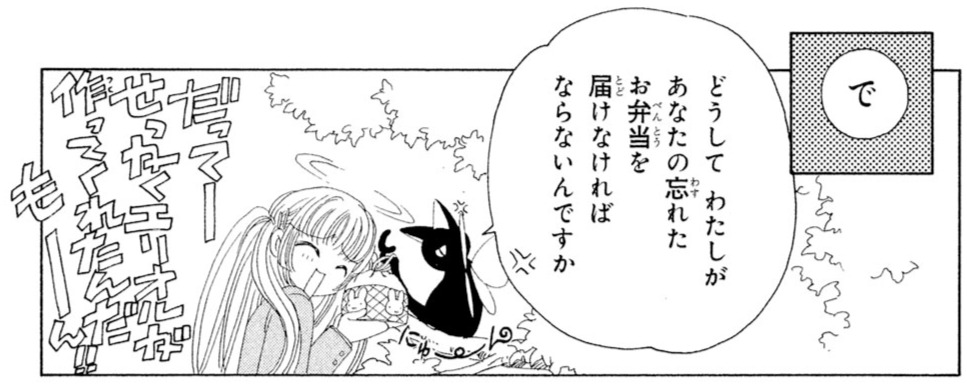
Spinel Sun calls out to Ruby Moon at school. After a brief discussion, Spinel Sun gets to the reason for his appearance there.
- スピネル・サン:
- 「で」
- “So.”
- 「どうして わたしがあなたの忘れたお弁当を届けなければならないんですか」
- “Why do I have to deliver the lunch you forgot?”
- Literal: “Why is it that I must deliver the lunch you forgot?”
- ルビー・ムーン:
- 「だってー せっかくエリオルが作ってくれたんだもーーん!!」
- “Well, because Eriol went to all that trouble to make it for me!!”
Key Points
1届けなければならない = must deliver
- The verb is 届ける “to deliver”; dropping る gives the stem 届け before なければならない.
2Why this feels like “have to”
- 〜なければならない literally comes from “if not, it will not do”, but in use it means someone must do the action.
3Parsing あなたの忘れたお弁当
- 忘れた modifies お弁当, so the phrase means “the lunch you forgot”.
- The あなたの marks whose forgotten lunch it is, not possession in the sense of ownership alone.
4Polite complaint with んですか
- どうして … んですか asks for an explanation: “why is it that…?”
- Combined with なければならない, it sounds like a formal but pointed complaint: “Why do I have to…?”
Vocabulary
せっかく (With much effort)
せっかく marks an effort or valuable opportunity that should not go to waste. Depending on the sentence, it can mean “after taking the trouble” or “since we have the chance”.
作る (To make)
作る means to create or prepare something.
See Also
- Grammar: Must do with 〜なければならない
- Future entry: Past tense with 〜た・〜だ
カードキャプターさくら © its respective creators. It is used here for educational commentary.