Worth making a meal with 〜甲斐がある
Grammar Explanation: Worth it with 〜甲斐がある
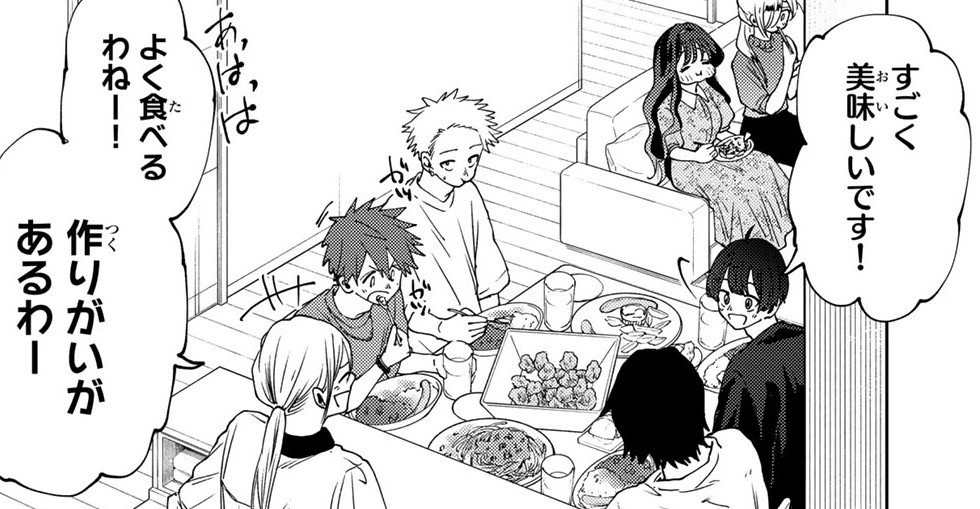
Rintaro’s mother is overjoyed when her son has friends over for the first time in his life. She prepares a large meal for them to eat.
- 絢斗:
- 「すごく美味しいです!」
- “This is incredibly delicious!”
- 杏子:
- 「よく食べるわね! 作りがいがあるわー」
- “You sure do eat a lot! It makes cooking worthwhile!”
- Literal: “You eat well! There is worth in making it.”
Key Points
1作りがいがある = “cooking feels rewarding”
- Here, 作りがいがある means her effort in cooking feels worthwhile because everyone is eating so enthusiastically.
- The nuance is not just “worth doing” in general, but “this feels rewarding because I can see the result right now”.
- Reusable pattern: Verb stem + がいがある “it is rewarding to do / worth doing”.
- The previous line, よく食べる (“you eat a lot / you eat well”), sets up the reason 作りがいがある feels true here: people enjoying the food makes the cooking effort pay off.
2わね and わー give the line a warm, delighted tone
- わね sounds like a friendly observation shared with the listener.
- The final わー stretches the feeling out and makes her sound genuinely pleased rather than formal or flat.
Vocabulary
食べる (To eat)
食べる means to eat or consume food.
作る (To make)
作る means to create or prepare something.
See Also
- Grammar: Worth it with 〜甲斐がある
- Future entry: Seeking agreement with ね
- Grammar: Polite style with です and ます
薫る花は凛と咲く © its respective creators. It is used here for educational commentary.