Worth teasing with 〜甲斐がある
Grammar Explanation: Worth it with 〜甲斐がある
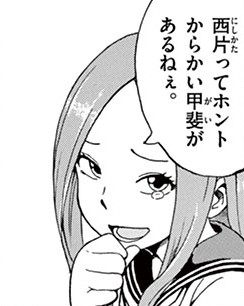
Takagi teases Nishikata, causing him to jump up from his chair and get scolded by the teacher. After sitting back down, Nishikata demands to know why Takagi is laughing.
- 高木:
- 「西片ってホントからかい甲斐があるねぇ。」
- “Teasing you really is worth it.”
- Literal: “Nishikata really has worth in teasing.”
Key Points
1からかい甲斐がある = “you are rewarding to tease”
- Here, からかい甲斐がある means Nishikata reacts in such a satisfying way that teasing him feels worth it.
- The positive “reward” is his strong response, which is exactly what Takagi enjoys.
2西片って = “as for Nishikata / Nishikata is really…”
- って marks Nishikata as the topic in a casual spoken way.
- It frames the whole comment as Takagi’s personal observation about what kind of person he is.
3ホント and ねぇ make it sound teasingly affectionate
- ホント adds emphasis: “seriously / really”.
- The ending ねぇ softens the line into a drawn-out, playful comment rather than a blunt statement.
Vocabulary
| Word | English | Meaning |
|---|---|---|
| ホント | Really | ホント is a casual form of 本当, “truth” or “really”. |
| からかう | To tease | からかう is to make fun of someone playfully, or to joke at their expense. |
| 甲斐 | Worth | 甲斐 is the result or value that makes an effort worthwhile. After a verb stem, it reads がい: 〜がいがある, “worth doing”. |
| ある | To exist | ある is to exist or be in a place, for things and plants rather than people or animals. It also means to have something, or for an event to take place. |
See Also
- Grammar: Worth it with 〜甲斐がある
- Grammar: Seeking agreement with ね
からかい上手の高木さん © its respective creators. It is used here for educational commentary.