You say that, but I didn't hear a rule against it with だって
Grammar Explanation: That said with だって
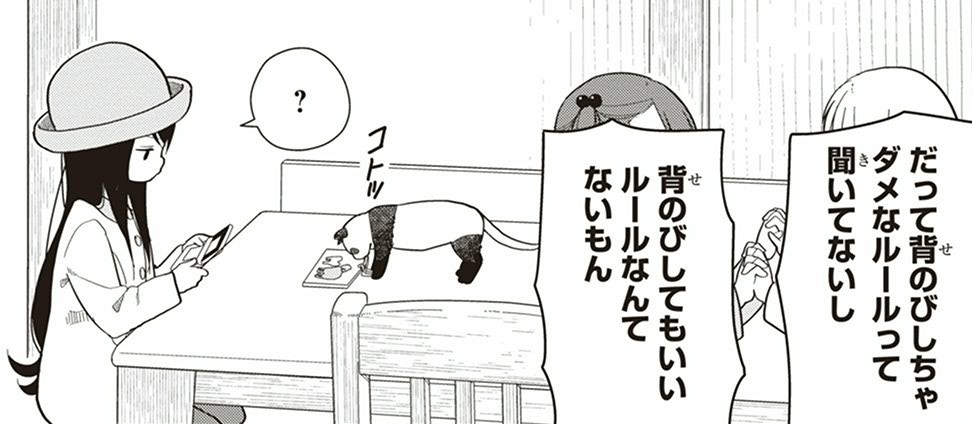
Standing back to back, Sacchan is slightly taller than Yui. Yui questions whether Sacchan is standing tip-toed, which Sacchan denies, but Yui looks and sees that Sacchan is.
- さっちゃん:
- 「だって背のびしちゃダメなルールって聞いてないし」
- “You say that, but I didn't hear a rule against tiptoes.”
- Literal: “Because I haven't heard of a rule saying tiptoes are no good.”
- 結衣:
- 「背のびしてもいいルールなんてないもん」
- “There's no way there'd be a rule allowing tiptoes!”
Key Points
1だって pushes back with an excuse
- Sacchan uses だって to answer Yui’s accusation about standing on tiptoe.
- It has a “but” or “because” feel: she is defending herself.
2聞いてないし leaves the reasoning open-ended
- 聞いてない says she has not heard such a rule.
- し implies this is one reason among others, adding a casual argumentative tone.
3The rule phrase is packed into one noun
- 背のびしちゃダメなルール means “a rule saying tiptoeing is not allowed”.
- 〜ちゃダメ is casual for 〜てはいけない.
See Also
- Grammar: That said with だって
- Grammar: Must not do with 〜てはだめだ
- Grammar: Quoting and reporting with と and って
- Grammar: Casual reasons with 〜もん
三ツ星カラーズ © its respective creators. It is used here for educational commentary.