Anyone and always with 誰だって and いつだって
Grammar: Emphasis
After a question word, だって covers every case. 誰だって means “anyone” or “everyone”, and いつだって means “any time” or “always”. 誰だって失敗はする is “everyone makes mistakes”.
These are casual, stronger-sounding versions of 誰でも and いつでも. After a count of one, as in 一度だって, the same だって with a negative means “not even once”.
Usage Notes
Question word + だって belongs to casual conversation, and it sounds stronger than the でも versions. 誰だって can also take a negative to mean “nobody”, as in 誰だってそんなことはしないよ, “nobody would do that”. 誰でも usually can’t.
何だって is “anything”, as in 何だってする, “I’ll do anything”. The same なんだって has other uses too. なんだって? on its own is a startled or challenging “What?!” or “What did you say?!”, and なんだって can also mean “why on earth”, as in なんだってこんなことに, “why on earth did it come to this?”
Formation
View formation details
- 誰 + だって
- 誰だって怖いよ
- "Anyone would be scared."
- いつ + だって
- いつだって遊びに来ていいよ
- "You can come over any time."
- 何 + だって
- 何だってする
- "I'll do anything."
- どこ + だって
- どこだって行ける
- "We can go anywhere."
- Question word + particle + だって
- 誰にだって秘密はある
- "Everyone has secrets."
- Note: A particle such as に, と, or から goes before だって, as in 誰とだって or どこからだって.
- どんな + noun + だって
- どんな敵だって倒してみせる
- "I'll beat any enemy."
- Question word + だっていい
- 何だっていいよ
- "Anything's fine."
- 一度 + だって + negative
- 一度だって負けたことがない
- "I've never lost, not even once."
- Note: Other counts of one work too, such as 一人だって and 一円だって.
Covering Every Case
A question word asks about one case. With だって, the answer is “whichever one you pick”. It says something holds without exception.
| Question word | With だって | Meaning |
|---|---|---|
| 誰 | 誰だって | anyone, everyone |
| いつ | いつだって | any time, always |
| 何 | 何だって | anything |
| どこ | どこだって | anywhere |
| どれ | どれだって | any of them |
| どっち | どっちだって | either one |
These work like 誰でも, いつでも, 何でも, どこでも, どれでも, and どっちでも. だって is more casual, and it leans harder on the “every”. One difference is that だって also works with a negative, as the next section shows.
Everyone with 誰だって
誰だって states something true of all people. It often says that something is normal. If everybody does it or feels it, there’s nothing strange about it.
- ミスなんて誰だってするよ。
Everyone makes mistakes.
- あんなの見たら誰だって怖いよ。
- Anyone would be scared after seeing that.
With a negative, 誰だって means “nobody”. It’s a general statement about what no one would or could do. 誰でも usually can’t be used this way.
- あんな所には誰だって行かないよ。
- Nobody would go to a place like that.
To report that no one actually did something, use 誰も〜ない, as in 誰も来なかった, “nobody came”.
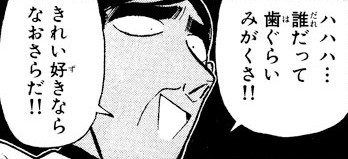
Novelist Imatake has been shot in his hotel room. His old friend Sasai, who shared the room, insists a robber shot Imatake the moment he opened the door to a knock. Conan has learned from Sasai that Imatake was tidy, and now points out toothpaste on the dead man’s mouth and a toothbrush lying beside him. He concludes that Imatake must have been brushing his teeth just before he was shot.
- 笹井:
- 「ハハハ…誰だって歯ぐらいみがくさ!!」
- “Ha ha ha... Everybody brushes their teeth!!”
- 「きれい好きならなおさらだ!!」
- “All the more if you're a neat freak!!”
Conan notices toothpaste on the murder victim’s mouth, a sign he was brushing his teeth when he was shot. Sasai laughs it off. 誰だって makes brushing your teeth something everybody does, so the clue sounds like nothing worth noticing.
Any Time and Always with いつだって
いつだって is “any time” when it offers or allows something, and “always” when it describes how things are. The rest of the sentence decides which.
- いつだって遊びに来ていいよ。
You can come over any time.
- 姉はいつだって元気だ。
- My sister is always full of energy.
“Always” can also be a complaint, “every single time”.
- あいつはいつだって遅刻する。
- He’s late every single time.
With a negative, いつだって means “never”, as in いつだって暇なんかない, “I’m never free”.
Anything with 何だって
何だって is “anything”, as in a promise like 何だってする, “I’ll do anything”, or a boast like 何だって知ってる, “he knows everything”.
Watch for these lookalikes:
- なんだって? on its own is a startled or challenging “What?!” or “What did you say?!”
- At the start of a complaint or question, なんだって can mean “why on earth”, as in なんだってこんなことに, “why on earth did it come to this?”
- At the end of a sentence, 品切れなんだって is な + んだって, “I hear it’s sold out”.
- Xが何だっていうんだ, often shortened to 何だってんだ, is 何だ + っていう, “what does X matter?”
The whole sentence tells you which one you’re reading.
Keeping the Particle Before だって
だって replaces が and を. Other particles, such as に, と, で, and から, normally stay in front of it.
- 誰にだって秘密はある。
Everyone has secrets.
- どこからだって見える。
- You can see it from anywhere.
In casual speech, the へ or に for a destination can drop, so どこだって行ける and どこへだって行ける both mean “we can go anywhere”.
Any Kind with どんな〜だって
どんな, “what kind of”, takes a noun before だって. どんな敵だって is “any enemy at all”, and どんな時だって is “at any time, no matter what”. どの, “which”, works the same way, as in どの国の人だって, “people from any country”.
- どんな時だって味方だよ。
- I’m on your side whatever happens.
Anything Goes with 〜だっていい
Question word + だっていい says that any choice is fine. 何だっていい is “anything’s fine”, 誰だっていい is “anyone will do”, and どっちだっていい is “either one is fine”. Depending on tone, it can be easygoing or a shrug of “I don’t care”.
どうだっていい, from どう, “how”, means “it doesn’t matter” or “I don’t care”.
- そんなのどうだっていいよ。
That doesn't matter.
- どっちだっていいよ。
- Either one is fine.
It often comes as だっていいから, “it doesn’t matter what, just…”, before a request or a wish.
- 何だっていいから食べなさい。
- Just eat something, anything.
Not Even Once with 一度だって
だって after a count of one, with a negative, means “not even one”. 一度だって is “not even once”, 一人だって is “not a single person”, and 一つだって is “not a single thing”.
- 一度だって負けたことがない。
I’ve never lost, not even once.
- 一円だって払わないぞ。
- I’m not paying a single yen.
This works like 一度も, which also takes a negative, and だって makes it sound stronger. With 〜たことがない, as in the first example, it denies any experience at all.
The negative is what makes it “not even one”. Without one, 一人だって平気 is “I’m fine even on my own”, the “even” だって covered on the Even with 〜だって page.
Further Reading
- だって, デジタル大辞泉 via Weblio (www.weblio.jp)
Related Grammar
- Even with 〜だって
- After an ordinary noun, だって means "even" or "too". A count of one without a negative, as in 一人だって平気, "fine even on my own", belongs there.
- That said with だって
- At the start of a sentence, だって gives a reason or an excuse.
- Even if with 〜たって
- どんなに〜たって and いくら〜たって mean "no matter how much", the verb and adjective version of covering every case.
- Something, nothing, and anything with question words
- The でも, も, and か forms of the same question words, such as 誰でも, 誰も, and 誰か.
- Previous experience with 〜た+ことがある
- 一度だって〜たことがない means "have never once done".
- Not at all with 全然〜ない
- 全然 and 一度だって both strengthen a negative.
- Grammar in the Kansai dialect
- Kansai speech uses かて, as in 誰かて.