As if with 〜んばかり
Grammar: Appearance » 〜んばかり
〜んばかり means something looks like it is one step away from happening.
A good default translation is “as if about to…“. If the verb is 言う, switch to “as if to say…“. The action after んばかり usually has not actually happened; the point is how strongly the scene gives that impression.
The Three Shapes You Will See
〜んばかりだ
This ends the description.
彼女は泣かんばかりだった。
“She looked as if she were about to cry.”
〜んばかりに
This describes how something is done.
彼は倒れんばかりに疲れていた。
“He was so tired he looked as if he might collapse.”
〜んばかりの + Noun
This describes a noun.
言わんばかりの表情
“An expression as if to say it.”
What Not to Overread
The ん before ばかり may look negative, but the pattern does not mean “not doing”. It means the scene seems close to doing that verb. Also, ばかり here is not the everyday “only” or “just” by itself. The whole chunk 〜んばかり works as one expression.
Further Reading
- 〜んばかり|日本語能力試験 JLPT N1 (edewakaru.com)
Examples
As if to say try and catch me 〜んばかり
Grammar Explanation: As if with 〜んばかり
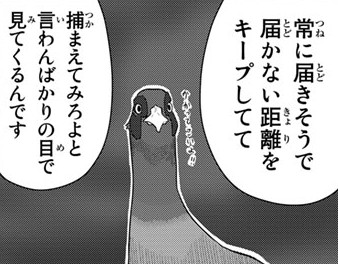
Kei and Chinatsu watch as their cousin, Makoto, chases a pheasant back and forth across the field. During a break in the chase, Makoto explains her fascination with the bird.
- 真琴:
- 「常に届きそうで届かない距離をキープしてて」
- “Constantly seeming like you can reach and keeping a distance you can't...”
- 「捕まえてみろよと言わんばかりの目で見てくるんです」
- “It's been looking with eyes as if to say, try and catch me!”