〜から after a clause gives the reason: “because”, “so”. 眠いから寝る “I’m sleepy, so I’m going to bed”.
から is the everyday way to give a reason, and it dominates casual conversation. ので sounds softer and is more common in formal settings and with people the speaker has to be careful with.
Usage Notes
から follows the plain or polite form, including past and negative forms: 行かなかったから, 寒かったですから. A plain noun or な-adjective takes だから, and the polite version is ですから. In a full sentence, the reason comes first: AからB means “A, so B”. English can put “because” on either side.
What follows can be a statement, a decision, a request, or a command, as in 危ないから触るな, “it’s dangerous, so don’t touch it”. から can also follow a guess with だろう or でしょう, which ので can’t. With だ or です after it, the から clause becomes the answer itself: 〜からです, “it’s because ~”.
Dialogue often ends on から and leaves the rest unsaid. 今行くから, “I’m coming (so hold on)”, can reassure, promise, warn, or press for something, depending on the scene. At the start of a sentence, だから means “so” or “that’s why”. An exasperated だから! means “like I said!”.
Formation
View formation details
Plain form + から
時間がないから、急ごう
"There's no time, so let's hurry."
Plain noun / な-adjective + だから
日曜日だから、店が混んでいる
"Because it's Sunday, the shops are crowded."
Polite form + から
日曜日ですから、店が混んでいます
"Because it's Sunday, the shops are crowded."
Note: In a polite sentence, the から clause is usually polite too.
Reason + からだ (reason as the predicate)
遅れたのは、電車が止まったからだ
"I was late because the train stopped."
Note: ので can't do this.
Sentence + から (trailing)
すぐ戻るから
"I'll be right back, so (don't worry)."
Note: The rest is left unsaid. Here it reassures.
だから (sentence-initial)
財布を忘れた。だから何も買えない
"I forgot my wallet. So I can't buy anything."
Reason, Then Result
In the usual AからB pattern, the から clause comes first and gives the reason. What follows is the result or conclusion.
1 source
[接助]活用語の終止形に付く。1 理由・原因を表す。「もう遅いから帰ろう」
[Conjunctive particle] Attaches to the terminal form of inflecting words. 1. Expresses a reason or cause. "It's already late, so let's go home."
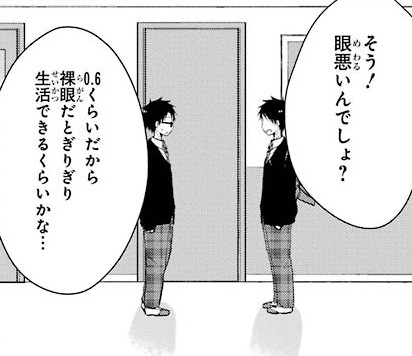
Shun asks Ayumu to continue switching places with him, since pretending to be Ayumu helps him be more open. Ayumu is game, but this requires Shun to go without his glasses, so Ayumu suggests he get contact lenses. Shun asks, “Contacts?”
歩:
「そう!眼悪いんでしょ?」
“That's right! You have bad eyesight, don't you?”
駿:
「0.6くらいだから裸眼だとぎりぎり生活できるくらいかな…」
“My vision's about 0.6, so without glasses, I can just barely get by in daily life...”
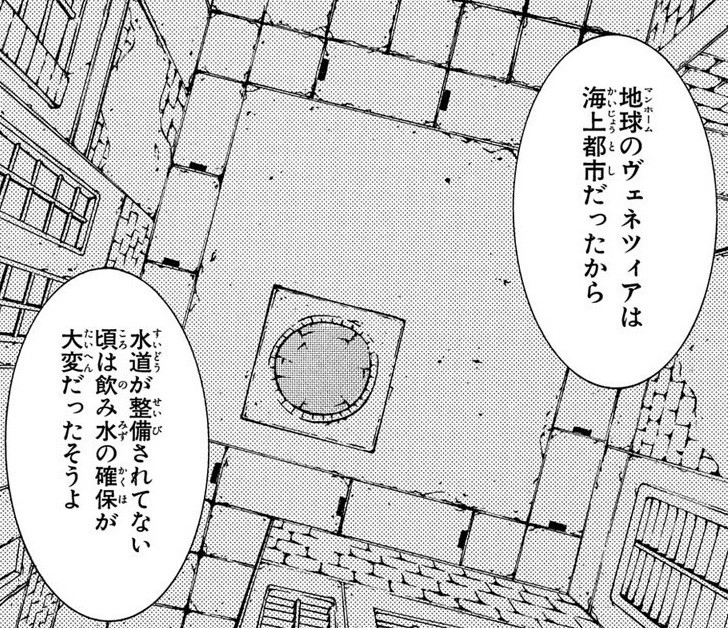
Al shows up late to meet Aika after working overtime, and the two walk the quiet streets at night. Aika climbs onto an old well in a plaza, its rotten cover gives way, and she drops in. Al reaches down to help her out and tumbles in after her. Luckily the well is dry. As Aika tries to climb the stone wall, Al remarks that the town’s wells have covers because no one uses them anymore.
アル:
「地球のヴェネツィアは海上都市だったから」
“Venice on Manhome was a city on the sea...”
「水道が整備されてない頃は飲み水の確保が大変だったそうよ」
“...so I hear getting drinking water was really hard back before they had a water system.”
Al, stuck in a dry well with Aika, explains the town’s old wells. The reason fills one balloon: Venice on Earth 海上都市だった, “was a city on the sea”. The result fills the next: getting drinking water was hard.
Example 5 of 9: Doing nothing but slack off with 〜てばっか
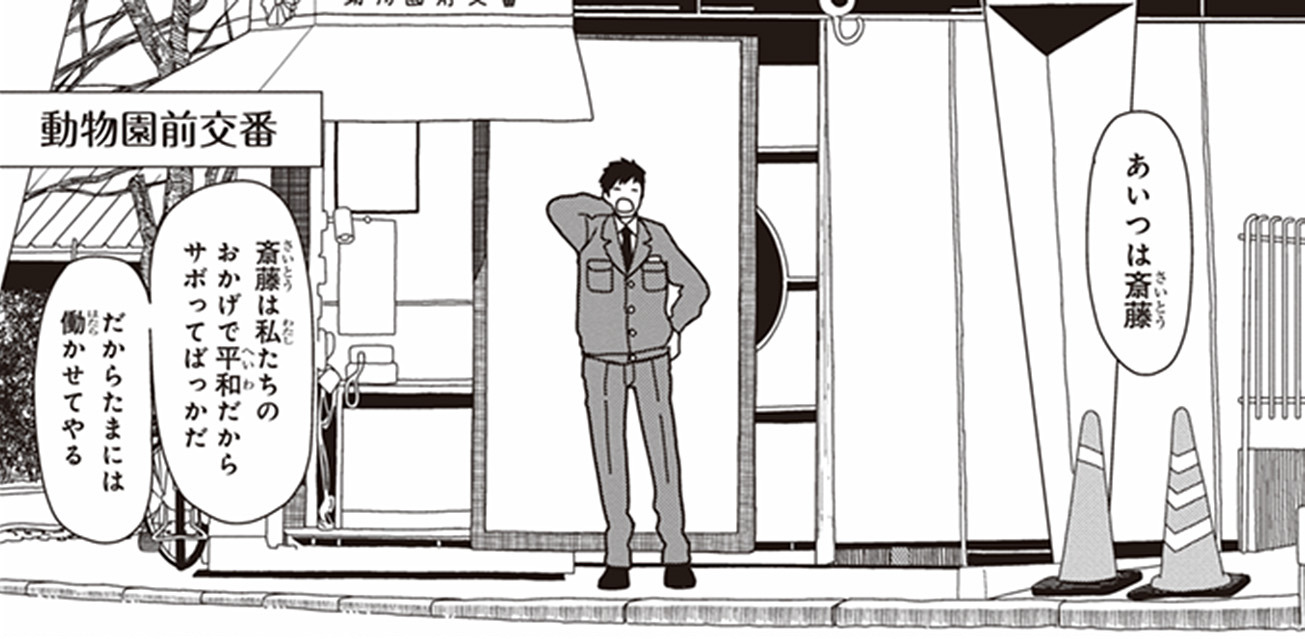
Yui, Sacchan, and Kotoha are making a video to introduce the Colors and the people of their town. After filming at a few local shops, they come to the police box by the zoo, where Officer Saitou works.
「動物園前交番」
“Zoo-Front Police Box”
さっちゃん:
「あいつは斎藤」
“That guy is Saitou.”
「斎藤は私たちのおかげで平和だからサボってばっかだ」
“Thanks to us, everything's peaceful, so Saitou does nothing but slack off.”
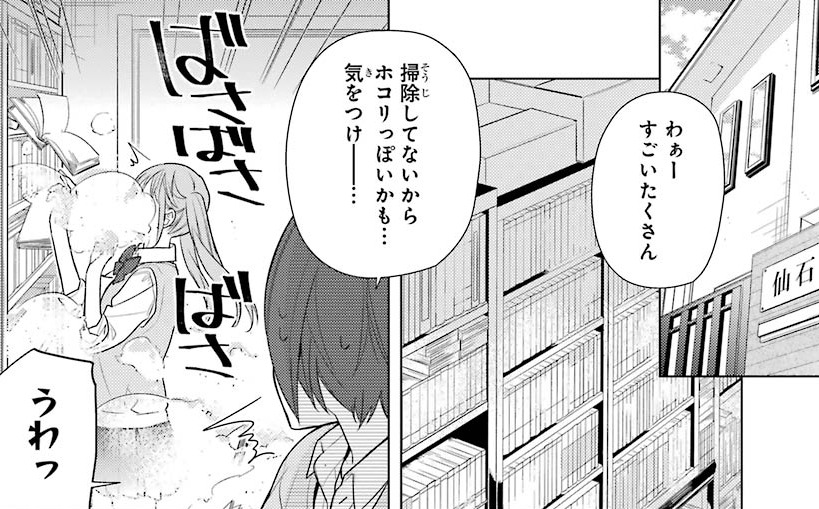
Sengoku has been lending books to his classmate Ayasaki. When he mentions that his parents’ books fill a whole room at home, she says she’d love to see it, and he invites her over.
綾崎:
「わぁー すごいたくさん」
“Wow, there are so many!”
仙石:
「掃除してないからホコリっぽいかも… 気をつけ——…」
“I haven't cleaned, so it might be dusty... Be care—...”
Sengoku warns a classmate before she looks around his parents’ book room. The reason is 掃除してない, “I haven’t cleaned”, and the result is ホコリっぽいかも, “it might be dusty”.
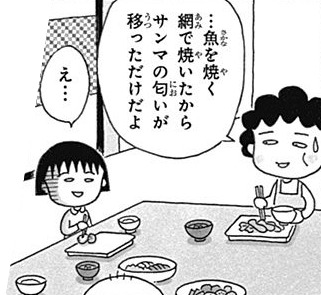
Example 7 of 9: A matsutake that tastes of saury with 魚を焼く
A neighbor brought the family some matsutake mushrooms, and Maruko begged Mom to grill one on the stove. At dinner she takes her first bite and beams. Matsutake are a surprise, she says, delicious with a slight taste of saury.
お母さん:
「…魚を焼く網で焼いたからサンマの匂いが移っただけだよ」
“…I only grilled it on the net I use for grilling fish, so it picked up the smell of the saury.”
Maruko thinks matsutake taste a little like saury. Mom’s reason is 魚を焼く網で焼いた, “I grilled it on the fish net”. The result is that the saury smell rubbed off on the mushroom.
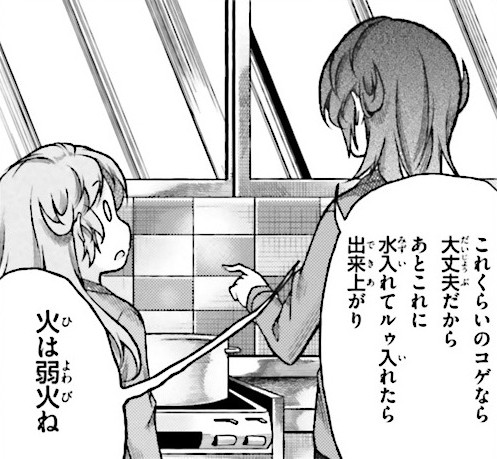
Example 8 of 9: Low heat for Komari's curry with 弱火
Komari insisted on making dinner by herself to prove to her sister Natsumi that she can cook. She settled on curry, using last night’s leftover meat and potato stew as the base, but while she was searching the kitchen for sugar, the pot began to smoke. Her mother came in, turned off the burner, and told her a little smoke was nothing to panic over.
お母さん:
「これくらいのコゲなら大丈夫だから あとこれに水入れてルゥ入れたら出来上がり」
“This little bit of scorching is fine. Now just add water and the roux, and it's done.”
Komari panicked when her curry started to smoke. Her mother’s reason is これくらいのコゲなら大丈夫, “this much scorching is fine”, and the result is that Komari can carry on: add water and roux, and it’s done.
Example 9 of 9: Boiling water for the projectionist's tea with お湯を沸かす
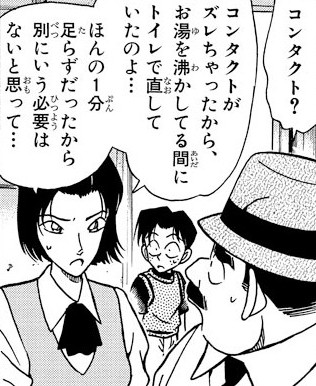
During a screening at an old movie theater, a man is found hanged in front of the projection window. Yuriko, who works the theater’s snack counter, says she was in the projection booth making tea for the projectionist when his shadow appeared on the screen. Mitsuhiko then says he saw her pressing her eyes in front of the mirror in the women’s restroom just before that. When Inspector Megure asks why she wasn’t in the booth, she stammers that it was her contact lens.
目暮:
「コンタクト?」
“Your contact lens?”
百合子:
「コンタクトがズレちゃったから、お湯を沸かしてる間にトイレで直していたのよ…」
“My contact lens slipped, so I fixed it in the restroom while the water was heating up...”
「ほんの1分足らずだったから別にいう必要はないと思って…」
“It took less than a minute, so I didn't think I needed to mention it...”
Yuriko explains why she left the projection booth. Her reason is コンタクトがズレちゃった, “my contact lens slipped”. The result is that she went to fix it in the restroom while the water heated.
Reasons for Requests and Commands
から often gives the reason for telling someone what to do. The main clause can be a request, a command, or a prohibition. In plain speech, から is the usual choice here rather than ので.
1 source
意志や勧誘・命令・依頼が普通体で現れる場合は一般に「から」の方が「ので」より用いられる。
When an intention, invitation, command, or request appears in plain style, から is generally used more than ので.
Takeo takes his pregnant mother to the hospital, as she’s getting close to delivery. Once there, she gives Takeo and his friend Suna a list of things to take care of during her stay.
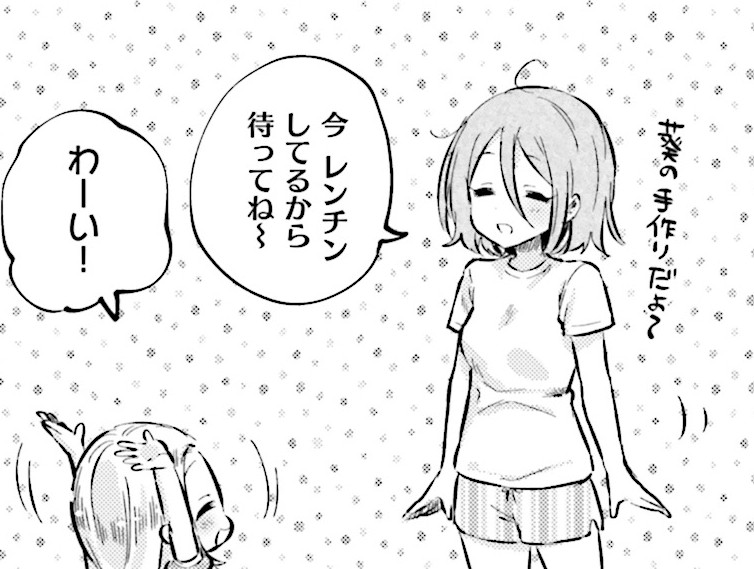
Satsuki is left to watch Sara for the day. As the afternoon arrives, Satsuki discovers their lunch had already been prepared and placed the refrigerator, with a note saying to heat it and eat it.
皐:
「今 レンチンしてるから待ってね〜」
“The food's heating up right now, so wait a bit, okay?”
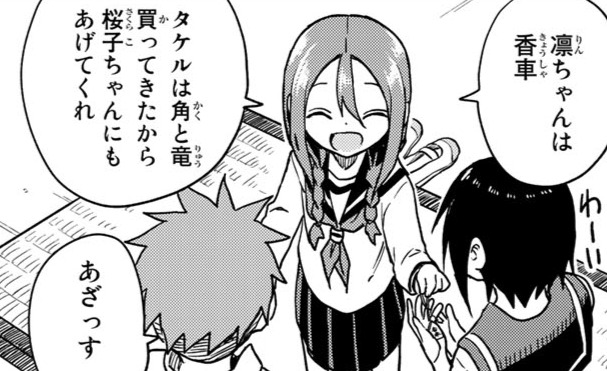
Urushi returns from her school trip with gifts for the underclassmen in the shogi club. First she presents the treats she bought for everyone, then she pulls out shogi piece keychains.
うるし:
「凛ちゃんは香車」
“Rin, this one's the lance.”
「タケルは角と竜買ってきたから桜子ちゃんにもあげてくれ」
“Takeru, I bought a bishop and a dragon, so give one of them to Sakurako too.”
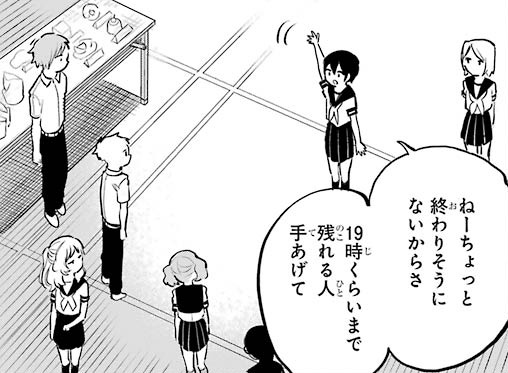
The culture festival is getting close, and the class is in the last stretch of its preparations. It’s almost six in the evening, and Asuka wants to get as much done as possible today.
あすか:
「ねーちょっと終わりそうにないからさ」
“Hey, it doesn't look like we're going to finish, so…”
「19時くらいまで残れる人手あげて」
“Raise your hand if you can stay until around seven.”
The class is running late on its culture festival preparations. Asuka’s reason comes first: 終わりそうにない, “it doesn’t look like we’ll finish”. Then comes the request, 手あげて, “raise your hand” if you can stay late.
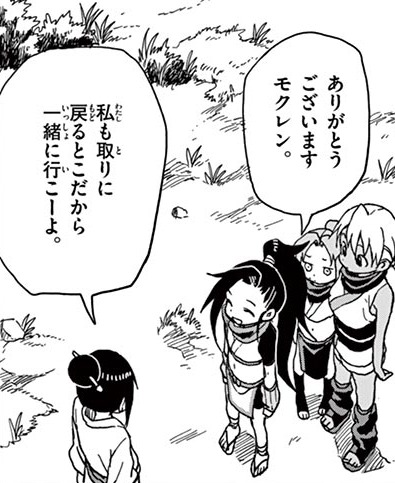
After lunch, Tsubaki is lost in thought when Mokuren calls her over. Mokuren tells her that today’s class will use the second scroll instead of the first.
ツバキ:
「ありがとうございますモクレン。」
“Thank you, Mokuren.”
モクレン:
「私も取りに戻るとこだから一緒に行こーよ。」
“I'm just about to go back for mine too, so let's go together.”
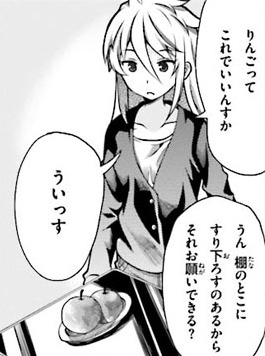
Renge is home in bed with a cold, and Kaede from the candy shop has dropped by with snacks, though she claims she only came to deliver a pillow. Renge’s older sister Kazuho heads off to make dinner and promises Renge some grated apple. Kaede offers to help, and the two go to the kitchen.
楓:
「りんごってこれでいいんすか」
“Are these the apples you want?”
一穂:
「うん 棚のとこにすり下ろすのあるから それお願いできる?」
“Yeah. There's a grater over by the shelf, so could you do that for me?”
Kazuho is making grated apple for her sick sister, and Kaede has offered to help. The reason comes first: there’s a grater over by the shelf. Then comes the request, それお願いできる?, “could you take care of that?”
Polite ですから and ますから
In polite speech, the から clause usually takes です or ます too. ので can stay plain inside a polite sentence, but a plain から clause there sounds less polite.
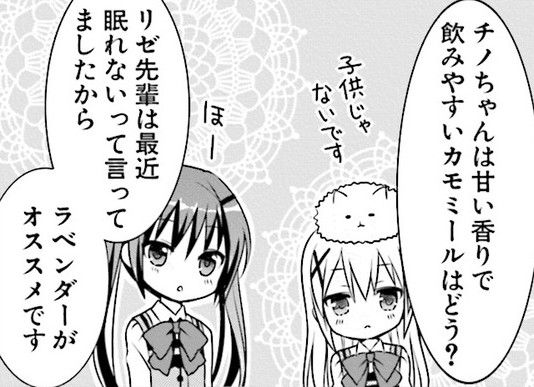
Syaro speaks to her senior Rize politely, so 言ってました comes before から. The main clause, ラベンダーがオススメです, “I recommend lavender”, follows in the next balloon.
Example 2 of 2: Worth the effort to build a garden with 〜甲斐がある
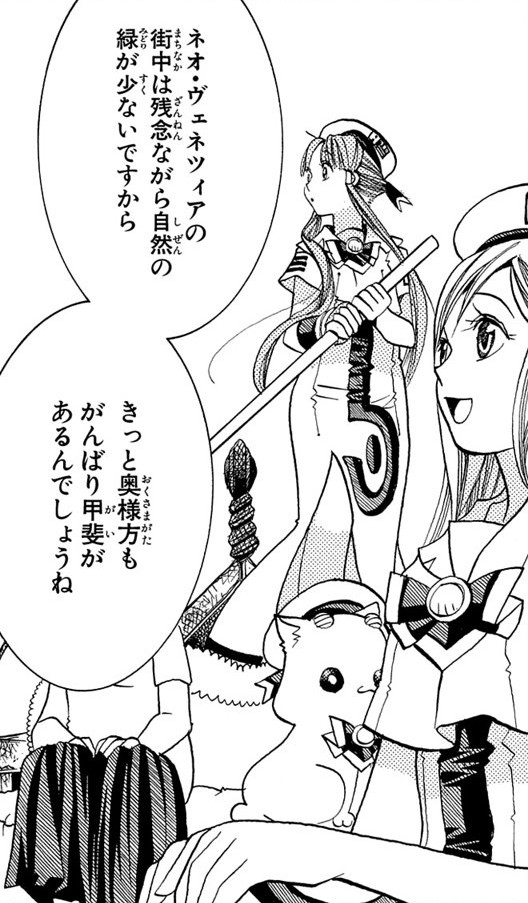
A customer asks Akari to stop the gondola as she sees a house with a fantastic flower garden. The customer asks if it’s a special place, to which Alicia explains it’s an ordinary house. She says the flower bed and gardening are a barometer to measure the caliber of the woman of the household.
アリシア:
「ネオ・ヴェネツィアの街中は残念ながら自然の緑が少ないですから」
“Since there's regrettably little natural greenery in the city of Neo-Venezia...”
「きっと奥様方もがんばり甲斐があるんでしょうね」
“...surely the housewives also find it worth the effort.”
Alicia gives the reason politely: the city has little natural greenery. Her conclusion follows in the next balloon: the housewives must find their gardening worth the effort.
Ending on から
A sentence can stop at から. The speaker states a reason and leaves the conclusion for the listener, or has just said it. It may be a reassurance, a promise, a warning, or an unspoken “so do it”.
2 sources
2 (終助詞的に用いて)強い主張、決意を表す。ぞ。「思い知らせてやるから」
2. (Used like a sentence-final particle) Expresses a strong assertion or determination, like ぞ. "I'll make you regret it."
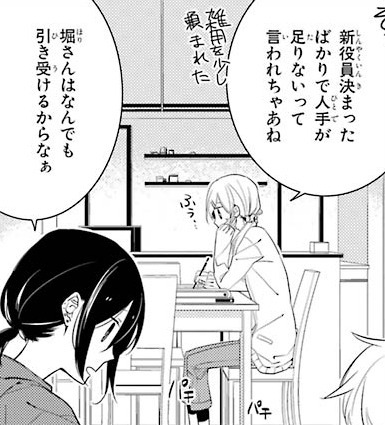
At Hori’s house, Miyamura is playing a board game with her little brother Souta while Hori works through a stack of papers at the kitchen table. Miyamura asks whether she’s helping out the student council.
堀:
「新役員決まったばかりで人手が足りないって言われちゃあね」
“When they tell me the new officers were only just chosen and they're short on help, what can I do?”
Hori has agreed to help the student council. Miyamura gives the reason: she takes on anything, なんでも引き受ける. The result, that she’s stuck with the work, goes unsaid, and なぁ makes it a musing remark.
Example 4 of 9: Leaving right after a drink with 〜たばっか
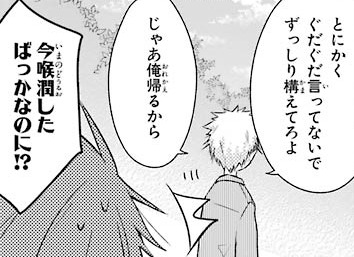
Fujimiya’s mother has asked Hase to meet her at the park on Sunday, and he’s anxious about what she wants. On Saturday he calls Kiryuu out to the same park to talk it over. Kiryuu, thirsty and without his wallet, gets Hase to buy him a drink. Hase admits he could have just phoned, but he wanted Kiryuu to set him straight in person.
桐生:
「とにかく ぐだぐだ言ってないで ずっしり構えてろよ」
“Anyway, quit whining and hold steady.”
「じゃあ俺帰るから」
“Okay, I'm heading home.”
長谷:
「今喉潤したばっかなのに!?」
“You only just wet your whistle, and you're leaving?!”
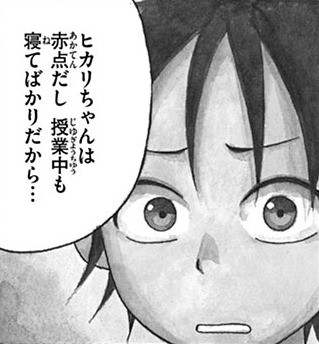
Hibino has kept Hikari and Kenji after school for extra study. Hikari is upset to be stuck with Kenji and points out that makeup classes are usually for students in the same year. Hibino explains that Kenji didn’t fail, but his scores are always just barely passing.
日々野:
「ヒカリちゃんは赤点だし 授業中も寝てばかりだから…」
“Hikari-chan, you got a failing grade, and in class you do nothing but sleep, so...”
Hikari has asked why she’s in an extra study session with Kenji. Hibino names two reasons, a failing grade and sleeping through class, and ends on だから. The conclusion, “so that’s why you’re here”, is left for Hikari to fill in.
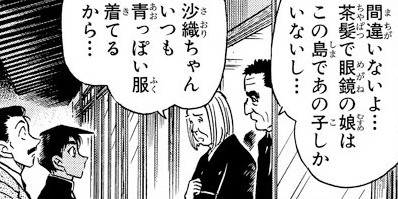
Naoko has been murdered during Sumi’s wake, and Kogoro tells the islanders that the killer took her Dugong Arrow, a sacred arrow from the island’s festival. Saori is missing, and she had also said she lost her arrow, so she may have been killed too. Then an elderly woman says she saw Saori near the Mermaid Falls on the morning of the festival, and other villagers say they spotted her there as well. Heiji asks whether it was really Saori.
お爺さん:
「間違いないよ… 茶髪で眼鏡の娘はこの島であの子しかいないし…」
“It was her, all right... She's the only girl on this island with brown hair and glasses...”
Heiji asks whether the girl the villagers saw was really Saori. A man says it was, since she’s the only girl on the island with brown hair and glasses. A woman adds a second reason and ends on から: Saori always wears bluish clothes. The conclusion, “so it was her”, goes unsaid.
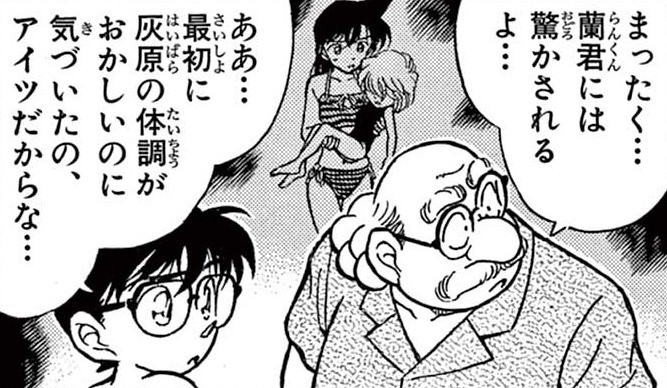
Professor Agasa takes Conan and the other kids to a beach in Izu, where they run into Ran and Sonoko. When Haibara says she’s tired, Ran comes ashore with her and Conan, and Haibara turns out to have sunstroke. Once Haibara starts to recover, Ran tells her to speak up the next time she feels sick, and heads back to join the others.
阿笠:
「まったく…蘭君には驚かされるよ…」
“Honestly... Ran never stops amazing me...”
コナン:
「ああ…最初に灰原の体調がおかしいのに気づいたの、アイツだからな…」
“Yeah... She's the one who noticed something was wrong with Haibara first.”
Professor Agasa says Ran never stops amazing him, and Conan agrees. アイツだからな ends on から: she’s the one who first noticed Haibara was sick. The conclusion, “so no wonder”, is left unsaid.
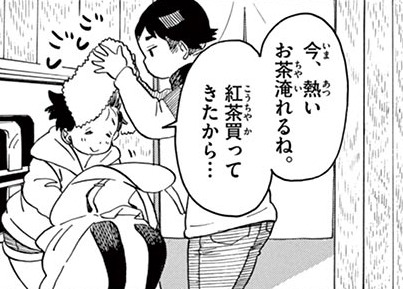
Example 8 of 9: Hot tea after a rainy grocery run with お茶を淹れる
Kiyo and Riko come home from a grocery run in the cold rain. Kiyo is relieved that the groceries in her backpack stayed dry, but she is soaked through herself, so Riko dries her hair with a towel.
理子:
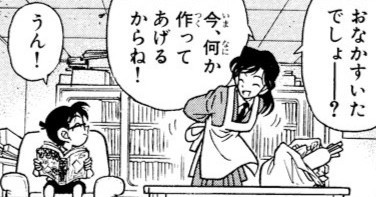
「今、熱いお茶淹れるね。紅茶買ってきたから…」
“I'll make you some hot tea right now. I picked up some black tea, so...”
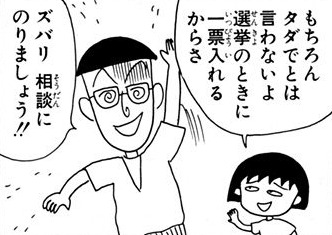
A rumor that Maruko and Hamaji are a couple has spread through the class, and their classmates won’t stop teasing them. They have even passed around a mock newspaper about it. Maruko asks Maruo, the class representative, to save her from the rumor, and he is delighted that she came to him for a favor.
まる子:
「もちろん タダでとは言わないよ 選挙のときに一票入れるからさ」
“Of course, I'm not asking you to do it for free. I'll give you my vote at election time.”
Maruko wants Maruo to save her from a rumor, and she offers a deal. 一票入れるからさ ends on から: she’ll vote for him at the next election. The conclusion, “so help me out”, goes unsaid.
The Reason as the Answer with からだ
With だ or です after it, the から clause becomes the predicate. This is how a reason is given as the answer to “why”, or after the fact: 〜からです, “it’s because ~”. The longer form 〜のは〜からだ means “the reason ~ is that ~”. ので can’t be used this way.
1 source
「だ」を伴って文の述語となる述語用法も、「から」のみが可能である。
The predicate use, in which it takes だ and becomes the predicate of the sentence, is also possible only with から.
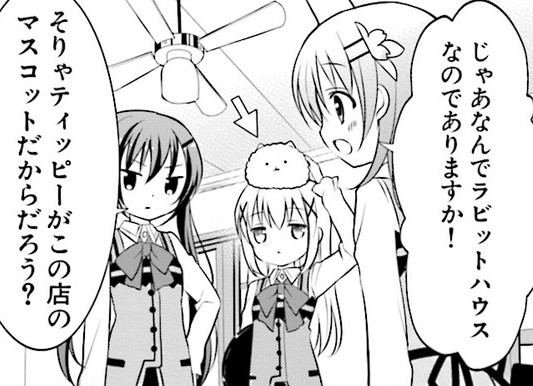
Cocoa asks why the café is called Rabbit House. Rize answers with a reason: Tippy is the shop’s mascot. だろう takes the place of だ in からだ, and with そりゃ it means “well, it’s because ~, obviously”.
Brushing Off with いいから
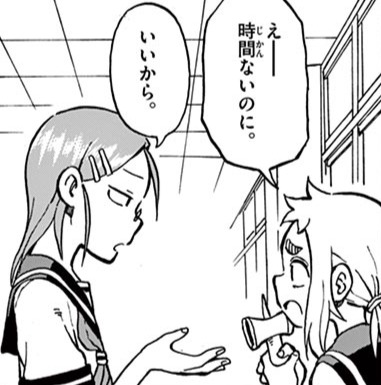
いいから is a set phrase for brushing aside an objection: “never mind that”. Here から gives no real reason. It pushes the listener to drop the point and go along.
Yukari sees Mina with a kendama while between classes. She tells Mina they need to get to their next class, but Mina has decided not to head to the classroom until she successfully gets the ball onto the spike. Yukari tells Mina to hand it over to her to try.
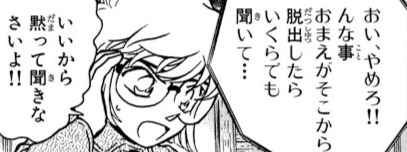
To allay Haibara’s fears of being recognized at an event, Conan lets her wear his fake glasses as a disguise. After she’s kidnapped, Conan communicates with her through the wireless communication device built into the glasses, in hope of discovering where she’s being held. Once Haibara confirms she cannot escape the room she’s in, she tells Conan to listen carefully and starts listing off the details of her research around the drug that caused the two of them to become children.
コナン:
「おい、やめろ!! んな事おまえがそこから脱出したら聞いて…」
“Hey, stop it!! I'll listen after we get you out of there...”
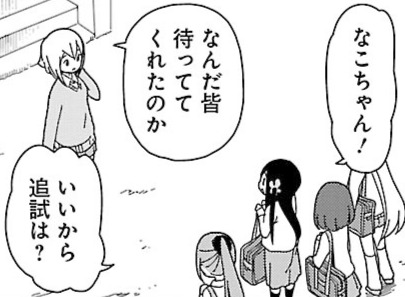
After failing an exam, Nako has to take a make-up exam. Bocchi provides her notes to help Nako learn the material better. After the test, Nako finds Bocchi and their friends waiting for her.
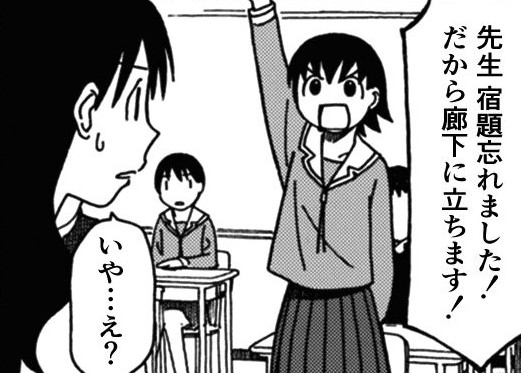
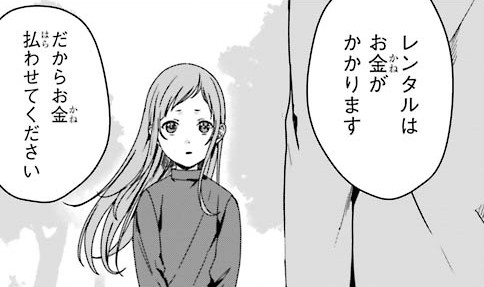
To help ease Kanami’s sorrow due to her situation in life, Makoto offers to let her rent time with him as an older brother. On the first rental, Kanae says she will pay him, something Makoto wasn’t expecting.
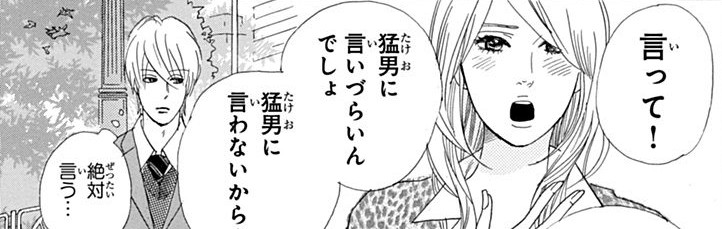
Kanami’s reason comes in the line before: rentals cost money. だから leads into her request to pay.
Exasperated だから
Said with irritation, sentence-initial だから repeats a point that should have landed the first time: “like I said”. The related だから言ったのに means “see, I told you so”. のに adds the complaint that the warning was ignored.