〜くなる and 〜になる say that something changes into a new state. なる means “become”. An い-adjective changes its final い to く before なる: 大きい becomes 大きくなる, “get bigger”. A noun or a な-adjective takes に: 大人になる is “become an adult”, and 静かになる is “get quiet”.
English often says “get” or “grow” instead of “become”. 寒くなった is “it’s gotten cold”, and 好きになった is “I’ve come to like it”.
Usage Notes
なる is an ordinary verb. It conjugates as なります, なった, なって, ならない, なれる (“can become”), and なりたい (“want to become”). It’s normally written in kana.
The change can happen by itself or because someone worked at it. 〜くなる and 〜になる only report the result. To say that someone makes a change, use する instead, with を on the thing that changes:
なる (what happens)
する (what someone does)
部屋が明るくなる
部屋を明るくする
The room gets brighter.
(Someone) brightens the room.
部屋がきれいになる
部屋をきれいにする
The room gets clean.
(Someone) cleans the room.
A past なった often describes a state that holds now. 便利になりました is “it’s gotten more convenient”, and the convenience is still there. In English, “has gotten” or a plain present (“it’s convenient now”) often fits better than “became”.
Several other patterns contain になる or となる but have their own meanings:
To say that something takes on an い-adjective’s quality, change the final い to く and add なる. 高い, “tall”, becomes 高くなる, “get taller”, and 眠い, “sleepy”, becomes 眠くなる, “get sleepy”.
いい is irregular, because its other forms come from よい. “Get better” is よくなる, never いくなる. Words built on いい follow it: かっこいい becomes かっこよくなる, and 仲がいい becomes 仲がよくなる, usually fused as 仲よくなる, “become friends”. かわいい isn’t one of them, so it’s regular: かわいくなる.
Example 1 of 5: A loss of public order at school with 治安
Following Zen’s absence from school for a while, fights and disobedience have taken over the school grounds. When Lulu learns Zen hasn’t been at home either during this time, she travels to the mountains in search of him. After finding him, she explains the situation at school.
ルル:
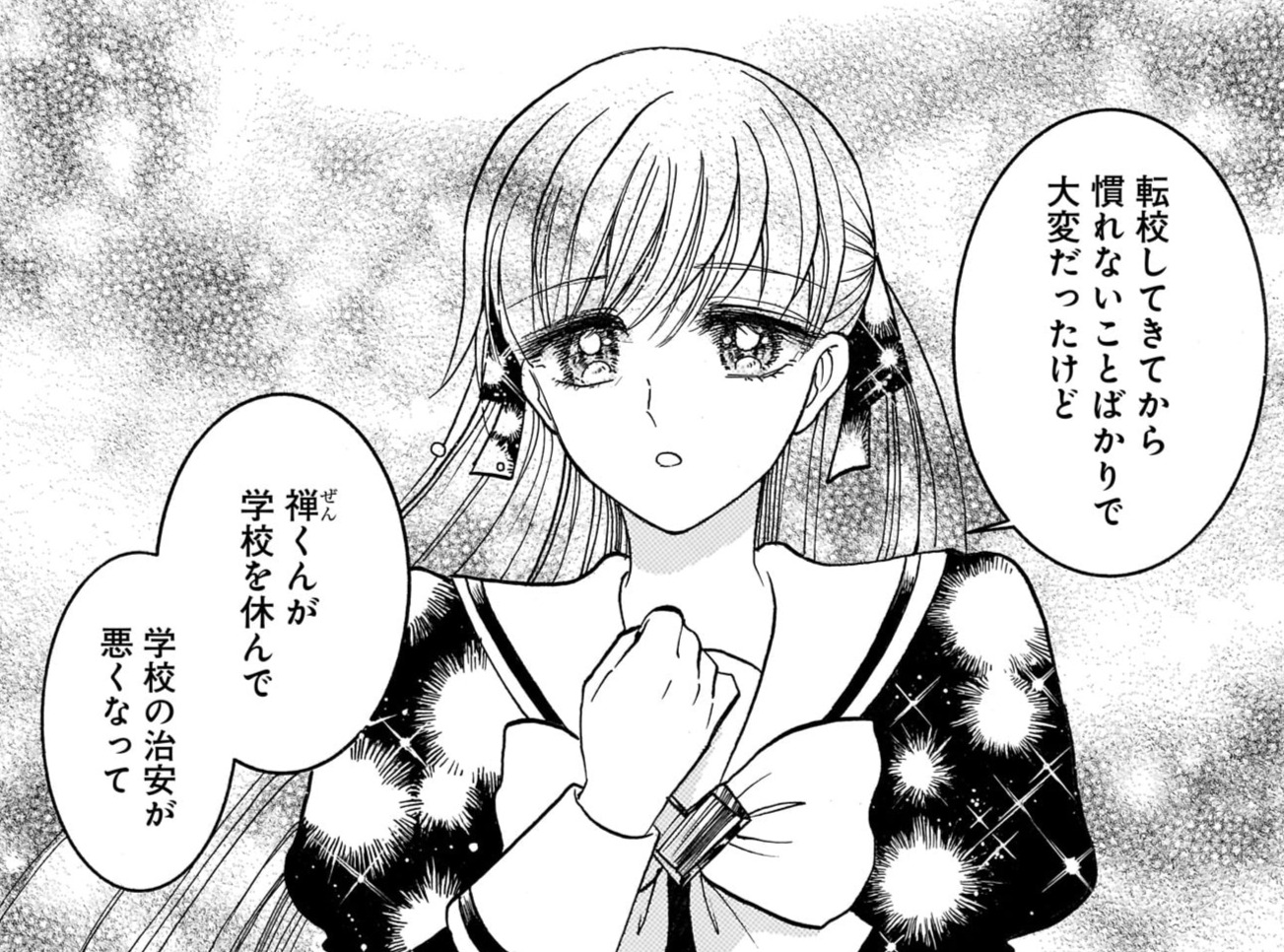
「転校してきてから慣れないことばかりで大変だったけど禅くんが学校を休んで学校の治安が悪くなって」
“Since I transferred to this school, everything has been unfamiliar and difficult, but ever since you've started missing school, the school's security has gotten worse...”
Lulu tells Zen what has happened at school since he stopped coming. 悪い is “bad”, and 悪くなる is “get worse”. The school’s order has broken down without him.
Example 2 of 5: Proportional to the degree of time passed with 〜ば〜ほど
After a traffic accident sends Hiyori to the hospital, she misses the first few months of the school year. Once she’s finally able to attend, an embarrassing situation occurs, and she runs out of the classroom and hides. Yuushin tracks her down, and Hiyori tells him she should never have come to school.
ひより:
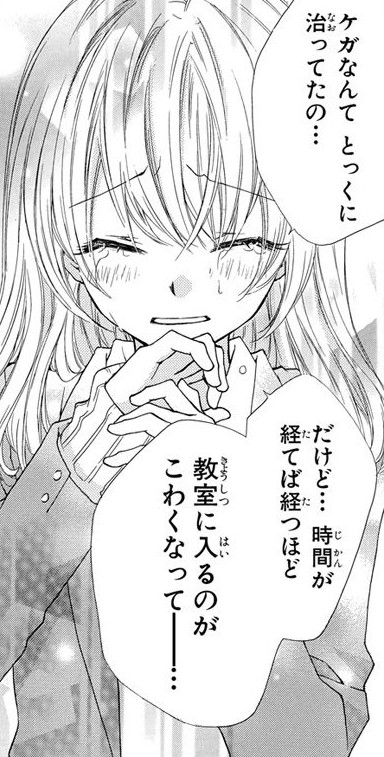
「ケガなんて とっくに治ってたの…」
“I'd already healed from my injuries.”
「だけど… 時間が経てば経つほど教室に入るのがこわくなってーー…」
“But, the more time passed, the more scary it became to return to class.”
Hiyori admits her injuries healed long ago. こわい is “scary”, and こわくなる is “get scary”. The longer she stayed away from school, the scarier walking into the classroom became.
Yotsuba greets Jumbo with a line she has picked up from adults. 大きくなった is “you’ve gotten bigger”. The change happened in the past, but the point is how big he is now.
Cocoa teases Chino for leaving food on her plate. 大きくならない is the negative, “won’t get bigger”. Cocoa is warning Chino that she won’t grow if she stays picky.
At the tea shop where Syaro works, Cocoa has picked dandelion tea, reading the name as “dandy lion”, and claims it will make them strong. なれる is the potential form of なる, so 強くなれる is “can become strong”. Rize points out that she’s missing the point: it’s just a dandelion.
A noun or a な-adjective takes に before なる, with no な or だ. 有名になる is “become famous”, 元気になる is “get well”, and 医者になる is “become a doctor”.
Some な-adjectives end in い, so check the word class before you pick く or に. きれい, “clean” or “pretty”, and 嫌い, “disliked”, are な-adjectives, so they take に: きれいになる, 嫌いになる.
好きになる is “come to like” or “fall for”. Japanese uses it for the moment a liking starts, where English often just says “like”.
Example 1 of 5: Proportional to the degree of walking to with 〜ば〜ほど
Akari, Aika, and Alice find themselves on a treasure hunt through town, as each map they follow leads them to another map. Aika remarks how Akari is in high spirits.
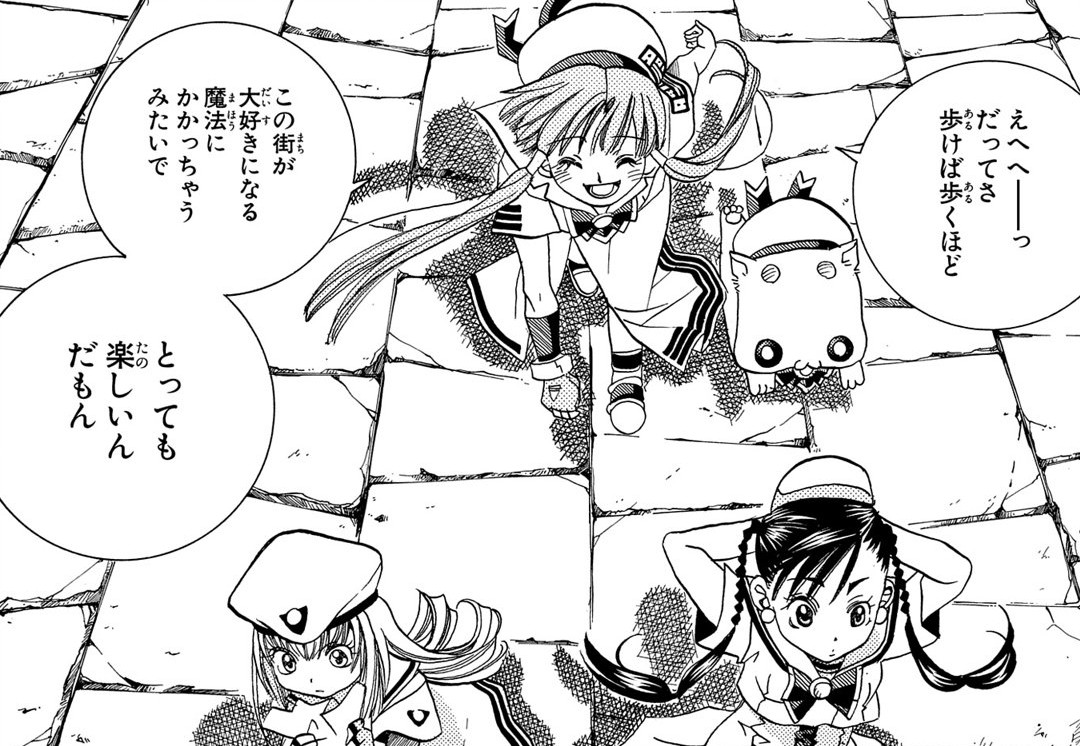
Akari is in high spirits on a treasure hunt through town. 大好き is a な-adjective, so it takes に: 大好きになる, “grow to love”. The more she walks, the more she loves the city.
During a visit with Anzu’s family, Makoto receives a request to babysit for another witch. Things are fine at first, but after a while, rain begins to pour inside. Anzu’s mother realizes that the child they’re watching over has rain magic.
杏子の母:
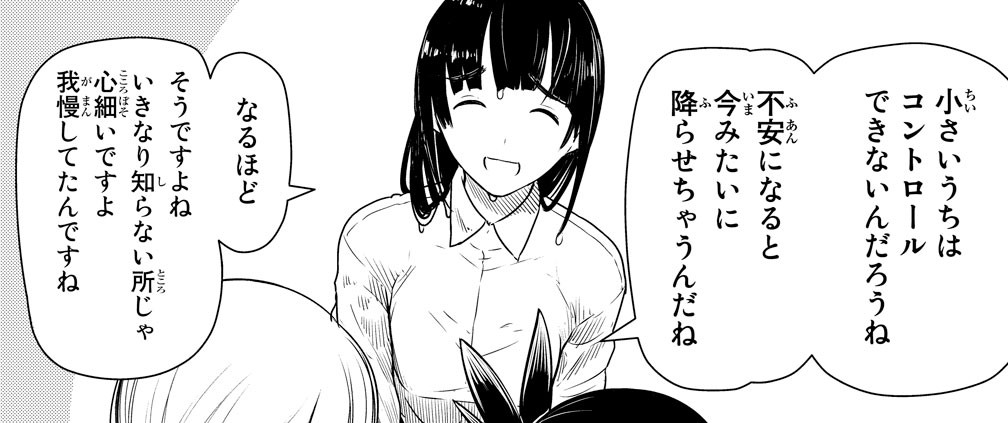
「小さいうちはコントロールできないんだろうね。不安になると今みたいに降らせちゃうんだね」
“You don't have control while you're small, right? When he gets uneasy, he makes it rain like just now.”
真琴:
「なるほど。そうですよね。いきなり知らない所じゃ心細いですよ。我慢してたんですね」
“I see. So that's it. It's a little scary suddenly being in a place you don't know. You've been patient, haven't you?”
The witch child Makoto is babysitting has made it rain indoors. 不安, “uneasy”, is a な-adjective. Anzu’s mother explains that when he gets uneasy, the rain starts.
Example 3 of 5: Hoping to get along well with 〜といい
Tippy sighs about Cocoa, the energetic new tenant. 大変 is “a handful”, and 大変になりそう is “looks like it’s going to be a handful”. そう attaches to the stem なり.
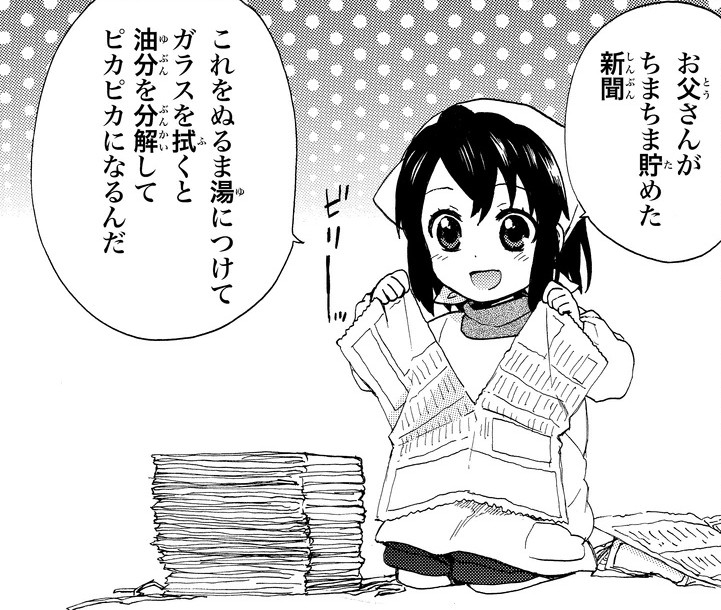
Hinata shares a cleaning trick with old newspapers. ピカピカ is “sparkling”. Mimetic words like this work like nouns before なる, so they take に: ピカピカになる, “come out sparkling”.
Example 5 of 5: Isn't the café named as such with 〜でしょう
Cocoa wants the Rabbit House uniforms to have bunny ears. Chino objects that the café would turn into a different kind of shop. 違う店 is a noun phrase, so it takes に. てしまいます adds that it would be an unwanted result.
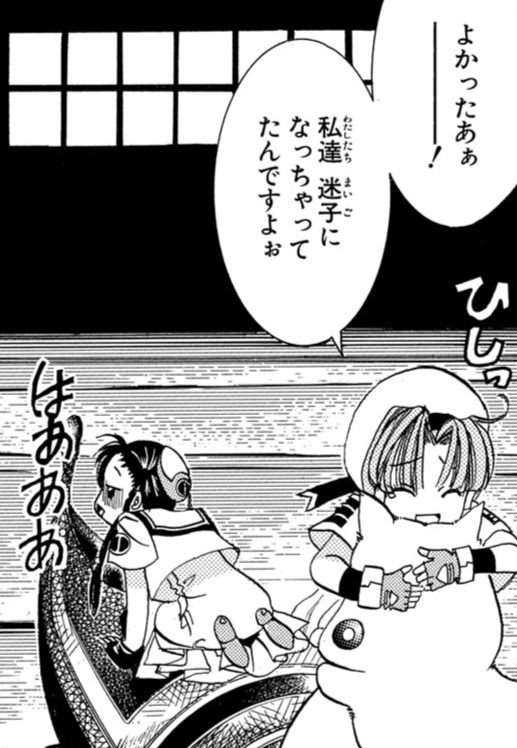
During training, Akari spots her company’s feline president, President Aria, sailing by in a small gondola. She instructs Aika to row the training gondola in the same direction, and the two follow him down an alley that’s normally gated from entry. The two lose sight of Aria and find themselves going in circles through flooded abandoned buildings. After some time, Aria’s gondola floats by.
灯里:
「よかったあぁーーーーー! 私達 迷子になっちゃってたんですよぉ」
“Oh, thank goooodness! We had gotten completely lost, you know!”
Akari and Aika have been going in circles through flooded buildings until Aria’s gondola finds them. 迷子 is “a lost child” or “someone who’s lost”, and 迷子になる is “get lost”. なっちゃってた is なってしまっていた, “had ended up lost”.
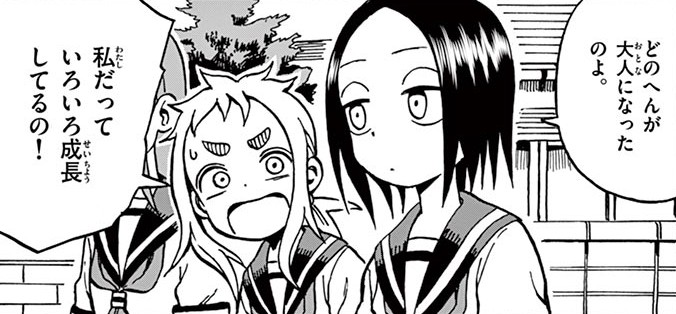
Mina buys a can of coffee, even though she’s bad at bitter drinks. When her friends question her, she says she’s grown up a bit and should be able to drink it.
Mina has bought canned coffee to prove she’s grown up, even though she can’t stand bitter drinks. Sanae isn’t convinced. 大人になる is “grow up”, and どのへんが asks “which part of you?”
Example 3 of 3: Anxious now that it's real with いざとなると
Yukari, Mina, and Sanae have been following Takagi’s family home. Watching them, Yukari sighs that she wants a marriage like that. When Takagi catches them, Yukari admits she hoped to learn the secret to a happy marriage, then reveals she’s getting married soon. Takagi congratulates her, and Mina starts to answer for her.
ミナ:
「すっかりマリッジブルーになっちゃって。」
“She's got a full-blown case of marriage blues.”
ユカリ:
「いざとなるとすっごく不安なのよ〜」
“Now that it's actually happening, I'm sooo nervous!”
Yukari has just said she’s getting married soon, and Mina answers for her. マリッジブルー is “pre-wedding jitters”, and マリッジブルーになる is “come down with” them. すっかり is “completely”.
Reaching a Time, Age, or Amount
になる also marks reaching a point in time, an age, or a total. 春になる is “spring comes”, 朝になる is “morning comes”, and 二十歳になる is “turn twenty”. 全部で千円になる is “it comes to a thousand yen”.
〜になると often means “once (a time or age) comes”, as in 夏になると, “in summer” or “when summer comes”.
In shops and restaurants, staff say things like 980円になります, “that’ll be 980 yen”, or こちらカレーになります, “here’s your curry”. Nothing changes here. It’s a polite way to say です.
Example 1 of 3: A son who just turned five with 〜たばかり
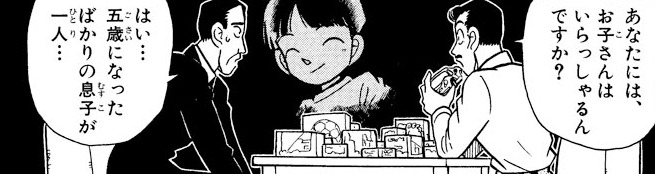
A man in a suit comes to the Mouri Detective Agency carrying an armful of toys. He explains that for about two years, toys have arrived every month along with money, and the sender’s name and address are fake. Kogoro looks over one of the toys, puzzling over why anyone would send both.
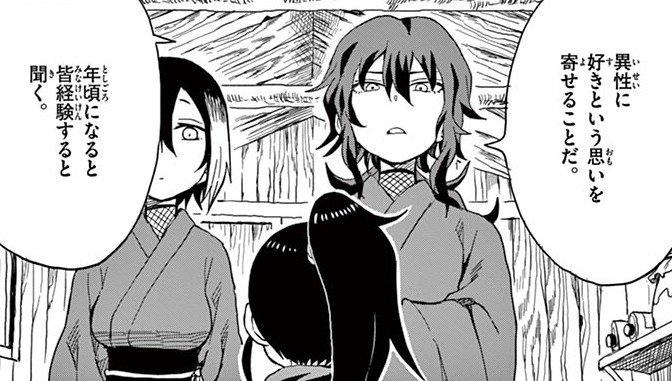
During a ninja training exercise, Tsubaki disguises herself as the teacher’s assistant in the hope of getting close enough to take the teacher’s mask. When the teacher unknowingly reveals that keeping boys and girls separate has been aided by lying to the female ninjas about men being scary, Tsubaki accidentally drops her disguise. The teacher has no choice but to take Tsubaki into her confidence and explain the reason for the separation, starting with the word “love”, of which Tsubaki is unfamiliar.
ハナ先生:
「異性に好きという思いを寄せることだ。」
“It means harboring feelings of affection for someone of the opposite sex.”
「年頃になると皆経験すると聞く。」
“I hear that everyone goes through this when they reach a certain age.”
The ninja teacher explains love to Tsubaki. 年頃 is the age when young people start taking an interest in romance, and 年頃になると is “once you reach that age”.
Example 3 of 3: Bothersome to try new things with 億劫
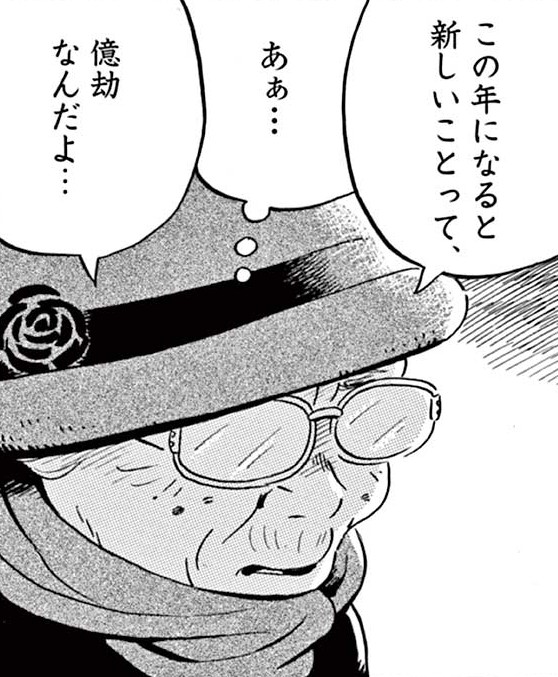
At dusk, Hanae takes the bus to the grocery store to buy ingredients for dinner. There she encounters Hiroto, doing the same on his way home from work. Hiroto says he rode his motorcycle today and can give Hanae a lift home. She refuses, as she’s never ridden on a motorcycle before.
Hanae turns down Hiroto’s offer of a ride home on his motorcycle. この年になると is “at my age”, literally “once you reach this age”. It’s a common way for older people to explain why something is hard for them now.
Noun + になった can report how something was decided or how plans turned out. 遠足は中止になった is “the field trip was called off”, and 会議は来週になった is “the meeting was moved to next week”.
The speaker doesn’t say who decided. It sounds as if the outcome came from the circumstances or from a group agreement. That makes it a polite way to announce a change, even when the speaker made the call.
Cocoa thanks Chiya and Syaro for visiting in bad weather. Syaro plays it down. 空白 is “a blank”, and 予定が空白になった is “my schedule opened up”. Nobody says why it opened up, so it sounds like things just turned out that way. It’s also her excuse for visiting.
ない conjugates like an い-adjective, so it becomes なくなる. On its own, なくなる means “disappear” or “run out”: お金がなくなった is “I ran out of money”. It’s often written 無くなる. 亡くなる, “pass away”, is the same word written for a death.
After a negative, it means “no longer”. An い-adjective’s negative becomes 〜くなくなる: 痛くなくなった, “it doesn’t hurt anymore”. A noun or な-adjective’s negative becomes 〜じゃなくなる, or 〜ではなくなる in formal speech: 大丈夫じゃなくなる, “stop being OK”.
Don’t mix these up with the negative of なる itself. 寒くならない is “doesn’t get cold”, and 寒くなくなる is “stops being cold”.
Verbs follow the same pattern, as in 会えなくなる, “won’t be able to see each other anymore”. The 〜ようになる page covers that use.
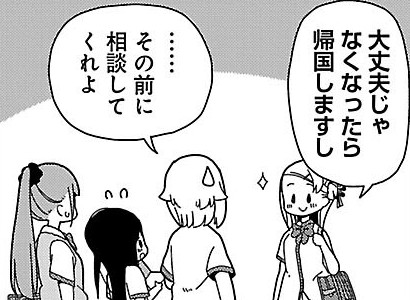
While staying in Japan, Sotoka lives alone in the apartment building her parents own. Aru asks if Sotoka isn’t lonely living alone, but Sotoka says it’s all right.
Sotoka lives alone in Japan and says she’s fine. 大丈夫じゃない is “not OK”, and 大丈夫じゃなくなる is “stop being OK”. If that happens, she’ll just go home. Nako asks her to talk to them first.
A noun or a な-adjective can also take と before なる. となる is more formal than になる, and it’s common in writing, news, and announcements to the public: 中止となりました, “it has been canceled”, and 必要となる, “become necessary”. In conversation, になる is the safe choice.
となる is hard to use for natural changes like aging or illness. In ordinary conversation about those, use になる. 二十歳となる sounds like a ceremony speech.
Don’t confuse this with 〜となると, “when it comes to”, or いざとなると. They add a conditional と after となる and work as set phrases.
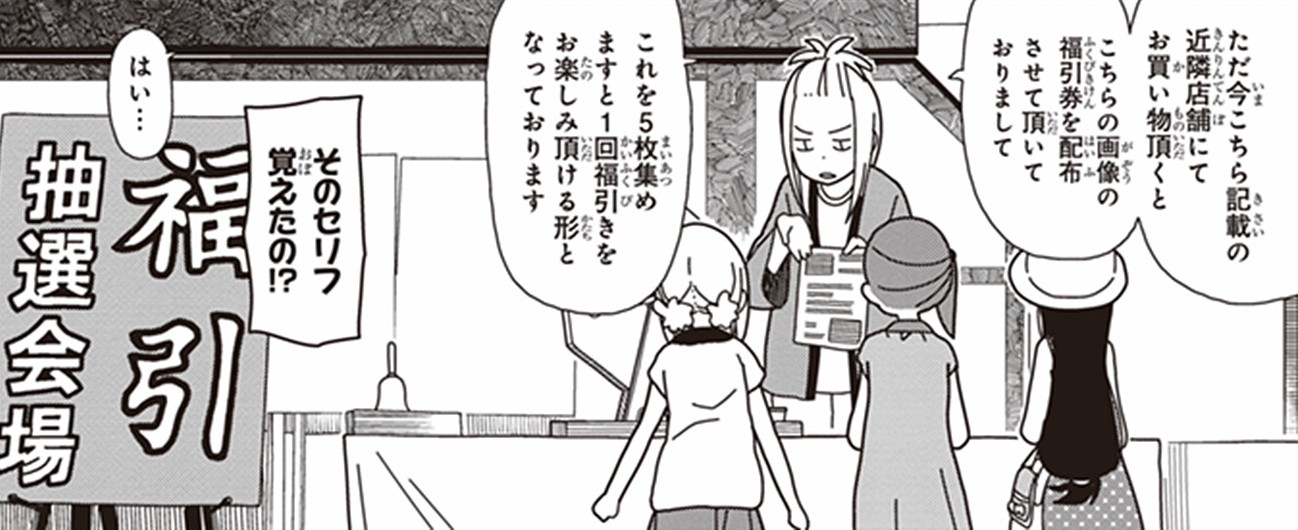
Upon entering the mall, Yui notices a lottery wheel. Sacchan and Kotoha join her, the two quickly pestering Subaru, the part-timer working the lottery, with random questions. Subaru pushes on with her script.
すばる:
「ただ今こちら記載の近隣店舗にてお買い物頂くとこちらの画像の福引券を配布させて頂いておりまして」
“Currently, when you make a purchase at a neighborhood store, we are distributing the raffle tickets shown in this image.”
「これを5枚集めますと1回福引きをお楽しみ頂ける形となっております」
“If you collect five tickets, you'll be able to enjoy one lottery draw.”
Subaru, working the mall’s lottery booth, sticks to her customer-service script. 形となっております is a stiff, formal way to say “that’s how it works”: collect five tickets and you get one draw. となる and おります both raise the formality.