Sentence-final さ says something with offhand confidence, like “y’know” or “no big deal”. It’s lighter than よ. The speaker isn’t pressing new information on the listener, just tossing it out.
In the middle of a sentence, さ marks a pause, the way “like” and “you know” do in English. It also opens conversations, as in あのさ, “hey, listen”.
Usage Notes
さ follows plain-form sentences. Like よ in feminine speech, it sits directly on nouns and な-adjectives without だ: 平気さ, “no big deal”.
Sentence-final さ sounds breezy, boyish, or worldly, and male characters use it most. Someone playing it cool says まあ、そんなもんさ, “eh, that’s how it goes”. Mid-sentence さ is different. Everyone uses it, girls included, to pace a story or to get someone’s attention.
Stretched さあ is a separate word. It can mean “who knows” or “come on, let’s go”.
Formation
View formation details
Sentence + さ
気にするな、よくあることさ
"Don't worry about it. Happens all the time, y'know."
Noun / な-adjective + さ (without だ)
簡単さ
"Easy, I tell you."
Mid-sentence さ (filler)
昨日さ、駅でさ、変な人見たんだ
"So like, yesterday, at the station, right, I saw this weird guy."
〜って + さ (hearsay)
今日は来ないってさ
"He says he's not coming today."
Question word + さ
何さ、その顔
"What's with that face?"
さあ (standalone)
さあ、どうだろう
"Hmm, who knows."
Note: Standalone さあ means "beats me" or rallies people to action. It's a separate word from the sentence-final particle.
Playing It Cool
At the end of a sentence, さ states something as if it barely needs saying. 大丈夫さ is “I’m fine, no problem”, and 当然さ is “naturally”. It sounds relaxed and a little self-assured. Someone trying to look unbothered reaches for it, whether they are or not.
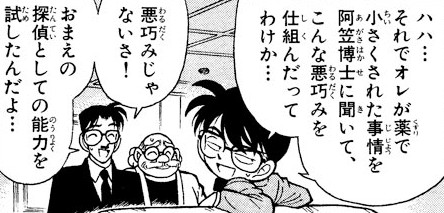
Example 1 of 2: Testing one's detective ability with 能力
Conan has just found out that the dangerous pair who grabbed him are his own parents in disguise, and he accuses them of cooking up an evil scheme. His father brushes it off: 悪巧みじゃないさ!, “it’s no evil scheme!” さ makes the denial sound easy and unbothered.
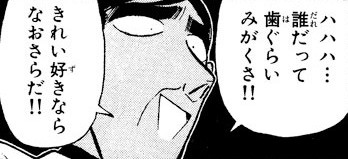
Example 2 of 2: Everyone brushes their teeth with 誰だって
Novelist Imatake has been shot in his hotel room. His old friend Sasai, who shared the room, insists a robber shot Imatake the moment he opened the door to a knock. Conan has learned from Sasai that Imatake was tidy, and now points out toothpaste on the dead man’s mouth and a toothbrush lying beside him. He concludes that Imatake must have been brushing his teeth just before he was shot.
Conan points out that the murder victim was brushing his teeth when he was shot. Sasai laughs and says everybody brushes their teeth. さ makes the clue sound too obvious to matter.
Explaining with さ and のさ
さ suits someone who knows how things work and is happy to tell you. Paired with the explanatory の, 〜のさ lays out a reason or a reveal with a flourish.
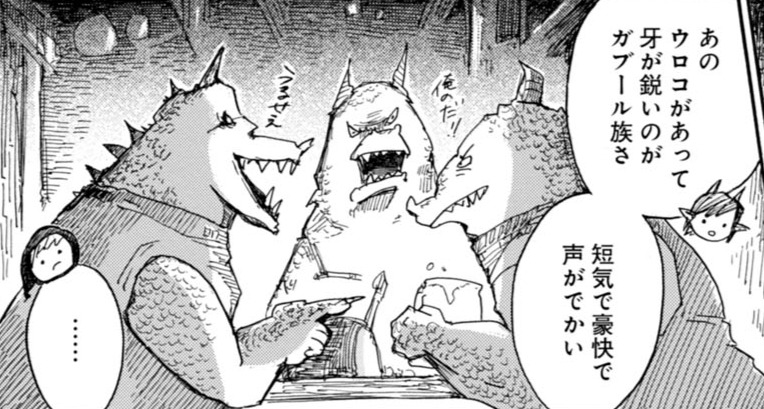
Simon and Nicola stop at a pub for dinner. Their dinner conversation turns to Simon explaining the various temperaments of different tribes in the demon world.
サイモン:
「あのウロコがあって牙が鋭いのがガブール族さ」
“Those ones with scales and sharp fangs are the Gabool tribe.”
Over dinner at a pub, Simon is filling Nicola in on the tribes of the demon world. あのウロコがあって牙が鋭いのがガブール族さ is “the ones with scales and sharp fangs, those are the Gabool”. さ sits right on the noun 族 with no だ, and Simon sounds like a guide who has seen it all.
A detective revealing how he knew, or a culprit confessing why, often ends on 〜のさ: 見ちゃったのさ, “I saw it, that’s how”.
Anyone can use mid-sentence さ. After あの, おまえ, or the listener’s name, it grabs the listener’s attention before the real point. あのさ, “hey, listen”, is one of the most common ways to start a casual conversation.
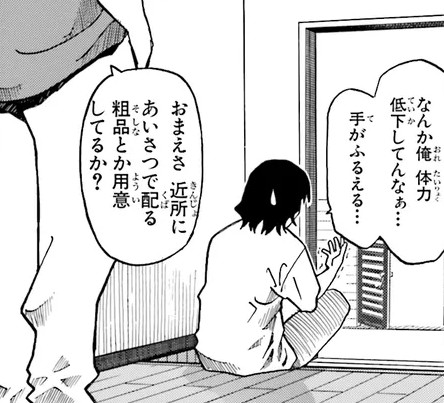
Jumbo is helping Yousuke move in, and Yousuke has stopped for a break, grumbling about his stamina. Jumbo changes the subject: おまえさ、近所にあいさつで配る粗品とか用意してるか?, “hey, have you got gifts ready for when you say hello to the neighbors?” おまえさ is “hey, you”, with さ holding Yousuke’s attention for a beat before the question.
In casual speech, さ can follow almost any phrase: a particle, a て-form, から, or だって. It marks a pause and keeps the listener with you, much like “like” or “you know” in English. A string of them sounds chatty and young.
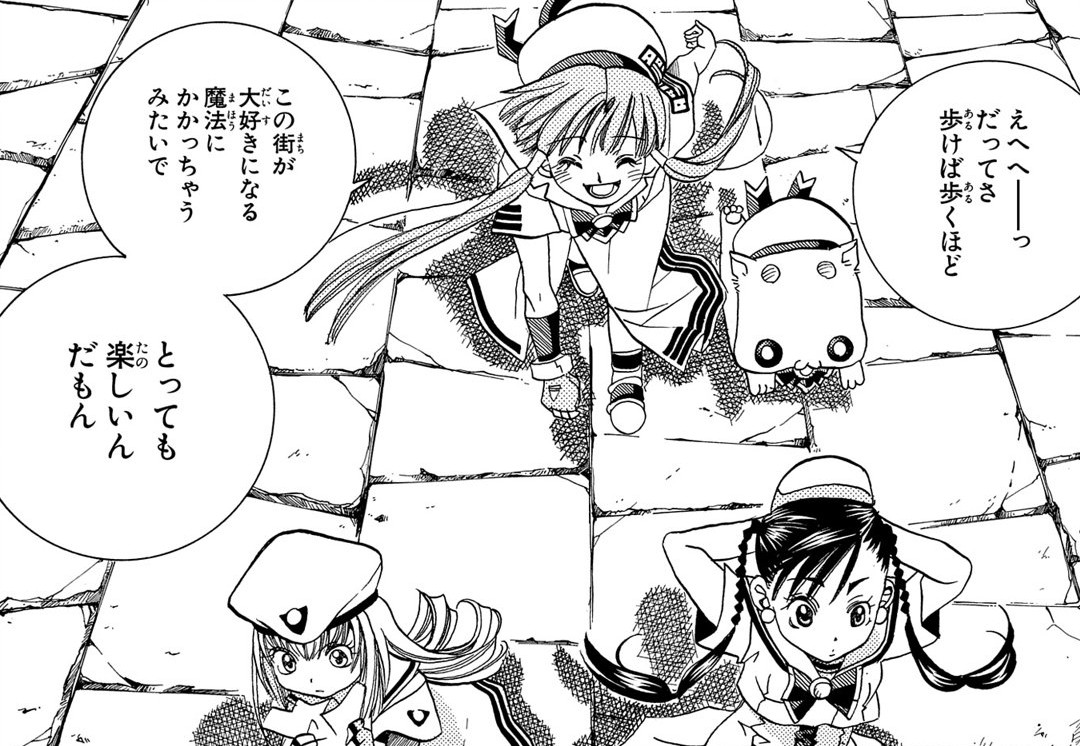
Example 1 of 5: Proportional to the degree of walking to with 〜ば〜ほど
Akari, Aika, and Alice find themselves on a treasure hunt through town, as each map they follow leads them to another map. Aika remarks how Akari is in high spirits.
Akari, Aika, and Alice are on a treasure hunt through the city, and Aika notices how cheerful Akari is. Akari starts with だってさ, “because, like”, and then the rest pours out: the more they walk, the more it feels like a spell that makes her love the city. さ after だって gives her a beat to gather the thought.
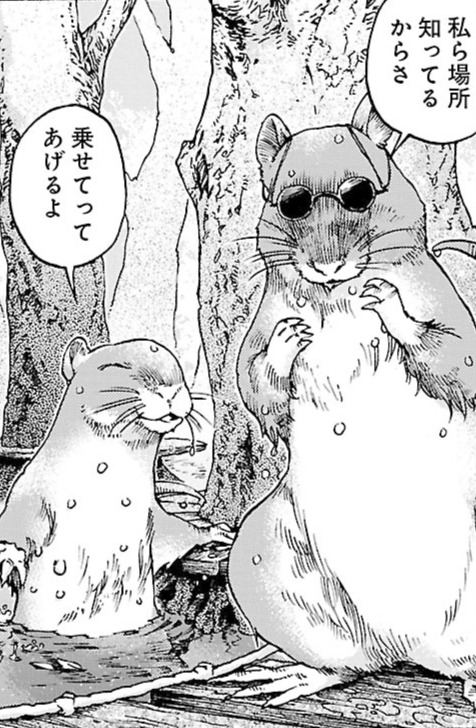
Hakumei and Mikochi can’t find the café they’re looking for, and two rodents pop up out of the water nearby. 私ら場所知ってるからさ is “we know where it is, so”, and the second one finishes the sentence: 乗せてってあげるよ, “we’ll give you a ride”. さ after から marks a pause in the middle of a sentence, here split across two speakers.
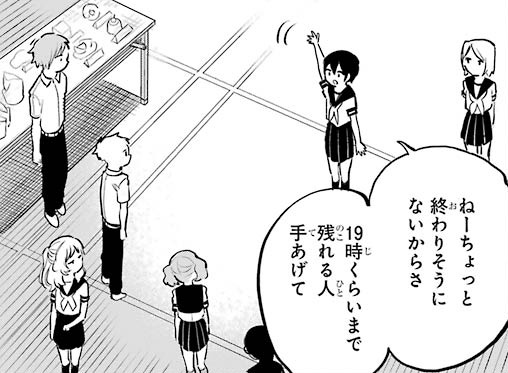
The culture festival is getting close, and the class is in the last stretch of its preparations. It’s almost six in the evening, and Asuka wants to get as much done as possible today.
あすか:
「ねーちょっと終わりそうにないからさ」
“Hey, it doesn't look like we're going to finish, so…”
「19時くらいまで残れる人手あげて」
“Raise your hand if you can stay until around seven.”
Asuka calls out to the whole class during culture festival preparations: 終わりそうにないからさ, “it doesn’t look like we’ll finish, so”. さ after から is a short pause that keeps everyone listening before she gets to the request.
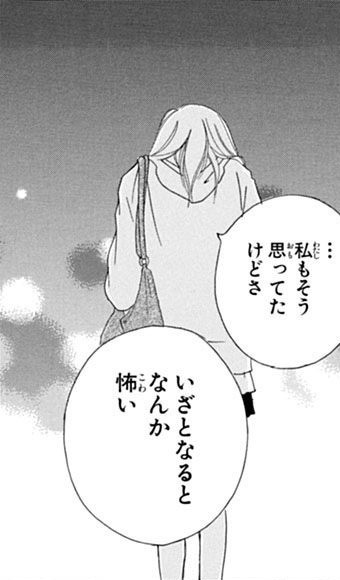
Example 4 of 5: Scared when it comes down to it with いざとなると
Sayu sees her boyfriend Daiki leaning close to another girl’s face, as if kissing her, and runs off. Her friends catch up. One insists Daiki was only getting something out of the girl’s eye, but Sayu keeps asking what she’ll do if they really were kissing. Ninako reminds her that she once said she’d fight anyone who came to take Daiki away.
さゆ:
「…私もそう思ってたけどさ」
“...I thought so too, but...”
「いざとなるとなんか怖い」
“Now that it's actually happening, I'm kind of scared.”
Ninako reminds Sayu that she once vowed to fight for her boyfriend. Sayu answers 私もそう思ってたけどさ, “I thought so too, but”. さ after けど holds the pause before she admits what’s hard to say: now that it’s real, she’s scared.
Example 5 of 5: Wanting an alluring older woman with 〜っぽい
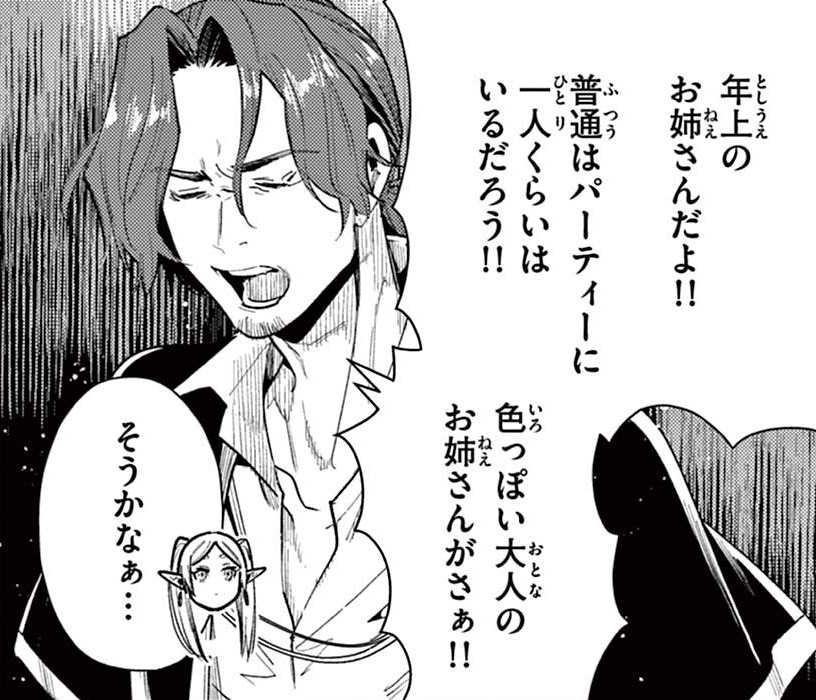
While the party walks through the hills of the northern lands, Sein says the party is missing something and asks the others what it is. Fern suggests a thief, since Frieren keeps falling for mimics, but Sein says what they lack is far more important.
Sein insists every adventuring party needs an older woman, then adds one more description: 色っぽい大人のお姉さんがさぁ!! The stretched-out さぁ after the particle が gives his afterthought a whiny emphasis, like “y’know!”
Passing Along Hearsay with ってさ
At the end of a sentence, 〜ってさ passes along what someone else said: 来ないってさ, “he says he’s not coming”. It’s the quoting って plus さ, and 〜んだってさ means “apparently” or “I heard”. Only the sentence-final ってさ is hearsay. In 宿題があってさ, “there’s this homework, see”, the って is just a て-form followed by filler さ.
With a question word, さ makes a question sound pushy or exasperated. なにさ is “what’s that supposed to mean?”, なんでさ is “why, though?”, and 〜のさ demands an explanation: どうするのさ, “so what are you going to do?” Female characters use them too, especially なにさ.
Stretched into さあ, the word stands alone at the start of a line, with two different jobs. At the start of an action, it gets people moving: さあ、行こう, “come on, let’s go”. As an answer, it’s a shrug: さあね or さあな, “beats me”.
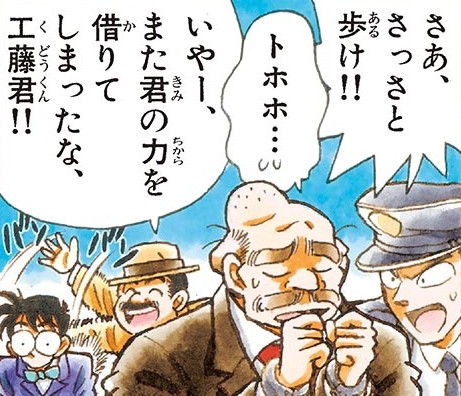
Kudou has helped Inspector Megure solve a murder and caught the culprit as he ran. As an officer leads the culprit away, he orders さあ、さっさと歩け!!, “come on, get moving!” This さあ pushes someone into action.
The shrugging さあ answers a question the speaker can’t or won’t answer. さあね sounds coy, and さあな sounds rougher.