Coming to do with 〜ようになる
Grammar: Time and Sequence » 〜ようになる
〜ようになる says that something is now the case that wasn’t before: someone can now do something, has started doing it as a habit, or a situation has changed. The change usually builds up over time.
With the potential form, it means “became able to”: 泳げるようになった “I learned to swim”.
Usage Notes
ようになる follows a plain, non-past verb: the dictionary form (走るようになる), the potential form (読めるようになる), or the receptive (知られるようになる). Nouns and adjectives don’t take it. They use になる and くなる directly: 医者になる, 寒くなる.
Even with a verb someone chooses to do, ようになる reports the change as something that came about. To talk about the effort behind it, use 〜ようにする.
To say that someone no longer does something, Japanese almost always uses 〜なくなる: 食べなくなった “stopped eating”.
Formation
View formation details
- Verb (dictionary form) + ようになる
- 毎朝走るようになった
- "I've started running every morning."
- Verb (potential form) + ようになる
- 漢字が読めるようになった
- "I've become able to read kanji."
- Verb (receptive) + ようになる
- 彼の名前が知られるようになった
- "His name became known."
- Verb (ない-form, ない → なく) + なる
- 最近、彼は笑わなくなった
- "Lately, he's stopped laughing."
- 〜ようになっている (how something is set up)
- このドアは自動で開くようになっている
- "This door is set up to open automatically."
Becoming Able to Do Something
With a potential verb, ようになる means someone can now do something they couldn’t before. In conversation, this is its most common use. The change can be a skill someone learned, or a new possibility, as when a new service lets people do something.
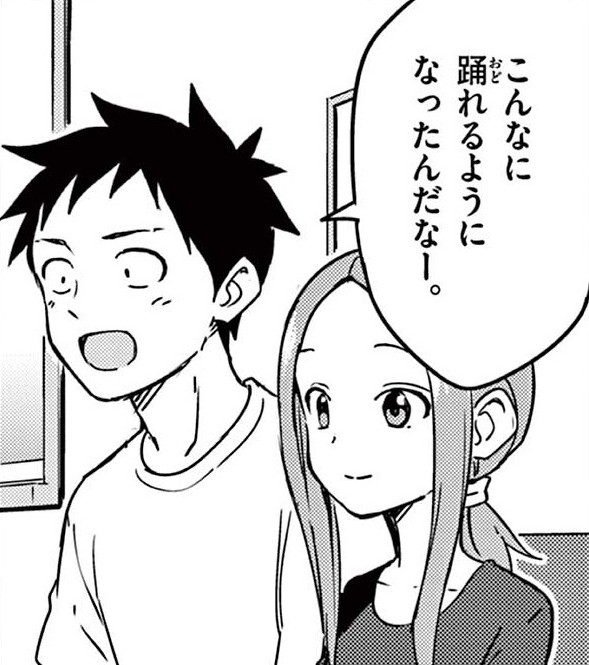
Chii’s preschool recital is coming up, but it falls on a weekday, so her father, Nishikata, has to work. Takagi suggested Chii dance for him the day before. Takagi starts the music and Chii dances.
- 西片:
- 「こんなに踊れるようになったんだなー。」
- “So you can dance this well now.”
Chii’s father can’t come to her preschool recital, so she performs the dance for him at home the day before. When she finishes, Nishikata is moved. 踊れる is the potential of 踊る, so 踊れるようになった is “has learned to dance”. こんなに, “this well”, points at the dance he just watched.
To say you want to be able to do something, put たい on なる: できるようになりたい “I want to be able to do it”. たい can’t attach to できる or any other potential verb, so 泳げたい doesn’t work.
New Habits and Changing Situations
With action verbs, ようになる says something now happens regularly that didn’t before. It might be a habit someone picked up: 母が病気になってから、弟は洗濯を手伝うようになった “Since Mom got sick, my little brother has started helping with the laundry.” It can also be a change in what tends to happen, with no one choosing it. With verbs like 思う, it marks a new state of mind: 〜と思うようになった “came to think”.
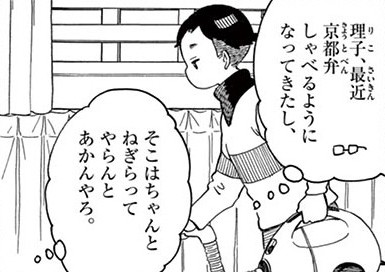
The dance teacher and the house mistress send the maiko off with おきばりやす, “keep up the good work”. Later, over a cup of tea, Tsurukoma decides the phrase sounds cool and wants to say it herself. Watching Riko, the new trainee, vacuum the room, she realizes she could say it to her own junior.
- つる駒:
- 「理子、最近京都弁しゃべるようになってきたし、」
- “Riko's started speaking Kyoto dialect lately...”
- 「そこはちゃんとねぎらってやらんとあかんやろ。」
- “...so I really ought to give her some credit for that.”
Tsurukoma wants an excuse to say おきばりやす, the “keep up the good work” seniors give juniors, and she settles on Riko, the new trainee. 京都弁しゃべるようになる is “start speaking Kyoto dialect”, a new habit. てきた adds that it has been building up gradually, and 最近 “lately” places it in recent weeks.
ようになる describes reaching a new state or settling into a habit. It doesn’t report that someone did something once. For a single trip, “I came to Japan” is 日本に来た. 日本に来るようになった would mean “started coming to Japan regularly”.
Verbs that already describe a change, like 増える “increase”, take ようになる only for an ongoing tendency, not a one-time change. Adverbs like だんだん “gradually” often appear with ようになる. ようになってきた adds てくる to say the change has been building up to now.
No Longer Doing with 〜なくなる
For a change toward not doing something, or no longer being able to, change ない to なく and add なる: 何も言わなくなった “stopped saying anything”, 遊べなくなった “can’t hang out anymore”. 〜ないようになる is grammatical, but it’s rare.
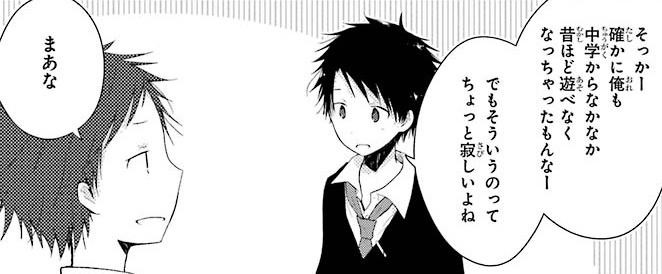
Kohei points out that this is the first time in a while he and Sana have talked this much. Ayumu asks why. Kohei says that between club activities, cram school, and entrance exams, everyone got busy, and they just got together less often.
- 歩:
- 「そっかー 確かに俺も中学からなかなか昔ほど遊べなくなっちゃったもんなー」
- “I see. Come to think of it, since middle school I haven't really been able to hang out as much as I used to, either.”
- 「でもそういうのってちょっと寂しいよね」
- “But that kind of thing is a little lonely, isn't it?”
- 康平:
- 「まあな」
- “I guess.”
Kohei explains that his old friends drifted apart in middle school, once club activities, cram school, and entrance exams filled everyone’s schedules. Ayumu says the same happened to him. 遊べる is “can hang out”, and 遊べなくなる is “stop being able to hang out”. 昔ほど, “as much as before”, makes the change partial: he still hangs out, just less.
How Something Is Set Up with 〜ようになっている
ようになっている can describe how a machine, building, or system is designed to work. It often states what happens under some condition: ボタンを押すとお湯が出るようになっている “It’s set up so that hot water comes out when you press the button.” This use doesn’t say that anything changed.
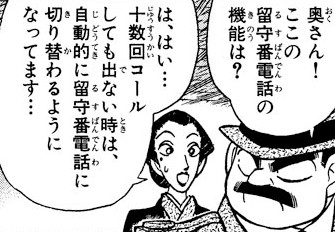
After a suspect recalls that his call to the victim’s house rang many times before the answering machine picked up, Inspector Megure asks the woman of the house how the machine works.
- 目暮:
- 「奥さん!ここの留守番電話の機能は?」
- “Ma'am! How does this answering machine function?”
- 奥さん:
- 「は、はい… 十数回コールしても出ない時は、自動的に留守番電話に切り替わるようになってます…」
- “Well... When nobody answers even after a dozen or so rings, it automatically switches to the answering machine...”
Inspector Megure asks how the answering machine works. The woman of the house explains how it’s set up: when nobody picks up after a dozen or so rings, it switches over to the answering machine automatically. なってます is なっています with the い dropped, which is common in speech.
For the negative, keep ない here: 外から開かないようになっている “it’s made so it won’t open from outside”. 開かなくなっている would mean it has stopped opening.
ようになっている can also mean that a change has happened and still holds: 字が読めるようになってる! “She can read now!” Context decides which reading fits.
Related Grammar
- To end up being with 〜ことになる
- ことになる reports a decision or outcome; ようになる reports a change that built up over time.
- Making an effort to with 〜ようにする
- する means someone deliberately brings the change about; なる means it comes about.
- Able to do with 〜れる・〜られる
- The potential form that ようになる often builds on.