Commanding with 〜たまえ
Grammar: Colloquial and Casual Speech » 〜たまえ
〜たまえ is an expression used to urge or command someone to do something. It is primarily used by a person of higher status toward someone of lower status. It is the imperative form of the auxiliary verb 給う.
Modern everyday conversation rarely uses 〜たまえ, but fiction gives it to old-fashioned or authoritative characters. The form tells you as much about the speaker as it does about the command.
Formation
View formation details
-
五段 verb stem + たまえ
- よく聞きたまえ
- "Listen carefully."
-
一段 verb stem + たまえ
- こちらを見たまえ
- "Look this way."
-
する -> したまえ
- 早くしたまえ
- "Do it quickly."
-
来る -> 来たまえ
- ここへ来たまえ
- "Come here."
たまえ vs. Other Command Forms
Japanese has several was to give a command. Here is where たまえ sits among them:
| Form | Example | Feel |
|---|---|---|
| Plain imperative | 行け | Blunt, rough, aggressive |
| 〜なさい | 行きなさい | Firm but parental/teacherly |
| 〜たまえ | 行きたまえ | Authoritative, old-fashioned, top-down |
| 〜てください | 行ってください | Polite request |
| 〜てくれ | 行ってくれ | Casual request, informal |
Related Grammar
-
The prohibitive な
- A blunt negative command telling someone not to do something.
Examples
Stop joking with 〜たまえ
Grammar Explanation: Commanding with 〜たまえ
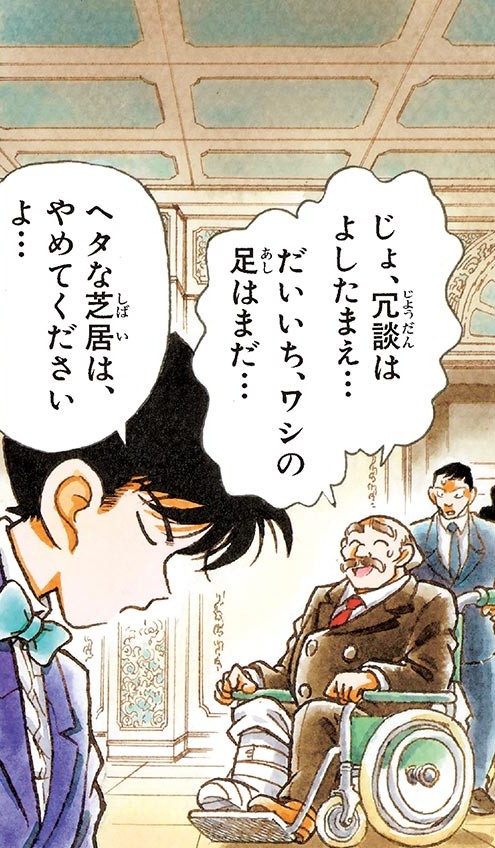
Assisting the police with a murder investigation, Shin’ichi explains how the culprit was able to move without a trace by going out a window and scaling the wall to the next window up. The victim’s husband demands to know who killed his wife, only for Shin’ichi to accuse him.
- 御主人:
- 「じょ、冗談はよしたまえ… だいいち、ワシの足はまだ…」
- “S-stop joking around.... First of all, my leg is still...”
- 新一:
- 「ヘタな芝居は、やめてくださいよ…」
- “Please stop with the lousy acting...”