Connecting actions with 〜て・〜で
Grammar: Time and Sequence » 〜て・〜で
The て-form strings actions into a sequence (「起( お ) きて、食( た ) べて、出( で ) かけた」 “got up, ate, and went out”) and links a verb to the helper verbs that follow it.
Usage Notes
How a verb forms て depends on its last syllable.
Godan endings group into sound families:
う・つ・る become って
む・ぶ・ぬ become んで
く becomes いて
ぐ becomes いで
す becomes して
Ichidan verbs simply add て.
Between clauses, て can mean sequence (“and then”), cause (“and so”), or means (“by doing”), with context deciding. A sentence with a て-form ending is often a soft request (「待( ま ) って!」 “wait!”), with ください left unsaid.
The auxiliary patterns 〜ている, 〜てみる, 〜てしまう, 〜ておく all attach here.
Formation
View formation details
Godan う・つ・る + って
少( すこ ) し待( ま ) って 、それから入( はい ) って"Wait a little, and then go in."
Godan む・ぶ・ぬ + んで
マンガを読( よ ) んで 、寝( ね ) た
"I read manga and went to sleep."
Godan く + いて/ぐ + いで
名前( なまえ ) を書( か ) いて 、出( だ ) してください"Write your name and hand it in."
Note: The one exception is 行( い ) く, which becomes 行( い ) って.
Godan す + して
宿題( しゅくだい ) を出( だ ) して 、帰( かえ ) った"I turned in the homework and went home."
Ichidan + て
朝( あさ ) ご飯( はん ) を食( た ) べて 、学校( がっこう ) に行( い ) く"I eat breakfast and go to school."
Negative 〜ない → 〜なくて
道( みち ) が分( わ ) からなくて 、困( こま ) った"I didn't know the way, so I was stuck."
Note: 〜ないで is used for "without doing" and negative requests.
する → して、来( く ) る → 来( き ) て
電話( でんわ ) し て 、すぐ来( き ) て"Call me, and come right away."
い-adjective + くて
この店( みせ ) は安( やす ) くて 、おいしい
"This shop is cheap and delicious."
Noun / な-adjective + で
彼( かれ ) は元気( げんき ) で 、優( やさ ) しい"He's energetic and kind."
A Sequence of Actions
て strings events in the order they happen, with only the last verb carrying the tense.
ご注文はうさぎですか? »
Volume 1 » Page 50
After Cocoa suggests if she were saying at Chiya’s place rather than Chino’s, that she’s be working for Chiya’s family’s tea house, Chiya takes to the idea.
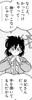
千夜( ちや ) :「じゃあ部屋( へや ) を空( あ ) けておくから早速( さっそく ) 荷物( にもつ ) をまとめて 来( き ) てね」
“Then I'll clear out a room in advance, so go gather your things and come right away.”
ココア:
「誰( だれ ) か止( と ) めてよ!」
“Somebody stop her!”
Challenge Yourself
Show translation
Challenge
What does 千夜( ちや ) mean in the highlighted line?
Clues
空( あ ) けておく空( あ ) けておく means clearing a room and keeping it available
What does the speaker mean?
Then I'll clear out a room in advance, so go gather your things and come right away.
Chiya proposes preparing the room before Cocoa arrives with her belongings.
Chiya says the room will remain occupied when Cocoa arrives.
The highlighted form is 空( あ ) けておく. Here 空( あ ) けておく means clearing a room and keeping it available, so this choice does not match the Japanese.
Chiya tells Cocoa to clear out her own room first.
The highlighted form is 空( あ ) けておく. Here 空( あ ) けておく means clearing a room and keeping it available, so this choice does not match the Japanese.
Chiya plans to prepare the room only after Cocoa moves in.
The highlighted form is 空( あ ) けておく. Here 空( あ ) けておく means clearing a room and keeping it available, so this choice does not match the Japanese.
空( あ ) けておく means clearing a room and keeping it available. Chiya proposes preparing the room before Cocoa arrives with her belongings.
View Full Example
荷物( にもつ ) をまとめて来( き ) て puts the actions in order: gather your belongings, then come.
Linking Descriptions and States
The connecting forms join descriptions. Descriptions may add information or contrast two states.
ふらいんぐうぃっち »
Volume 1 » Page 78
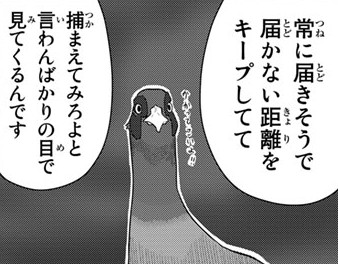
Kei and Chinatsu watch as their cousin, Makoto, chases a pheasant back and forth across the field. During a break in the chase, Makoto explains her fascination with the bird.
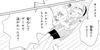
真琴( まこと ) :「常( つね ) に届( とど ) きそうで 届( とど ) かない距離( きょり ) をキープしてて」
“Constantly seeming like you can reach and keeping a distance you can't...”
「捕( つか ) まえてみろよと言( い ) わんばかりの目( め ) で見( み ) てくるんです」
“It's been looking with eyes as if to say, try and catch me!”
Challenge Yourself
Show translation
Challenge
What does Makoto imagine the pheasant's look is saying?
Clues
捕( つか ) まえてみろよa taunting command to try catching it
と言( い ) わんばかりの目( め )
eyes that appear to express those words without speaking
What does the speaker mean?
Try and catch me.
捕( つか ) まえてみろ is a forceful invitation to try catching it, and 言( い ) わんばかり makes that the message of its look.
Stop following me.
Makoto reads the bird's eyes as a challenge to catch it, not a request to end the chase.
You have already caught me.
The command uses 捕( つか ) まえてみろ, telling her to try. It does not describe a completed capture.
Keep your distance from me.
The bird maintains distance, but Makoto imagines that behavior as a teasing challenge to catch it.
I cannot see where you are.
The bird directs its gaze toward Makoto. The line does not suggest that it has lost sight of her.
Follow me out of the field.
The imagined message concerns catching the bird, not leading Makoto to another place.
The pheasant stays barely out of reach and looks at Makoto as though it is daring her to catch it. 言( い ) わんばかり describes a message conveyed by its eyes rather than literal speech.
View Full Example
届( とど ) きそうで届( とど ) かない places opposing descriptions of the distance together. It seems within reach, yet Makoto cannot reach it.
三ツ星カラーズ »
Volume 5 » Page 115
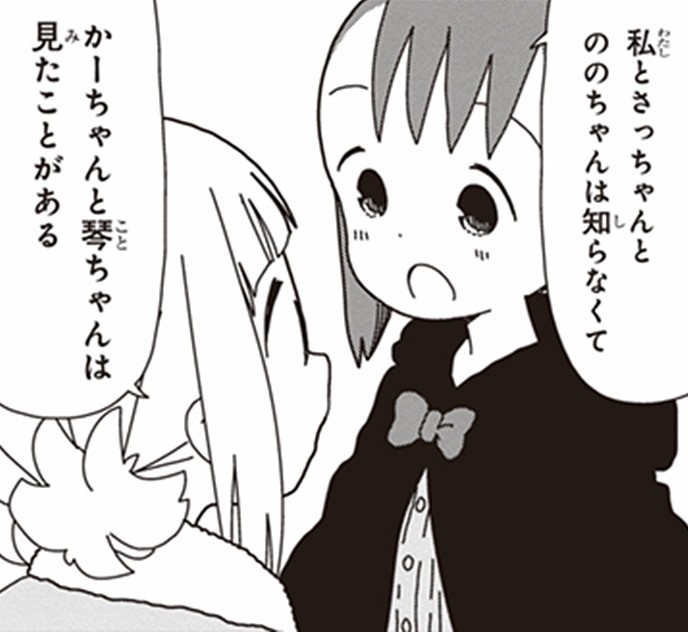
Sacchan and her friends come across a torn piece of paper with 「あたり100」 written on it. Thinking it may be for a 100,000 yen prize, the girls head to the shopping district to redeem it. Along the way, their friend Nonoko says she doesn’t recognize where the ticket is from, but Sacchan’s mother says it looks familiar somehow. Kotoha admits it seemed familiar to her as well, but she thought it was just her imagination until now.
結衣( ゆい ) :「私( わたし ) とさっちゃんとののちゃんは知( し ) らなくて 」
“Even though Sacchan, Nono-chan, and I don't know it...”
さっちゃん:
「かーちゃんと琴( こと ) ちゃんは見( み ) たことがある」
“My mom and Koto-chan have seen it before.”
Challenge Yourself
Show translation
Challenge
Who does Sacchan say has seen the mysterious ticket before?
Clues
私( わたし ) とさっちゃんとののちゃんは知( し ) らなくてYui, Sacchan, and Nono-chan do not recognize it
かーちゃんと琴( こと ) ちゃんは見( み ) たことがある
Mom and Koto-chan have seen it before
What does the speaker mean?
Sacchan's mother and Kotoha.
かーちゃんと琴( こと ) ちゃん are the people marked as having the experience 見( み ) たことがある.
Yui, Sacchan, and Nono-chan.
Those three are followed by 知( し ) らなくて, so they do not recognize it.
Only Sacchan's mother.
と joins かーちゃん and 琴( こと ) ちゃん as two people with the experience.
Only Kotoha.
Sacchan includes both Kotoha and her mother.
Yui and Kotoha.
Yui places herself among those who do not know it, while Kotoha is in the experienced group.
Sacchan and her mother.
Sacchan says she does not recognize it. Her mother and Kotoha do.
Sacchan divides the group in two. Yui, Sacchan, and Nono-chan do not recognize the ticket, but Sacchan’s mother and Kotoha have seen it before.
View Full Example
知( し ) らなくて uses the connecting negative of 知( し ) らない. Yui names the girls who do not recognize the ticket. Sacchan follows with the people who have seen it.
Cause and Effect
When the first clause explains the second, て or で reads as “and so”. A speaker can end on the connecting form and leave the result implied. The result may precede a reason that ends in て.
好きな子がめがねを忘れた »
Volume 1 » Page 12
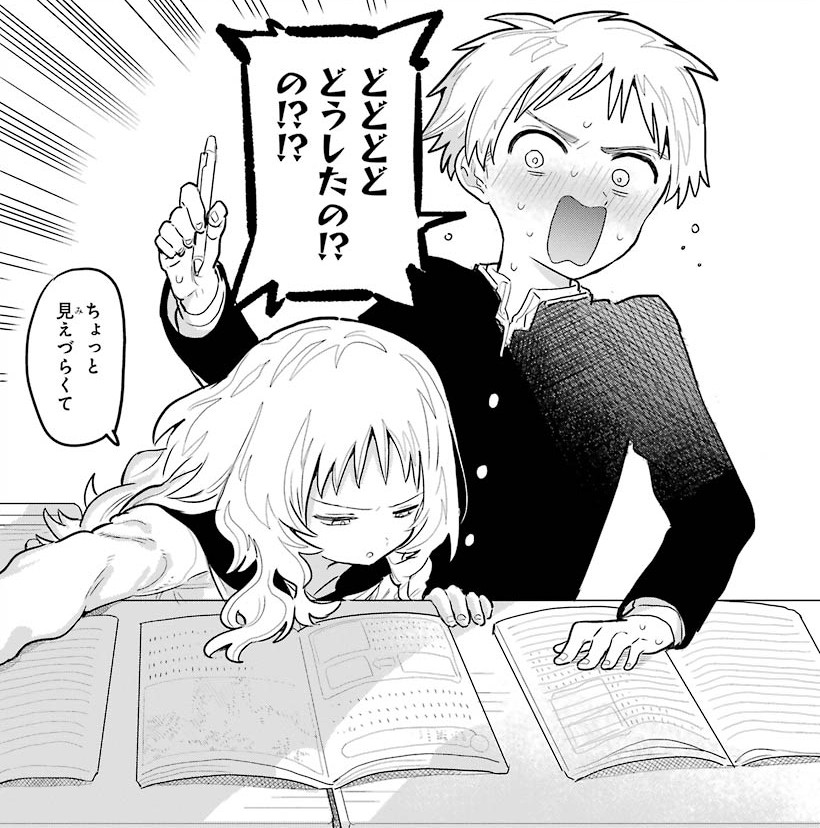
Komura shares his history book with Mie. Since Mie forgot her glasses, she leans in as she strains to see the material written in the book.
小村( こむら ) :「どどどど どうしたの!? の!?!?」
“Wh-wh-what's wrong?!”
三重( みえ ) :「ちょっと見( み ) えづらくて 」
“It's a bit difficult to see...”
Challenge Yourself
Show translation
Challenge
Why does Mie lean closer to Komura's book?
Clues
ちょっと
a little
見( み ) えづらくてbecause it is difficult to see
What does the speaker mean?
She is having trouble seeing the text.
見( み ) えづらい says that the writing is physically difficult for her to make out.
She wants Komura to stop reading.
Mie explains a problem with seeing, not an objection to the book.
She cannot hear what Komura is saying.
The difficulty comes from 見( み ) える, to be visible, rather than hearing.
She has already finished the assignment.
Her unfinished て-form explains why she needs to move closer now.
She thinks the book belongs to someone else.
Nothing in the line questions ownership. She is trying to read the shared page.
She dislikes the history lesson.
〜づらい describes practical difficulty here, not dislike of the subject.
Mie leans close because she is having trouble seeing the text without her glasses. The trailing づらくて leaves that consequence for Komura to infer.
View Full Example
見( み ) えづらくて presents poor visibility as the reason Mie leans closer. She leaves that result unspoken, as she’s responding to Komura’s question.
ARIA The MASTERPIECE »
Volume 3 » Page 96
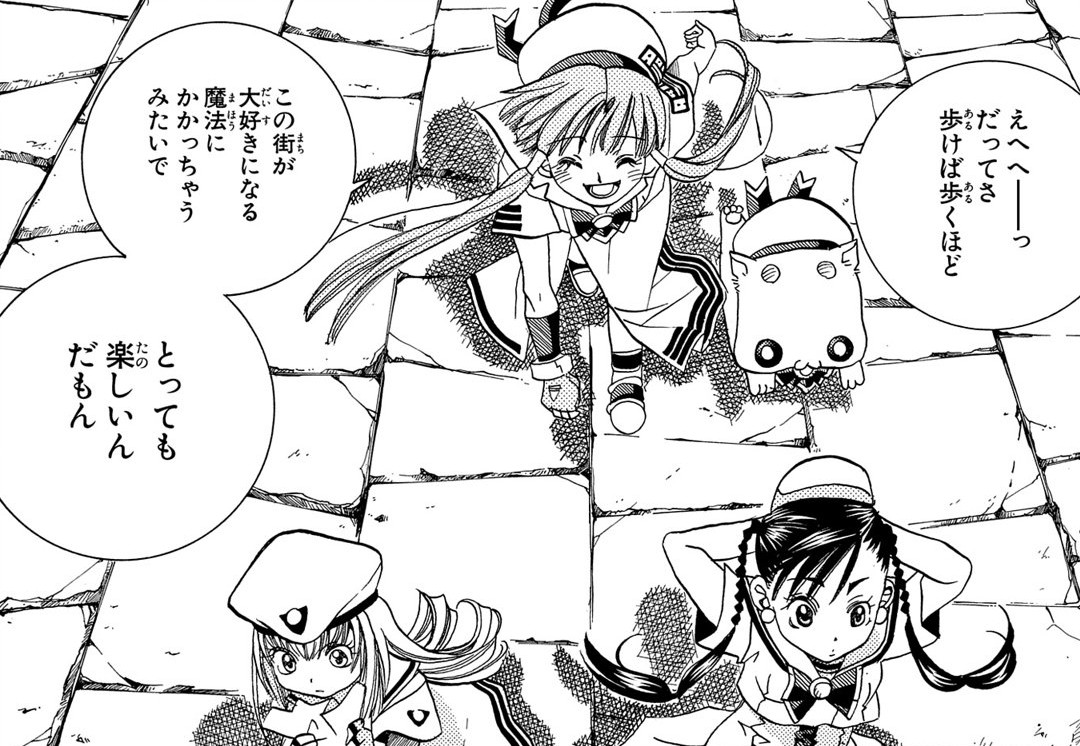
Akari, Aika, and Alice find themselves on a treasure hunt through town, as each map they follow leads them to another map. Aika remarks how Akari is in high spirits.
灯里( あかり ) :「えへへーーっ だってさ歩( ある ) けば歩( ある ) くほどこの街( まち ) が大好( だいす ) きになる魔法( まほう ) にかかっちゃうみたいで とっても楽( たの ) しいんだもん」
“Ehehe, that's because the more we walk, it's like falling under the spell of loving this city. It's very enjoyable!”
View Full Example
みたいで is the connecting form of the noun-like みたいだ. Akari feels as though the town has enchanted her, and that impression explains why she finds the walk fun.
The Means of Doing Something
て can tell how the main action is carried out.
ご注文はうさぎですか? »
Volume 1 » Page 23
Cocoa asks Chino where her rabbit, Tippy, is. Chino explains that Tippy is watching over the bar with her father.
ココア:
「そっかー」
“I see.”
「ぎゅーってして 寝( ね ) たかったのになー」
“I wanted to sleep while hugging her tight, though.”
チノ:
「ティッピーは抱( だ ) き枕( まくら ) じゃないですよ」
“Tippy isn't a body pillow.”
Challenge Yourself
Show translation
Challenge
Which interpretation best matches the highlighted line?
Clues
寝( ね ) たかった寝( ね ) たかった expresses an unrealized past desire
What does the speaker mean?
I wanted to sleep while hugging her tight, though.
寝( ね ) たい becomes past 寝( ね ) たかった, so Cocoa says she had wanted to sleep with Tippy.
Cocoa says Tippy wanted to sleep while hugging her.
The highlighted form is 寝( ね ) たかった. Here 寝( ね ) たかった expresses an unrealized past desire, so this choice does not match the Japanese.
Cocoa says she is currently asleep with Tippy.
The highlighted form is 寝( ね ) たかった. Here 寝( ね ) たかった expresses an unrealized past desire, so this choice does not match the Japanese.
Cocoa refuses to cuddle Tippy because he is not a pillow.
The highlighted form is 寝( ね ) たかった. Here 寝( ね ) たかった expresses an unrealized past desire, so this choice does not match the Japanese.
寝( ね ) たかった expresses an unrealized past desire. 寝( ね ) たい becomes past 寝( ね ) たかった, so Cocoa says she had wanted to sleep with Tippy.
View Full Example
ぎゅーってして tells how Cocoa wanted to sleep: she wanted to do it while hugging Tippy tight. して connects the hug to 寝( ね ) たかった.
ご注文はうさぎですか? »
Volume 1 » Page 91
During a library study session with her friends, Syaro wonders what it would be like if she attended Cocoa and Chiya’s school. She does attend the same school as Rize, but they are in different grades.
千夜( ちや ) :「んー…正直( しょうじき ) 窮屈( きゅうくつ ) よね」
“Hmm... Honestly, it feels stifling.”
「私( わたし ) だったら周( まわ ) りがお嬢様( じょうさま ) だらけで気( き ) を遣( つか ) って 疲( つか ) れちゃう」
“If it were me, I'd get tired of surroundings filled with rich girls and having to act proper.”
Challenge Yourself
Show translation
Challenge
Which interpretation best matches the highlighted line?
Clues
お嬢様( じょうさま ) だらけ
お嬢様( じょうさま ) だらけ means filled with rich girls
What does the speaker mean?
If it were me, I'd get tired from being surrounded by rich girls and watching my manners.
だらけ attaches to the noun before it and says the surroundings are covered or full of that thing.
Chiya says she would enjoy being surrounded by rich girls.
The highlighted form is お嬢様( じょうさま ) だらけ. Here お嬢様( じょうさま ) だらけ means filled with rich girls, so this choice does not match the Japanese.
Chiya says the school is literally covered in expensive decorations.
The highlighted form is お嬢様( じょうさま ) だらけ. Here お嬢様( じょうさま ) だらけ means filled with rich girls, so this choice does not match the Japanese.
Chiya says Rize gets tired from taking care of all the students.
The highlighted form is お嬢様( じょうさま ) だらけ. Here お嬢様( じょうさま ) だらけ means filled with rich girls, so this choice does not match the Japanese.
お嬢様( じょうさま ) だらけ means filled with rich girls. だらけ attaches to the noun before it and says the surroundings are covered or full of that thing.
View Full Example
気( き ) を遣( つか ) って tells how Chiya would wear herself out: by watching her manners around the other students. The preceding だらけで also links her surroundings to that action.
Connecting to Helper Verbs
A helper verb after the て-form adds meaning such as an attempt, preparation, or an unintended result. The helper carries tense and mood for the combined predicate.
ご注文はうさぎですか? »
Volume 1 » Page 40
Cocoa shows off the bread she made.
ココア:
「じゃーんティッピーパン作( つく ) って みたんだ」
“Ta-da, I tried making Tippy bread.”
リゼ:
「看板( かんばん ) メニューはこれで決定( けってい ) だな」
“That settles our signature menu item, then.”
Challenge Yourself
Show translation
Challenge
What does ココア mean in the highlighted line?
Clues
作( つく ) ってみた作( つく ) ってみた reports a completed attempt
What does the speaker mean?
Ta-da, I tried making Tippy bread.
Cocoa tried making bread shaped like Tippy and now presents the result.
Cocoa says she plans to make Tippy bread someday.
The highlighted form is 作( つく ) ってみた. Here 作( つく ) ってみた reports a completed attempt, so this choice does not match the Japanese.
Cocoa says she bought the Tippy bread from another bakery.
The highlighted form is 作( つく ) ってみた. Here 作( つく ) ってみた reports a completed attempt, so this choice does not match the Japanese.
Cocoa asks Chino to try making Tippy bread for her.
The highlighted form is 作( つく ) ってみた. Here 作( つく ) ってみた reports a completed attempt, so this choice does not match the Japanese.
作( つく ) ってみた reports a completed attempt. Cocoa tried making bread shaped like Tippy and now presents the result.
View Full Example
作( つく ) って connects making bread to みた. Cocoa uses みた to frame the action as a completed attempt.
ご注文はうさぎですか? »
Volume 1 » Page 78
As Chino gathers her things after school, she recalled that Cocoa will be making stew for dinner.
チノ:
「にんじん以外( いがい ) を伝( つた ) えて おこう」
“I'll let her know in advance everything except carrots.”
◯:
「またねー」
“See you!”
◯:
「バイバーイ」
“Bye-bye!”
Challenge Yourself
Show translation
Challenge
伝( つた ) えておこう伝( つた ) えておこう means deciding to tell her in advance
What does the speaker mean?
I'll let her know in advance everything except carrots.
Chino plans to send the ingredient information before Cocoa shops for the stew.
Chino decides to tell Cocoa that carrots are the only ingredient she wants.
The highlighted form is 伝( つた ) えておこう. Here 伝( つた ) えておこう means deciding to tell her in advance, so this choice does not match the Japanese.
Chino says she already gave Cocoa the list after the shopping was finished.
The highlighted form is 伝( つた ) えておこう. Here 伝( つた ) えておこう means deciding to tell her in advance, so this choice does not match the Japanese.
Chino decides not to tell Cocoa anything about the ingredients.
The highlighted form is 伝( つた ) えておこう. Here 伝( つた ) えておこう means deciding to tell her in advance, so this choice does not match the Japanese.
伝( つた ) えておこう means deciding to tell her in advance. Chino plans to send the ingredient information before Cocoa shops for the stew.
View Full Example
伝( つた ) えて connects telling Cocoa to おこう. Chino uses おく to place the action before the shopping trip and おこう to put the combined predicate in the volitional form.
A Bare て as a Request
Dialogue constantly clips 〜てください down to just the て-form.
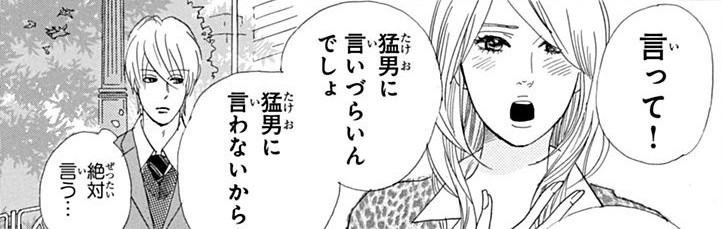
俺物語!! »
Volume 1 » Page 141
Takeo feels Rinko is keeping something from him, but can’t figure out what. Makoto and Ai meet with Rinko to confront her about it.
愛( あい ) :「言( い ) って ! 猛男( たけお ) に言( い ) づらいんでしょ? 猛男( たけお ) に言( い ) わないから!」
“Tell me! It's difficult to say to Takeo, right? But I won't tell Takeo!”
誠( まこと ) :「絶対( ぜったい ) 言( い ) う…」
“She'll definitely tell him...”
Challenge Yourself
Show translation
Challenge
How does Ai try to persuade Rinko to open up?
Clues
猛男( たけお ) に言( い ) いづらいんでしょit is difficult to say to Takeo, right
猛男( たけお ) に言( い ) わないからI will not tell Takeo, so it is safe to tell me
What does the speaker mean?
She promises not to tell Takeo what Rinko says.
言( い ) わない is the negative promise, and sentence-final から offers it as reassurance.
She promises to tell Takeo on Rinko's behalf.
Ai says 言( い ) わない, so she promises the opposite.
She tells Rinko that speaking to Takeo should be easy.
言( い ) いづらい recognizes that Rinko finds it difficult to tell him.
She asks Rinko to keep the matter secret from Makoto.
The person named in both clauses is Takeo, not Makoto.
She says Takeo already knows what Rinko is hiding.
Ai treats the matter as something Rinko has not told Takeo.
She refuses to hear anything about Takeo.
The opening 言( い ) って urges Rinko to tell her.
Ai recognizes that Rinko finds the subject hard to discuss with Takeo. She urges Rinko to tell her instead and promises she will not pass it on to him.
View Full Example
Ai’s opening 言( い ) って is a bare request to speak. Her forceful tone supplies the command, and adding ください would make it polite.
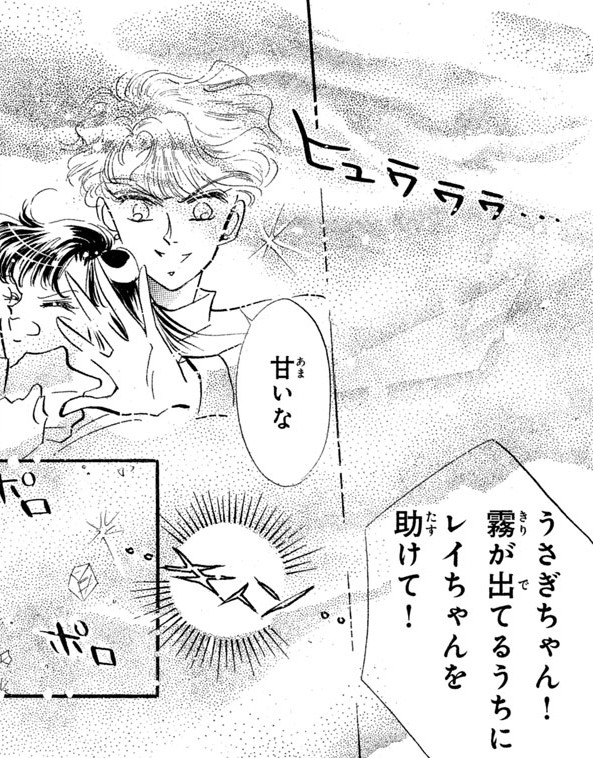
美少女戦士セーラームーン »
Volume 1 » Page 117
Jadeite captures the priestess Rei. Ami uses an ability to fill the area with fog, giving Usagi a chance to act.
亜美( あみ ) :「うさぎちゃん!霧( きり ) が出( で ) てるうちにレイちゃんを助( たす ) けて !」
“Usagi! (Take the opportunity to) rescue Rei while it's foggy!”
Challenge Yourself
Show translation
Challenge
What does Ami tell Usagi to do while the fog remains?
Clues
霧( きり ) が出( で ) てるうちにthe fog creates a limited window before the condition changes
レイちゃんを助( たす ) けて
Ami tells Usagi to rescue Rei
What does the speaker mean?
Rescue Rei before the fog clears.
霧が出てるうちに sets the temporary window, and レイちゃんを助けて gives the action Usagi must take.
Wait inside the fog until Rei escapes by herself.
Ami directly tells Usagi to rescue Rei. She does not ask her to wait.
Clear the fog so that Rei can see the enemy.
The fog is helping conceal Usagi's action, so うちに means she should act while it is still present.
Ask Rei to create more fog before attacking.
Ami created the opportunity and addresses Usagi. The requested action is rescuing Rei.
Leave Rei behind and escape while visibility is poor.
レイちゃんを助けて explicitly tells Usagi to save Rei, not abandon her.
Find out whether the fog has already disappeared.
出てる describes the fog as currently present. The line urges immediate action during that state.
Ami tells Usagi to use the fog as temporary cover and rescue Rei before it clears. 霧が出てるうちに marks the limited opportunity, and 助けて gives the urgent action.
View Full Example
助( たす ) けて is a direct request to rescue Rei while the fog remains. The urgent situation makes ください unnecessary.
Supplemental Examples
Try finding this grammar in the following examples: