After a complete clause, が means “but”. この店は高いが、おいしい means “this place is expensive, but the food is good”. The first clause states one fact, and the second goes against what you’d expect from it.
が doesn’t always contrast. In すみませんが、ちょっといいですか, “excuse me, but do you have a moment?”, the first clause just opens a request. A sentence can also end in が and leave the second half unsaid.
Usage Notes
This が follows a clause, not a noun. Verbs and い-adjectives take it directly, in plain or polite form. Nouns and な-adjectives need だ or です first, as in 雨だが. The subject marker が comes right after a noun, as in 雨が降る, so the word before が tells you which one you’re reading.
が and けど do the same job, but が sounds more formal. It’s common in writing, in narration, and in polite speech as ですが and ますが. Plain だが in conversation sounds stiff or dramatic, and in manga it mostly comes from older men and characters acting tough. Casual speech uses けど or だけど.
が states a contrast without taking a side. のに also joins two facts that clash, but it adds surprise or frustration.
Formation
View formation details
Verb + が
待ったが、誰も来なかった
"I waited, but nobody came."
Verb (polite) + が
探しましたが、見つかりませんでした
"I looked, but I couldn't find it."
い-adjective + が
この店は高いが、おいしい
"This place is expensive, but the food is good."
Note: The polite form is 高いですが.
Noun + だが・ですが
雨だが、出かける
"It's raining, but I'm going out."
Note: Without だ or です, 雨が is the subject marker.
な-adjective + だが・ですが
静かだが、不便だ
"It's quiet, but it's inconvenient."
だが・ですが at the start of a sentence
だが、もう遅い
"But it's too late now."
Note: ですが is the polite version. Writing also uses が on its own.
Opening a request with が
すみませんが、窓を開けてもいいですか
"Excuse me, but may I open the window?"
Ending a sentence with が
ちょっとお願いしたいんですが…
"I'd like to ask a favor, but..."
Note: The listener fills in the rest, such as "do you have a moment?"
Joining Two Clauses with が
The part before が is a complete sentence. It could end right there. が adds a second sentence that pulls the other way.
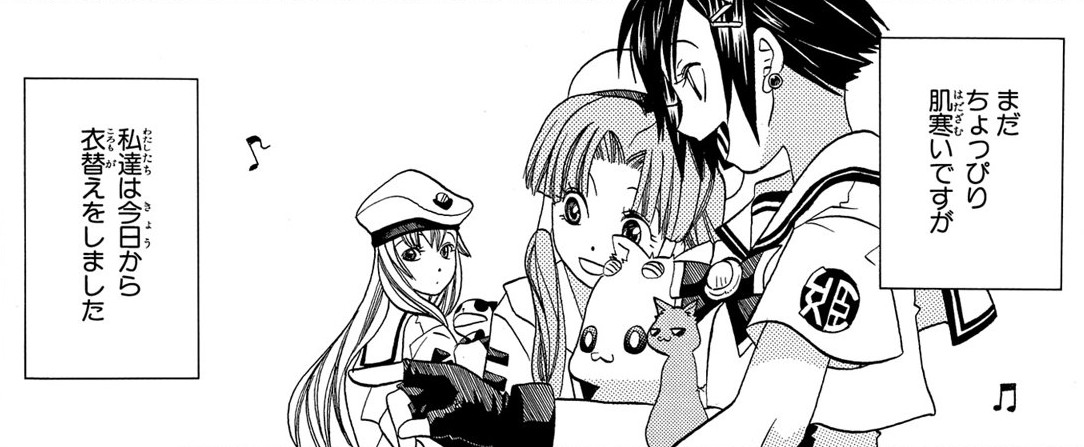
Example 1 of 3: Even though it's still chilly with 〜が〜
Akari’s narration opens a new chapter. She, Aika, and Alice have switched to their summer uniforms. 衣替え is the seasonal change of clothes, and in Japan schools and many workplaces switch on a set date, whatever the weather. まだちょっぴり肌寒いです, “it’s still a little chilly”, could stand alone. が turns to what they did anyway.
Akari narrates in polite style, so her first clause ends in です. In plain style it would be 肌寒いが.
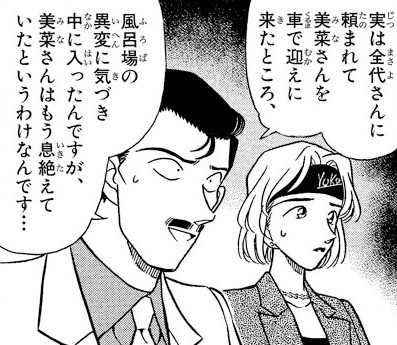
Example 2 of 3: How the body was found with というわけなんです
Kogoro lost his ticket to Yoko Okino’s concert. A woman named Masayo gave him a spare on one condition, that he drive her to pick up her sister Mina, who hadn’t shown up. At the house they found the bathroom taped shut from the inside, forced the door, and found Mina dead with a cut wrist. Now Inspector Megure has arrived, and Kogoro tells him why he was there.
小五郎:
「実は全代さんに頼まれて美菜さんを車で迎えに来たところ、」
“You see, Masayo asked me to come pick up Mina in my car, and when we got here...”
「風呂場の異変に気づき中に入ったんですが、美菜さんはもう息絶えていたというわけなんです…」
“...we noticed something wrong with the bathroom and went in, but Mina-san was already dead. That's how it happened...”
Kogoro tells Inspector Megure how they found the body. 中に入ったんです, “we went in”, could end there. が turns to what they found inside: Mina was already dead.
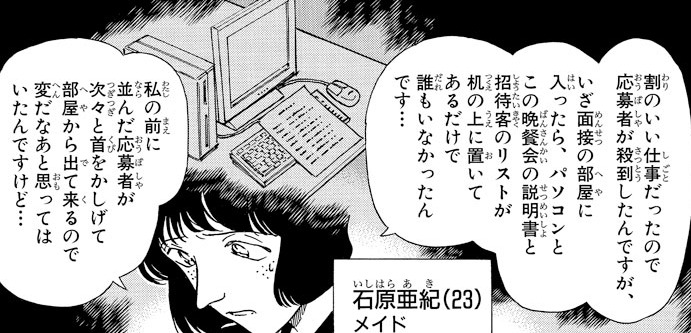
Example 3 of 3: Nobody in the interview room with いざ入ったら
Kogoro, Ran, and Conan have arrived at a remote mansion whose owner has invited several famous detectives to dinner. The maid who greets them admits she has never met the owner. Asked about the guest list, she says she was given it at her job interview, and that the interview was a strange one.
“It paid well, so applicants came flooding in. But when I actually went into the interview room, there was just a computer, instructions for this dinner party, and the guest list on the desk. Nobody was there…”
「私の前に並んだ応募者が次々と首をかしげて部屋から出て来るので変だなあと思ってはいたんですけど…」
“The applicants in line ahead of me came out of the room one after another, looking puzzled, so I did think it was odd…”
The maid at a remote mansion explains how she got her job. 殺到したんです, “applicants came flooding in”, could end there. が turns to what she found when her turn came: an interview room with nobody in it.
Admitting One Thing, Then Turning
Often the first clause concedes something. The second clause is what the speaker actually cares about.
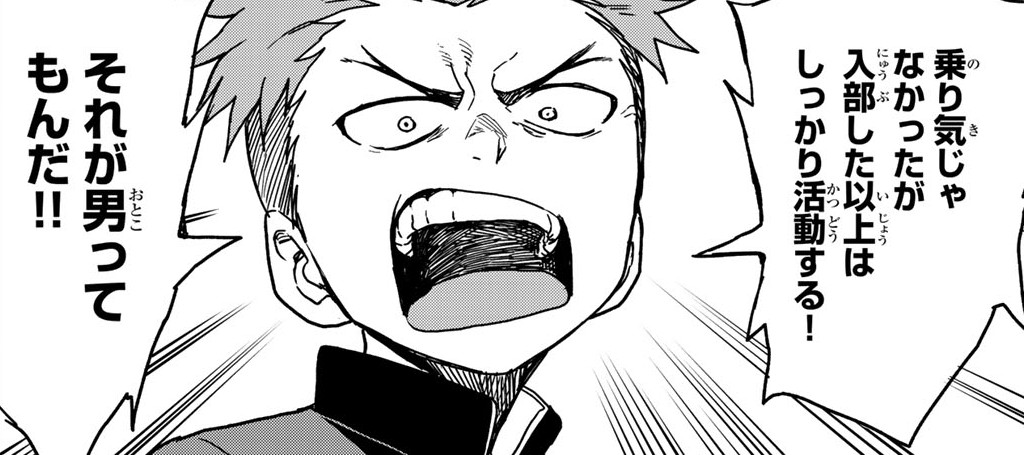
Example 1 of 3: Enthusiasm for shogi club with 乗り気
Sakurako forces Takeru to join the shogi club. When he suggests she join as well, she refuses and tells him not to go either, or else he’ll be in the way there.
タケル:
「乗り気じゃなかったが入部した以上はしっかり活動する!」
“I wasn't enthusiastic, but now that I'm in the club, I'll work hard!”
Takeru never wanted to join the shogi club, and 乗り気じゃなかった admits it. After が comes his new attitude. 入部した以上は means “now that I’ve joined”, and しっかり活動する means he’ll take the club seriously. His reluctance doesn’t go away. It just stops mattering.
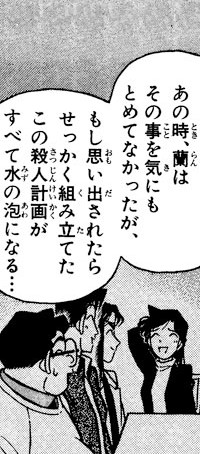
Example 2 of 3: All that murder planning for nothing with 水の泡になる
Example 2 of 3
The past negative じゃなかった takes が directly. So does any plain ending, such as 行かない or 寒かった.
“Ran didn't think anything of it at the time, but if she remembered it, all the murderous plans he worked so hard on putting together would go up in smoke.”
Conan is explaining why the culprit went after Ran. She saw something that gives the culprit away, but at the time she didn’t think twice about it. That first clause is the good news, from the culprit’s side. After が comes the danger. もし思い出されたら, “if she remembered”, would wreck the whole plan.
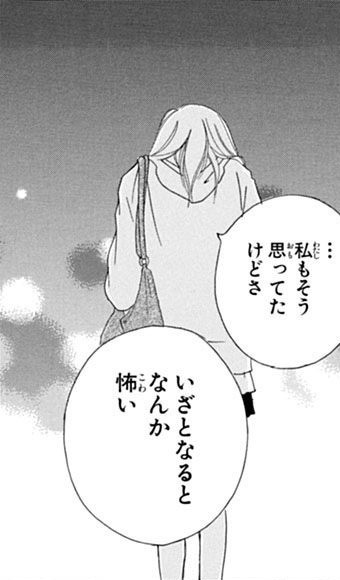
Example 3 of 3: Scared when it comes down to it with いざとなると
Sayu sees her boyfriend Daiki leaning close to another girl’s face, as if kissing her, and runs off. Her friends catch up. One insists Daiki was only getting something out of the girl’s eye, but Sayu keeps asking what she’ll do if they really were kissing. Ninako reminds her that she once said she’d fight anyone who came to take Daiki away.
さゆ:
「…私もそう思ってたけどさ」
“...I thought so too, but...”
「いざとなるとなんか怖い」
“Now that it's actually happening, I'm kind of scared.”
Ninako reminds Sayu that she once vowed to fight anyone who tried to take her boyfriend. Sayu concedes the point first: 私もそう思ってた, “I thought so too”. After けど comes what she feels now: いざとなるとなんか怖い, “now that it’s actually happening, I’m kind of scared.”
Starting a Sentence with だが and ですが
だが can open a sentence. It points back at whatever was just said, like “but” or “however”. The polite version is ですが.
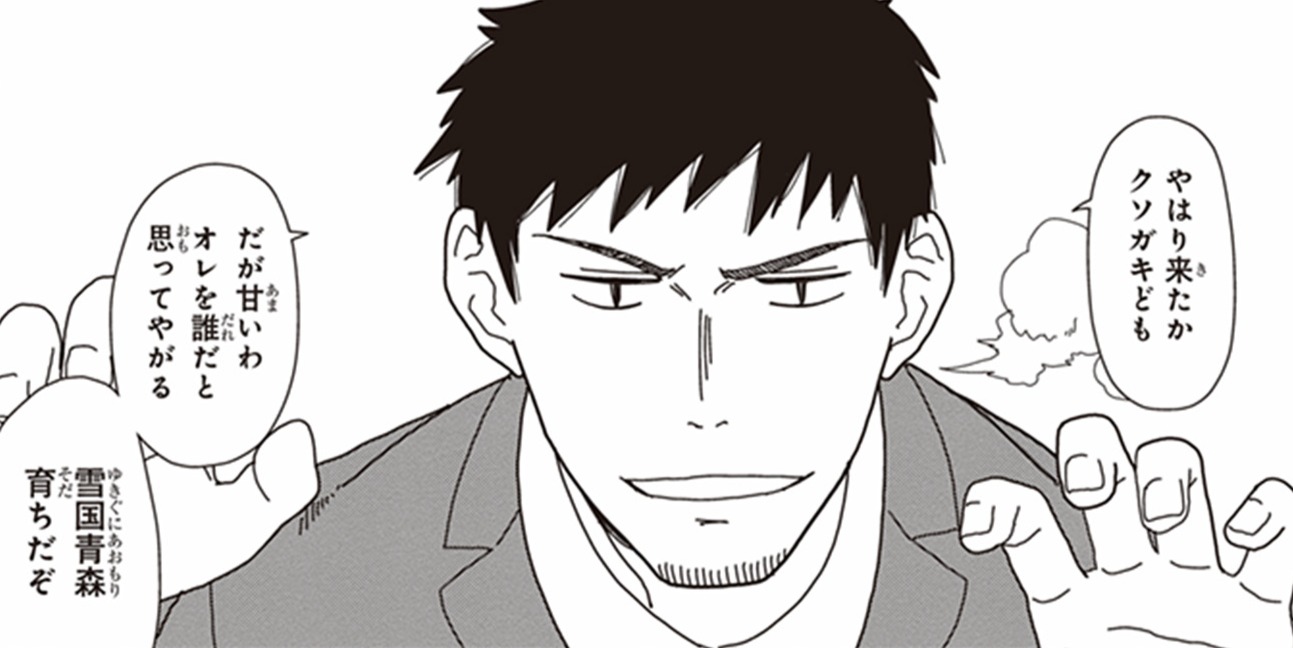
Sacchan, Yui, and Kotoha play in the snow in various ways. After running out of things to do, Sacchan comes up with an idea. They head over to Officer Saitou and greet him with snowballs in hand.
斎藤:
「やはり来たか クソガキども」
“So you came after all, you little brats.”
「だが甘いわ オレを誰だと思ってやがる」
“But you underestimate me! Just who do you think I am?”
Sacchan, Yui, and Kotoha run out of snow games and go after Officer Saitou with snowballs. He was expecting them, as やはり来たか, “so you came after all”, shows. Then だが turns the scene around. 甘い here means “naive”. The girls think they can win a snowball fight against a man who grew up in snowy Aomori.
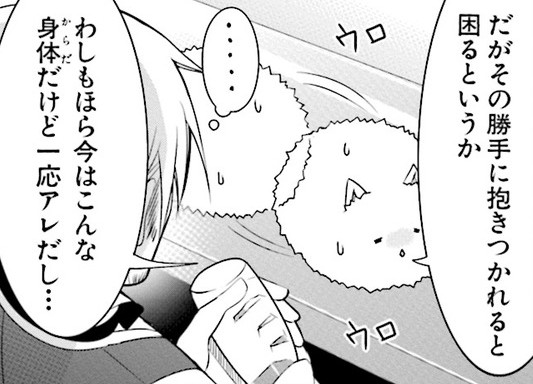
Example 2 of 5: Receiving an embrace with 〜れる
Example 2 of 5
だが sounds stiff in casual speech, and Saitou uses it on purpose. He’s talking like a villain who saw the heroes coming.
Tippy talks about how Cocoa might be just the friend Chino needs. だが brings up Tippy’s own problem. Cocoa hugs him whenever she feels like it, 勝手に抱きつかれる, and he finds that awkward.
Example 3 of 5: Determining the cause of death with 解剖
Example 3 of 5
His next line has だけど in the middle. わしもほら今はこんな身体だけど means “I may have a body like this now, but”. 一応アレだし is his hint that he’s still a grown man. Both lines say “but”. だが sounds older and more formal, which suits a grandfather who calls himself わし. だけど is what anyone would say.
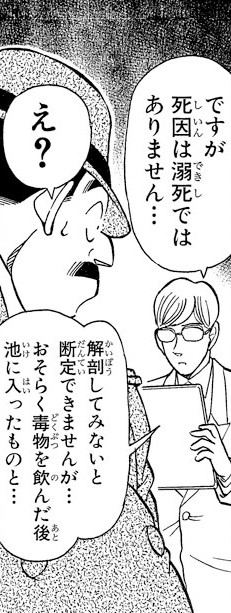
Inspector Megure thinks the suspect drowned in a suicide. The medical examiner disagrees. Speaking to a police inspector, the examiner opens with the polite ですが. The cause of death wasn’t drowning. The next line has が in the middle. 解剖してみないと断定できませんが means “I can’t say for sure without an autopsy, but”. It’s a hedge, and the guess follows it. おそらく毒物を飲んだ後池に入った means the suspect probably took poison and then went into the pond.
Example 4 of 5: Not just Machisu, but also Kyou with 〜だけでなく〜も
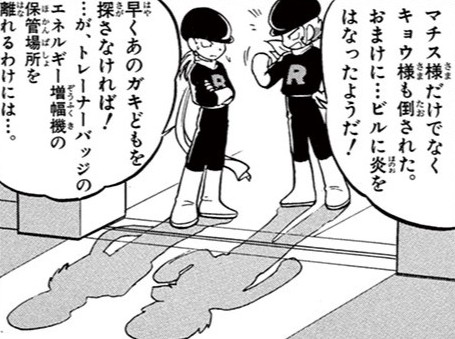
After infiltrating a Team Rocket hideout, Red, Green, and Blue take on the various Gym Leaders inside, including Machisu, Natsume, and Kyou. A couple of Team Rocket grunts discuss the fallout.
したっぱ 1:
「マチス様だけでなくキョウ様も倒された。 おまけに…ビルに炎をはなったようだ!」
“Not only Master Machisu, but Master Kyou was defeated too. On top of that... it looks like they set fire to the building!”
Red, Green, and Blue have beaten the Gym Leaders inside a Team Rocket hideout, and the building is on fire. One grunt says they have to find the kids. Then he stops himself with …が、, “but”. が can open a sentence even without だ in front of it. They can’t leave the energy amplifier unguarded.
Example 5 of 5: Human magic won't stand a chance with 〜まい
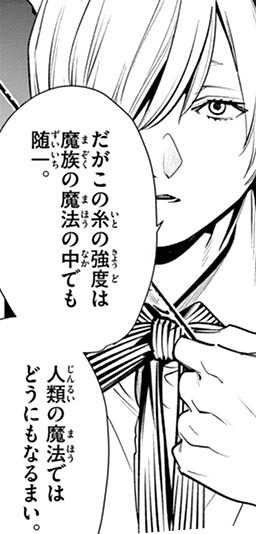
The demon Draht has slipped into the town jail where Frieren is held, intending to kill her. He wrapped invisible threads of mana around her neck and pulled to behead her, but she blocked the cut by concentrating her mana in her neck. Draht admits she kept her cool and warns that an ordinary mage would have lost their head before realizing what was happening.
ドラート:
「だがこの糸の強度は魔族の魔法の中でも随一。」
“But this thread is stronger than anything else in demon magic.”
「人類の魔法ではどうにもなるまい。」
“Human magic won't be able to do a thing against it.”
The demon Draht admits that Frieren kept her cool and saved her neck from his threads of mana. Then だが turns to why it won’t matter: the thread is the strongest in all of demon magic. The stiff だが suits a demon who talks down to his victim.
Opening a Request or Question
Sometimes nothing in the second clause goes against the first. The first clause sets up what comes next, the way “excuse me, but” does in English. すみませんが and 失礼ですが are everyday openers.
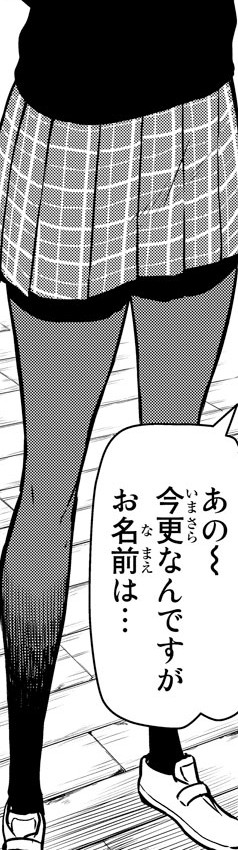
During class, Makoto hears her cat meowing over the school’s intercom. After retrieving her cat, Makoto is confronted by another student. The student, also a witch, verbally reprimands Makoto over the ordeal. A few minutes into their conversation, Makoto asks the girl a question.
真琴:
「あの~ 今更なんですがお名前は…」
“Um... It's a bit late for this, but what's your name?”
Makoto’s cat has been meowing over the school intercom, and another student, also a witch, has been scolding her for it. A few minutes in, Makoto realizes she never asked the girl’s name. 今更なんです means “it’s a bit late for this”. There’s no contrast. The first clause apologizes in advance, and が leads into the question.
The question trails off too. お名前は… leaves out 何ですか, and the girl knows what’s being asked.
〜んですが is the standard polite way to bring up a request. The ん gives background, and が hands the conversation to the listener.
A sentence can stop at が. The speaker says one thing and lets the “but” hang. The missing half is usually a worry, a request, or an objection the speaker would rather not say out loud.
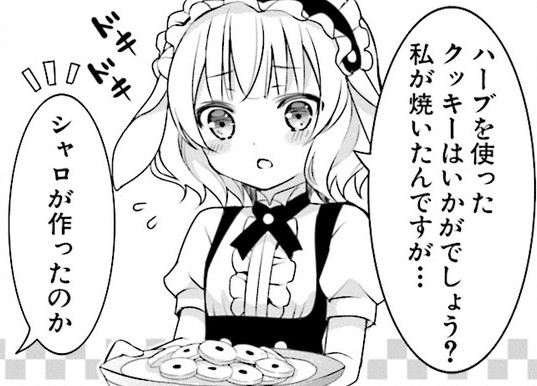
Syaro’s friends have come to the tea shop where she works. She offers them herb cookies, then adds that she baked them herself. 私が焼いたんです gives that background, and が leaves the rest open. It could be “so I hope you like them” or “so don’t expect much”. The ドキドキ beside her shows how nervous she is.
Example 2 of 4: Indiscriminate murder would be one thing if with 〜ならともかく
Example 2 of 4
Her line has two が. 私が marks the subject, “I”. The が after んです is the “but”.
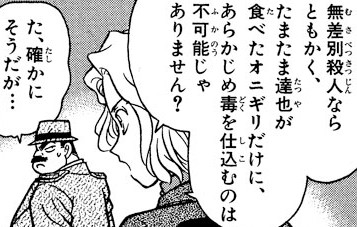
Sonoko is invited to a band’s after party. During the get-together, the band’s singer Tatsuya eats a rice ball only to collapse and die. The police are called in, and Inspector Megure discovers the victim was poisoned. He accuses the man who prepared the food, but Conan bites into a rice ball to show it’s safe. The victim’s manager, Mari, agrees.
“If it were indiscriminate murder, that's one thing but since it was just the rice ball Tatsuya happened to eat, wouldn't it be impossible to poison it beforehand?”
Inspector Megure has accused the man who made the rice balls of poisoning Tatsuya. Mari points out that nobody could have known which rice ball Tatsuya would eat. Megure can’t argue with that, and 確かにそうだ means “that’s true”. The が says he still has doubts, even if he can’t name them yet.
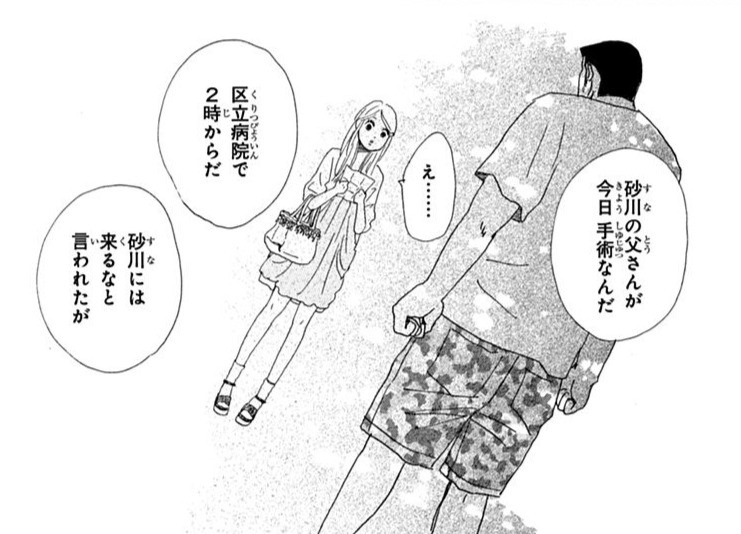
Takeo and Yamato go out on a date for Yamato’s birthday. They have a great time spending the day together, but when Yamato asks Takeo what his friend Sunakawa is doing, Takeo becomes silent. He says Suna helped him plan the date’s events, and Takeo gives her the tickets to the date’s finale. He tells Yamato to take a friend, because he needs to go be with Suna.
On Yamato’s birthday date, Takeo tells her that Suna’s father is having surgery today. Suna told him not to come, 来るなと言われた. The が leaves the other half for Yamato to work out. Takeo is going anyway. He gives her the tickets for the end of their date and heads for the hospital.
Example 4 of 4: Respected by the fishing folk with 漁民
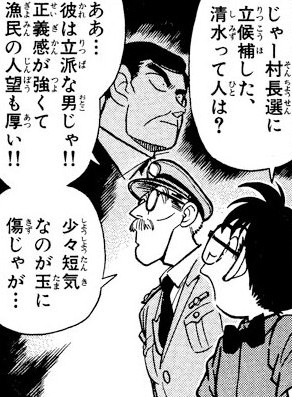
Conan is walking with the island’s elderly police officer to fetch a key from the police box. On the way, he asks about each person connected to the murders. The officer has just described Murasawa, who recently got engaged to the village head’s daughter, and Hirata, the village head’s secretary.
コナン:
「じゃー村長選に立候補した、清水って人は?」
“Then what about Shimizu, the guy who ran for village head?”
おまわりさん:
「ああ…彼は立派な男じゃ!! 正義感が強くて漁民の人望も厚い!!」
“Ah... He's a fine man!! He has a strong sense of justice, and the fishermen hold him in high regard!!”
おまわりさん:
「少々短気なのが玉に傷じゃが…」
“His one flaw is that he's a bit short-tempered, though...”
Conan asks the island’s old police officer about Shimizu, a candidate for village head. The officer praises him, then admits his one flaw, a short temper. じゃが is an old man’s だが, and the sentence stops there. The rest, that Shimizu is a good man anyway, goes unsaid.
His first line, 砂川の父さんが, has the subject marker. It follows the noun 父さん. The が at the end follows a complete clause.
Two set endings use this が. 〜といいが and 〜ばいいが hope for something while worrying it won’t happen. 〜と思いますが offers an opinion and leaves room to disagree.
けど, けれど, and けれども mean the same as が, and they attach the same way. Nouns still need だ, as in 雨だけど. The difference is register.
Where you hear it
“It’s expensive, but it’s good.”
Writing and narration
高いが、おいしい。
Polite speech
高いですが、おいしいです。
Polite conversation
高いですけど、おいしいです。
Casual speech
高いけど、おいしい。
Plain が in casual speech sounds stiff. A friend who says 高いが、おいしい sounds like a food critic. ですが is fine in conversation, since polite speech is already a little formal.
At the start of a sentence, the same split holds. だが and ですが are the formal choices, and だけど and でも are the casual ones. しかし is a formal “however”.
Choosing Between が and のに
Both join two facts that clash. が just reports the clash. のに adds a reaction, usually surprise or frustration.
勉強したが、落ちた。
I studied, but I failed.
勉強したのに、落ちた。
I studied, and I still failed!
After のに, the second clause has to be a fact. It can’t be a request, a plan, or a command. が has no such limit. 高いが、買おう, “it’s expensive, but I’ll buy it”, is fine. 高いのに、買おう is not.
Telling the Two が Apart
The subject marker が comes after a noun. The “but” が comes after something that could end a sentence, such as a verb, an adjective, だ, です, or ます. Check the word right before が.
雨が降っている。
Rain is falling.
雨だが、行く。
It’s raining, but I’m going.
When が Is Not “But”
〜うが〜まいが means “whether or not”. It pairs the volitional form with the negative まい. 雨が降ろうが降るまいが、試合はある means “the game is on whether it rains or not”. 〜ようが on its own means “no matter”, as in 何を言われようが, “no matter what they say”.