Deciding to with 〜ことにする
Grammar: Intention » 〜ことにする
〜ことにする means “decide to”. こと turns a verb phrase into “a matter”, and にする means “make it”, so 毎朝走ることにした is “I’ve decided to run every morning”. It presents the choice as the speaker’s own.
After a た-form, the same pattern usually means treating something as so, whether or not it’s true: 見なかったことにする, “I’ll pretend I didn’t see that”.
Usage Notes
ことにする follows the dictionary form or ない-form of a verb. To decide against something, negate the verb, not ことにする: 行かないことにした, “I decided not to go”. ことにした reports a decision, ことにしよう suggests one, and ことにしている describes a decision someone keeps following, like a habit or a personal rule.
こと can’t be swapped for の in this pattern: 行くのにした doesn’t work.
The one deciding is usually the speaker. Its counterpart 〜ことになる presents something as decided, or as having come about, without saying who chose it.
Noun + にする, as in コーヒーにします, “I’ll have coffee”, is a separate pattern for picking from options.
Formation
View formation details
- Verb (dictionary form) + ことにする
- 毎朝走ることにした
- "I've decided to run every morning."
- Verb (ない-form) + ことにする
- もう待たないことにした
- "I've decided not to wait anymore."
- 〜ことにしよう/〜ことにしましょう
- 今日はこの辺で終わることにしよう
- "Let's stop here for today."
- 〜ことにしている
- 夜はコーヒーを飲まないことにしている
- "I make a point of not drinking coffee at night."
- Verb (た-form) + ことにする
- 見なかったことにする
- "I'll pretend I didn't see that."
- Noun (+ だ) + ということにする
- 今日は留守だということにして
- "Just say I'm out today."
- 〜ことにしておく
- 引き分けということにしておこう
- "Let's call it a draw."
Deciding to Do Something
In its basic use, ことにする names a choice. The verb before it is usually something people do on purpose, such as 帰る, やめる, or 勉強する. For “decide not to”, the verb goes in the ない-form: 行かないことにした, “I decided not to go”.
ことにした reports a decision that has been made, whether a moment ago or long before. Plain ことにする can announce a choice as it’s made: そろそろ帰ることにする, “I think I’ll head home now”.
The one deciding is usually the speaker. When it’s someone else, speakers often add らしい or 言ってた, since they’re passing on a choice that isn’t theirs: 生産しないことにしたらしい, “it seems they’ve decided to stop making it”.
To announce news politely, people use ことにしました, “I’ve decided to”, or ことになりました, “it’s been arranged that”. ことにしました puts the speaker’s own choice up front. ことになりました is common even for choices the speaker made, because it sounds less forceful.
Proposing Plans and Rules with ことにしよう
ことにしよう and polite ことにしましょう are the volitional forms. Said to others, they propose a plan: “let’s make it so that…”. 今日はこの辺で切り上げることにしよう is “let’s wrap up here for today”. ことにしませんか is a gentler invitation.
A decision, whether proposed or already made, can also set a rule: what’s allowed, what’s required, or what someone gets. Here the verb before こと is often a permission or ability form. 休日はだれも行かなくていいことにした is “we decided nobody has to go in on days off”, and 遊んでいいことにしよう is “let’s make it so you’re allowed to play”. Once a rule like this is adopted, it really holds, unlike the pretend versions under Treating Something as True.
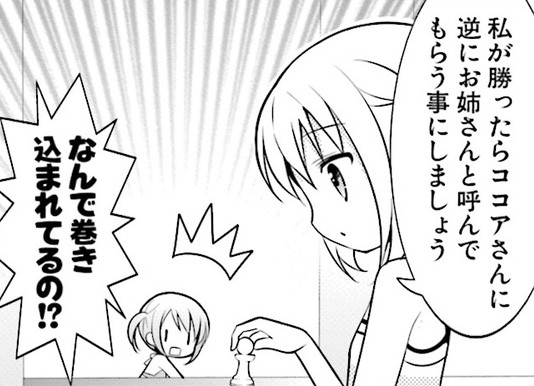
Chiya and Chino play chess at an indoor hot spring.
- チノ:
- 「私が勝ったらココアさんに逆にお姉さんと呼んでもらう事にしましょう」
- “If I win, I'll have Cocoa call me her big sister instead.”
- ココア:
- 「なんで巻き込まれてるの!?」
- “Why am I getting dragged into this!?”
Chiya and Chino are about to play chess at an indoor hot spring, and Chiya has proposed a bet. Chino names her own stakes. 私が勝ったら sets the condition, and 〜事にしましょう adds her prize to the terms: “let’s make it that Cocoa calls me big sister”. 逆に, “the other way around”, is the joke: Cocoa is the one who keeps wanting Chino to call her big sister. Cocoa wasn’t asked, and she wants to know why she’s been dragged in.
Said to no one in particular, ことにしよう is the speaker settling their own mind: 帰ることにしよう…, “I guess I’ll head home”.
Personal Rules with ことにしている
ことにしている describes a decision someone keeps living by: a habit or a personal rule. 夜はコーヒーを飲まないことにしている is “I make a point of not drinking coffee at night”. In casual speech, it shortens to ことにしてる, or ことにしてんだ with んだ.
A rule like this can still be broken. 人のうわさはしないことにしているのだが… is “I make a point of not gossiping, but…”.
Two similar patterns differ in who’s behind the rule and how firm it is. ことになっている presents a rule or arrangement as already established, such as a school rule or a schedule, rather than emphasizing your own decision. ようにしている is an effort to keep doing something, rather than a firm decision.
Treating Something as True
After a た-form, or a verb for a state such as いる or ある, ことにする usually doesn’t mean deciding to do something. It means deciding to treat something as so, whether or not it is. 見なかったことにする is “I’ll pretend I didn’t see it”, and なかったことにする is “let’s act like it never happened”.
Depending on the situation, the result is a polite way of overlooking something, a cover story, a lie, or just an assumption: 現金がこの中にあることにする, “let’s say the cash is in here”. The verb doesn’t have to be past. 一緒に来てることにしよう is “let’s say you came with me”.
With a noun or な-adjective, という is required before こと: 留守だということにしてください, “please say I’m out”. Other predicates can take という too, and casual speech uses ってことにする. A request like this asks the listener, not the speaker, to go along with the story.
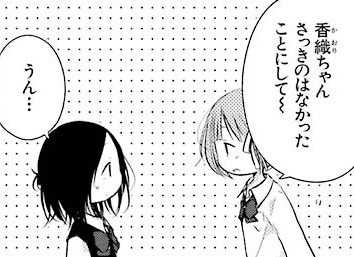
Saki has noticed that Fujimiya suddenly acts cool toward Hase, and decides to find out why. She assumes Hase must have made a pass at her, and asks Fujimiya straight out what kind of sexual harassment he subjected her to. Kiryu pulls Saki aside and tells her to ask the question again without assuming harassment. Saki goes back to Fujimiya.
- 沙希:
- 「香織ちゃん さっきのはなかったことにして~」
- “Kaori, pretend what I said just now never happened~”
- 藤宮:
- 「うん…」
- “Okay...”
Saki has just asked Fujimiya, point-blank, what kind of harassment Hase put her through, and Kiryu has told her that was out of line. さっきのはなかったことにして asks Fujimiya to act as though the question was never asked. Saki did ask it, which is what makes this a pretense.
Leaving It at That with ことにしておく
With ておく, the agreed version is something to leave in place for now. ということにしておこう is “let’s leave it at that” or “let’s just say…”. 引き分けということにしておこう is “let’s call it a draw”.
The version is often one the speaker knows isn’t true. お母さんには元気だということにしておこう is “I’ll tell Mom I’m fine”, said by someone who’s sick. Or the speaker just wants to drop the subject: そういうことにしておきます works like “if you say so”. In casual speech, しておく shortens to しとく: 友達ってことにしとく, “I’ll just say we’re friends”.
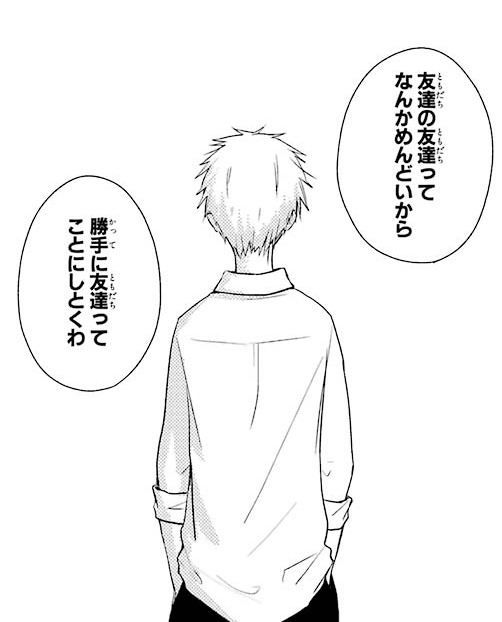
Some classmates mocked Fujimiya for laughing to herself over her exchange diary with Hase. Kiryu, who has taken the diary, told them it was something a friend had left behind, then corrected himself to “a friend’s friend”. He told the girls off and handed the diary back to Fujimiya, who was crying. Now he’s telling her it’s fine to cry, as long as she picks her spot.
- 桐生:
- 「友達の友達ってなんかめんどいから」
- “'Friend of a friend' is kind of a pain to say, so...”
- 「勝手に友達ってことにしとくわ」
- “...I'll just go ahead and call you a friend.”
Kiryu has been calling Fujimiya “a friend’s friend”, and he’s decided that’s too much of a mouthful. 勝手に友達ってことにしとく settles it his way: “I’ll just count you as a friend”. 勝手に means he isn’t waiting for her to agree.
Further Reading
- 〜ことにする, 日本語文型バンク (NINJAL) (ninjal.ac.jp)
- 〜ことにしている, 日本語文型バンク (NINJAL) (ninjal.ac.jp)
- 28.3.3 ~ことにする・ことになる, 日本語文法概説 (庭三郎) (niwasaburoo.amebaownd.com)
Related Grammar
- To end up being with 〜ことになる
- ことにした says "I decided". ことになった says "it was decided" or "it worked out that way", and leaves the decider out.
- Past decision still in effect with 〜ことになっている
- ことにしている is a rule you set for yourself. ことになっている presents a rule or arrangement as already established, rather than emphasizing your own decision.
- Making an effort to with 〜ようにする
- ことにする is a decision. ようにする is working toward a result, so it suggests effort or arranging things rather than a plain choice.
- Thinking of doing with 〜ようと思う
- ようと思う states an intention the speaker is still holding. ことにした states a decision that has been made.
- Speaker's conviction with 〜た+つもり
- たつもり is believing, or acting as if, you did something. たことにする is deciding to treat something as so, often by agreement.
- Doing in advance with 〜ておく
- ておく combines with ことにする in ことにしておく, "let's leave it at that".