Doing in advance with 〜ておく
Grammar: Time and Sequence » 〜ておく
〜ておく means doing something ahead of a later need. English often adds “ahead of time” or “in advance”, as in ジュースを冷やしておく, “chill the juice ahead of time”. The later need can be stated or only implied. The action need not happen immediately.
The pattern joins the て-form of a verb to おく, “to put”. It can also settle something for the time being. Another use is leaving something as it is on purpose, as in 窓を開けておく, “leave the window open”. In casual speech, ておく contracts to とく, and でおく contracts to どく.
Usage Notes
おく is a godan verb, so it conjugates like 書く. 〜ておいた reports something already taken care of, 〜ておこう decides or suggests doing it, and sentence-final 〜ておいて can ask someone else to do it. Casual speech often uses contracted forms, as in 覚えとけ, “remember that”, and やめとく, “I’ll pass”.
〜ておく presents an action as preparation or as a way to maintain a state. 〜てある can describe the state left by an intentional action. 窓を開けておいた reports opening the window in advance or leaving it open. 窓が開けてある describes the window as open because someone opened it on purpose. 〜っぱなし often criticizes leaving something unattended, though it can also describe uninterrupted continuation.
Formation
View formation details
- Verb (て-form) + おく
- ジュースを冷やしておく
- "I'll chill the juice ahead of time."
- Verb (で-form) + おく
- 教科書を読んでおく
- "I'll read the textbook beforehand."
- Verb (て-form) + おいた
- 切符はもう買っておいたよ
- "I already went ahead and bought the tickets."
- Verb (て-form) + おこう
- 念のため地図を印刷しておこう
- "Let's go ahead and print a map, just in case."
- Verb (て-form) + おいて・おいてください
- 窓を開けておいて
- "Open the window and leave it open."
- Note: If the window is already open, this can simply mean "leave it open".
- Verb (て-form) + おけ
- 今のうちに寝ておけ
- "Get some sleep while you can."
- Note: Casual speech can shorten this to とけ, as in 寝とけ.
- 〜とく・〜どく (casual)
- 宿題は後でやっとく
- "I'll take care of the homework later."
- Note: ておく contracts to とく, and でおく contracts to どく, as in 読んどく.
- Verb (ない-form) + で + おく
- 今はまだ言わないでおく
- "I'll hold off on saying it for now."
- Note: Leaves something undone on purpose.
Doing Something Ahead of Time
As a regular verb, おく means “put” or “set down”. After a て-form, it can present an action as preparation for a later need. In this preparatory use, the speaker has a later moment in mind, even when they don’t name it. The action itself can happen later, as in 宿題は後でやっとく, “I’ll take care of the homework later”.
It can also mean taking an opportunity while it lasts. 元気なうちに富士山へ登っておきたい means “I want to climb Mount Fuji while I’m still healthy”. The speaker wants the experience before the chance is gone.
確認しておきます, “I’ll make sure to check”, can reassure someone that you’ll handle a task. For advice, 確認しておいたほうがいい means “you should check it beforehand”. The た-form here belongs to the advice pattern, so it does not mean the checking already happened.
Example 1 of 2: Clearing out a room with 〜ておく
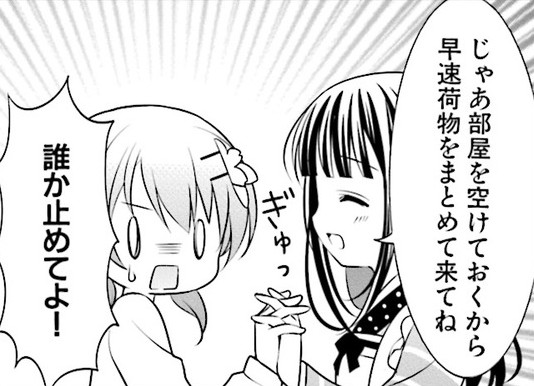
After Cocoa suggests if she were staying at Chiya’s place rather than Chino’s, that she’d be working for Chiya’s family’s tea house, Chiya takes to the idea.
- 千夜:
- 「じゃあ部屋を空けておくから早速荷物をまとめて来てね」
- “Then I'll clear out a room in advance, so go gather your things and come right away.”
- ココア:
- 「誰か止めてよ!」
- “Somebody stop her!”
Cocoa lodges with Chino’s family and works at their café. She muses that if she had lodged with Chiya instead, she’d be working at Chiya’s family’s teahouse. Chiya takes to the idea. 部屋を空けておく means she’ll clear out a room so it’s ready when Cocoa arrives. から presents that preparation as a reason for Cocoa to pack up and come right away.
Example 2 of 2: Cooking rice for whoever comes home with ご飯を炊く
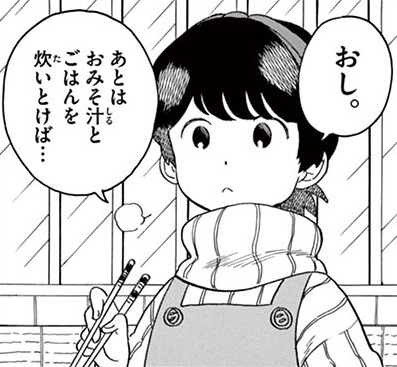
During the spring dance performances, everyone at the house keeps a different schedule, so they each eat when they can. Kiyo comes home from shopping, sees that the rice balls she left out have been eaten, and makes a set of side dishes that taste fine even cold.
- キヨ:
- 「おし。」
- “All right.”
- 「あとはおみそ汁とごはんを炊いとけば...」
- “Now if I just make the miso soup and cook the rice...”
During the dance season, everyone at the house comes home hungry at a different hour. Kiyo, the house cook, plans the last jobs of the meal. 炊いとけば is a casual 炊いておけば: if she cooks the rice now, it will be waiting for whoever gets back first.
Casual Contractions with とく and どく
In casual speech, ておく becomes とく, and でおく becomes どく. The contracted forms conjugate as godan verbs, so とく becomes といた in the past and とこう in the volitional.
| Full form | Casual form | Example | Meaning |
|---|---|---|---|
| 〜ておく | 〜とく | やっとく | I’ll take care of it |
| 〜ておいた | 〜といた | やっといた | I took care of it |
| 〜ておいて | 〜といて | やっといて | take care of it for me |
| 〜ておこう | 〜とこう | やっとこう | let’s take care of it |
| 〜ておけ | 〜とけ | やっとけ | take care of it |
| 〜でおく | 〜どく | 読んどく | I’ll read it ahead of time |
Example 1 of 3: Gathering spot during a shrine visit with 集合場所
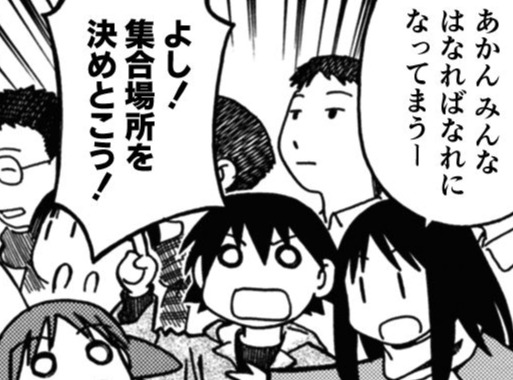
Chiyo and her friends from class go on a New Year’s shrine visit together. Chiyo remarks on how crowded it is.
- 歩:
- 「あかんみんなはなればなれになってまうー」
- “Oh no, everyone's going to end up separated!”
- とも:
- 「よし!集合場所を決めとこう!」
- “All right! Let's decide on a meeting spot!”
Chiyo and her classmates have gone to a shrine for the New Year’s visit, and the crowd is packed. Ayumu worries in Kansai speech that they’ll all get separated. Tomo’s 決めとこう is casual 決めておこう. They’ll pick a meeting spot now, before anyone gets lost.
Example 2 of 3: Just calling her a friend with 〜ことにする
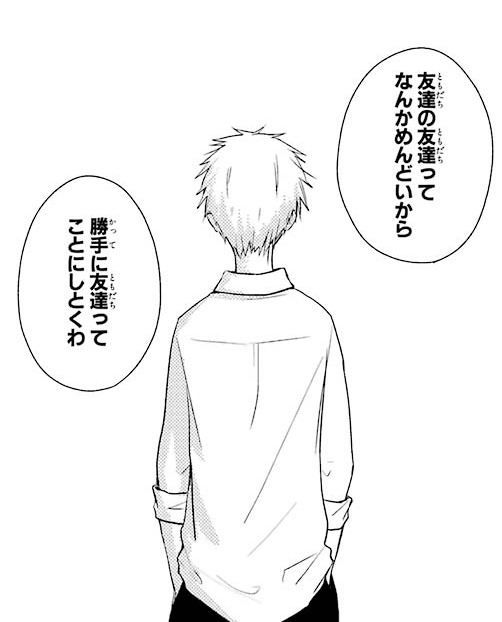
Some classmates mocked Fujimiya for laughing to herself over her exchange diary with Hase. Kiryu, who has taken the diary, told them it was something a friend had left behind, then corrected himself to “a friend’s friend”. He told the girls off and handed the diary back to Fujimiya, who was crying. Now he’s telling her it’s fine to cry, as long as she picks her spot.
- 桐生:
- 「友達の友達ってなんかめんどいから」
- “'Friend of a friend' is kind of a pain to say, so...”
- 「勝手に友達ってことにしとくわ」
- “...I'll just go ahead and call you a friend.”
Kiryu is done calling Fujimiya “a friend’s friend”. 友達ってことにしとく is casual ことにしておく, “I’ll just count you as a friend”, and it leaves the matter settled. Ending with わ keeps it offhand.
Example 3 of 3: Knowing her, it's probably nothing with 〜のことだから
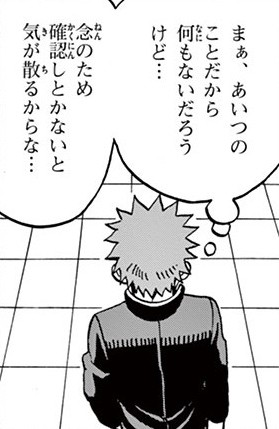
Kenji is staying after school for a study session with Hibino, the girl he likes, but his little sister Kyoko has seemed off all day. On the way, he tells Hibino to go ahead while he stops by the restroom.
- ケンジ:
- 「まぁ、あいつのことだから何もないだろうけど…」
- “Well, knowing her, it's probably nothing, but...”
- 「念のため確認しとかないと、気が散るからな…」
- “I'd better check just in case, or I'll be too distracted...”
Kenji decides to check on his sister before his study session. 確認しとかないと is a casual 確認しておかないと: “I’d better check now.”
行っといで, “off you go”, looks like the same contraction, but it comes from 行っておいで. おいで means “come”, so the phrase has nothing to do with おく. See How casual contractions work.
Deciding or Suggesting with ておこう
〜ておこう uses the volitional form of おく. It can express your own decision, “I’ll go ahead and”, or suggest joint action, “let’s”. Context supplies when the action will happen. Tomo’s 決めとこう in the contraction example above proposes choosing a meeting spot together.
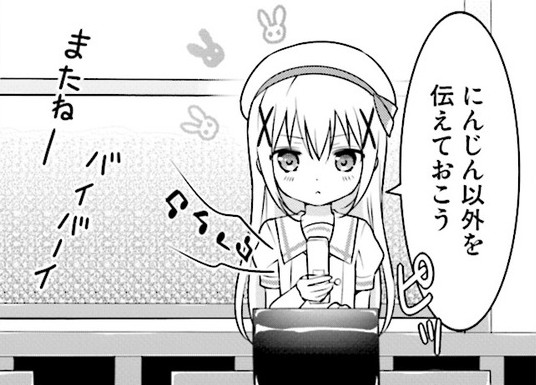
As Chino gathers her things after school, she recalled that Cocoa will be making stew for dinner.
- チノ:
- 「にんじん以外を伝えておこう」
- “I'll let her know in advance everything except carrots.”
- ◯:
- 「またねー」
- “See you!”
- ◯:
- 「バイバーイ」
- “Bye-bye!”
School has let out, and Chino remembers that Cocoa is making stew tonight. Chino decides to tell her which ingredients to buy before she goes shopping. にんじん以外, “everything except carrots”, leaves one vegetable off the list.
Giving Orders with ておけ and とけ
〜ておけ is the plain imperative of おく. In casual speech, it can shorten to 〜とけ. It tells someone to get something done before it’s needed or to keep something in a state. Sentence-final 〜ておいて and 〜といて can make a less forceful request. 〜ておいてください makes it polite, but the appropriate wording still depends on the relationship and the request.
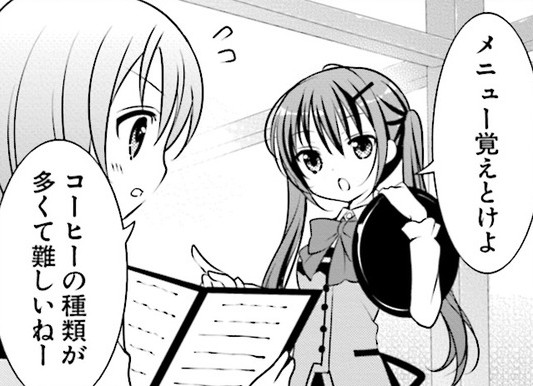
As the experienced barista, Rize is tasked with teaching Cocoa about working at the café.
- リゼ:
- 「メニュー覚えとけよ」
- “Memorize the menu ahead of time.”
- ココア:
- 「コーヒーの種類が多くて難しいねー」
- “The different kinds of coffee are numerous and difficult, huh?”
Rize is teaching Cocoa how to work at the café. 覚えとけ is 覚えておけ with the contraction. Cocoa should learn the menu now, so she’ll know it when customers order.
Glad You Did It with ておいてよかった
〜ておいてよかった looks back at something done in advance that paid off. English says “good thing I…” or “I’m glad I…”.
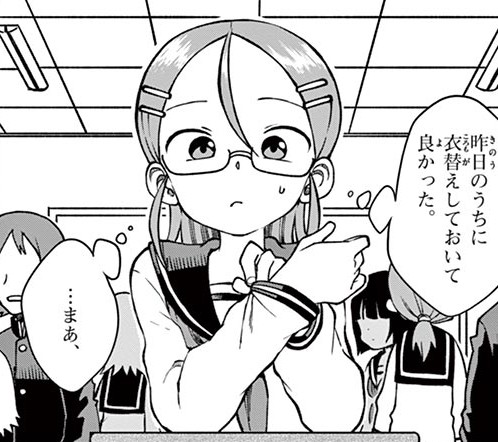
Yukari and her friends have a miscommunication on whether they’ll change from their summer uniforms to their winter uniforms yet. The decision is finalized just in time, as the following day is even colder.
- ユカリ:
- 「昨日のうちに衣替えしておいて良かった。」
- “I'm glad we (took the opportunity and) settled our uniform change (during) yesterday.”
Yukari is glad they completed the switch to winter uniforms yesterday, because today is even colder. 衣替え is the seasonal change of clothes. 昨日のうちに places the change before yesterday ended, and しておいて良かった says the preparation paid off.
The regretful version is 〜ておけばよかった, “I should have…”. 聞いておけばよかった means “I wish I’d asked when I had the chance”.
Doing Something for Now
Sometimes 〜ておく settles a matter for the time being, without a specific later need in mind. This use often appears with とりあえず, “for now”, or 一応, “just in case”.
Example 1 of 2: Choosing a menu item with 〜ておく
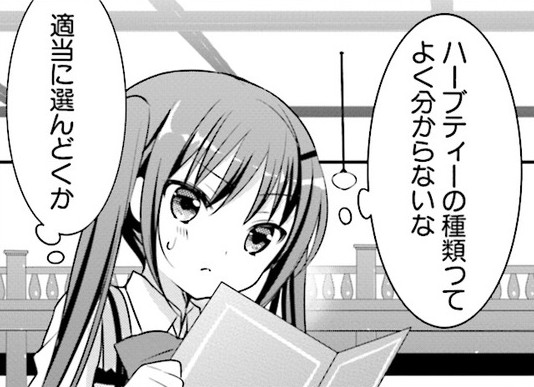
After a misunderstanding brings Rize and her friends to the teahouse where Syaro works, the group stays to have some tea.
- リゼ:
- 「ハーブティーの種類ってよく分からないな」
- “I don't really know the different kinds of herbal tea.”
- 「適当に選んどくか」
- “I'll just pick something for now?”
A mix-up has brought Rize and her friends to the tea café where Syaro works. Rize doesn’t know much about the herbal teas, so she’ll just pick one. 選んどく is casual 選んでおく. 適当に, “without much deliberation”, and her final か suggest getting the choice out of the way. She’ll have a tea picked out when it’s time to order.
Example 2 of 2: Reeling in the master of the lake with 釣りあげる
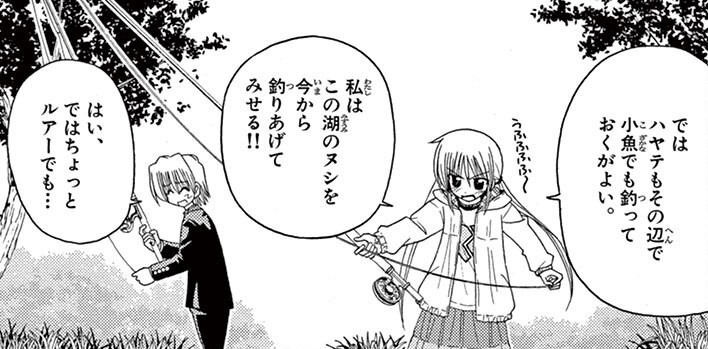
Inspired by a fishing manga, Nagi has dragged Hayate to the lake on the Sanzenin estate. She insists on fly fishing, though she has never tried it, because the hero of her manga does it. After looking over the equipment, she declares that she understands how it works.
- ナギ:
- 「ではハヤテもその辺で小魚でも釣っておくがよい。」
- “Then you can go catch some little fish over there, Hayate.”
- 「私はこの湖のヌシを今から釣りあげてみせる!!」
- “I'm going to reel in the master of this lake, starting right now!”
- ハヤテ:
- 「はい、ではちょっとルアーでも…」
- “Okay, then I'll try a lure or something...”
Nagi plans to land the lake’s legendary giant fish herself. Meanwhile, she tells Hayate 小魚でも釣っておくがよい, “go catch some little fish”. ておく gives him something to do for the time being, while she goes after the real prize.
やめとく, “I’ll pass”, applies the same idea to turning something down. The speaker leaves it undone, at least for now. The polite versions are やめておきます and 遠慮しておきます.
Leaving Something as It Is
〜ておく can also keep something in its current state on purpose. 窓を開けておく means “leave the window open”, and そのままにしておく means “leave it as it is”.
放っておく means “leave alone”, with the casual form ほっとく. ほっといて can mean “leave me alone”. The negative potential form 放っておけない means “I can’t just leave them alone” or “I can’t ignore it”.
With a causative verb, 〜ておく can express letting someone continue what they’re doing. 寝かせておこう means “let’s let her sleep”.
〜ないでおく leaves something undone on purpose. 言わないでおく means “I’ll keep it to myself”, for example to spare someone’s feelings. This differs from 〜ておかない, which negates doing something in advance. 予約しておかないと入れない means “you can’t get in unless you reserve beforehand”.
Something Saved for Later with とっておき
取っておく means “set aside” or “save”. As a request, 取っておいて asks someone to keep something. From the same verb comes the noun とっておき, “something special saved for the right moment”. とっておきの modifies a noun, as in とっておきの話, “a special story saved for the occasion”.
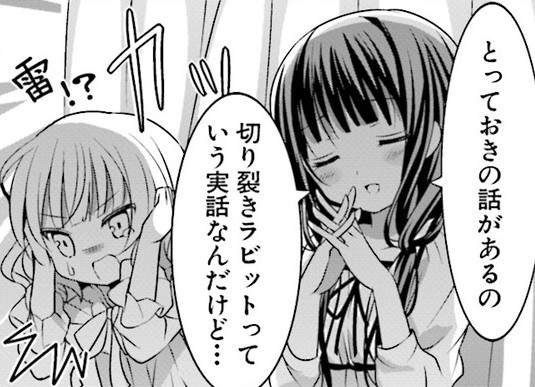
A sleep-over at Chino’s place turns into a late-night scary story-telling session.
- 千夜:
- 「とっておきの話があるの」
- “I have a special story in reserve.”
- 「切り裂きラビットっていう実話なんだけど…」
- “It's a true story called The Slasher Rabbit...”
- シャロ:
- 「雷!?」
- “Lightning!?”
A sleepover at Chino’s place has turned into a late-night round of scary stories. Chiya’s とっておきの話 is a special story she’s saved for an occasion like this.
Just So You Know with 言っておくけど
言っておくけど, casual 言っとくけど, means “just so you know” or “let me make this clear”. It introduces information the speaker wants understood beforehand, often a warning or clarification.
Criticizing with ておいて
〜ておいて can link an action to what follows when the combination seems contradictory or unreasonable. English says “after doing…” or “he did…, and yet…”. The speaker is usually complaining or shocked.
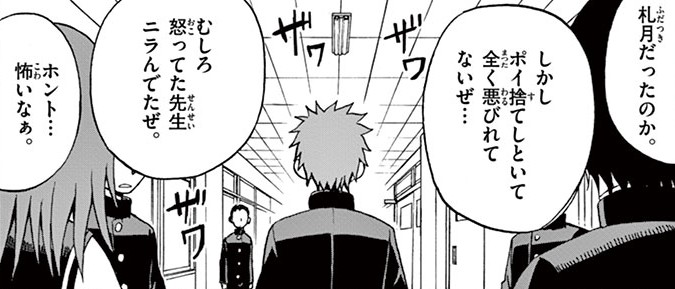
As Kenji Fudazuki ponders ways to increase his image as a delinquent, he hears a teacher asking who littered an empty soft drink can. Seeing an opportunity, Kenji takes credit for the misdeed. With this revelation, the teacher backs off and leaves quietly.
- Students:
- 「札月だったのか。」
- “So it was Fudazuki, huh?”
- 「しかしポイ捨てしといて全く悪びれてないぜ…」
- “But to litter, he really has no shame...”
- 「むしろ怒ってた先生ニラんでたぜ。」
- “Instead, he glared at the scolding teacher.”
- 「ホント…怖いなぁ。」
- “He truly is scary.”
Kenji Fudazuki wants a reputation as a delinquent. When a teacher asks who littered a soda can, Kenji claims he did it, and the teacher backs off. ポイ捨て is littering, and しといて is casual しておいて. The students believe he littered, yet he doesn’t act the least bit guilty. That mismatch is what しといて connects. 悪びれる means “act ashamed”.
自分で誘っておいて遅刻するなんて works the same way. “He’s the one who invited us, and then he shows up late?”
Comparing ておく with てある and っぱなし
〜ておく can present an action as preparation or as a way to maintain a state. 〜てある can describe a state left by an intentional action, without focusing on who did it.
- パーティーの前にジュースを冷やしておいた。
I chilled the juice ahead of the party.
- ジュースが冷やしてある。
- The juice has been chilled.
The first sentence reports an action done ahead of the party. The second describes the juice’s resulting state. In this state-focused use of 〜てある, が marks the thing affected. 〜てある can also report completed preparation with を, as in 予定を話してある, “I’ve already told them the plans”.
Example 1 of 2: Only the ace of spades with 〜だけ
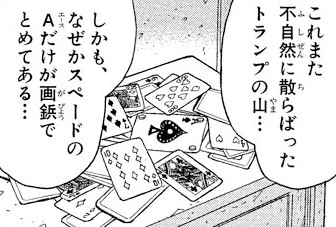
The Detective Boys group visits a cabin where Professor Agasa has secretly set out clues leading to a treasure. Conan draws the group’s attention to an arrow pointing to a table, on top of which there is…
- コナン:
- 「これまた不自然に散らばったトランプの山…」
- “A pile of cards, rather unnaturally scattered about.”
- 「しかも、なぜかスペードのAだけが画鋲でとめてある…」
- “Further, for some reason, only the ace of spades is pinned down with thumbtacks...”
Professor Agasa has set out clues around a cabin for the Detective Boys to find. 画鋲でとめてある describes the ace of spades as pinned down by someone’s deliberate action. Conan notices that only this card is pinned, which makes it look like a clue.
Example 2 of 2: Every kitchen knife sharpened with 包丁を研ぐ
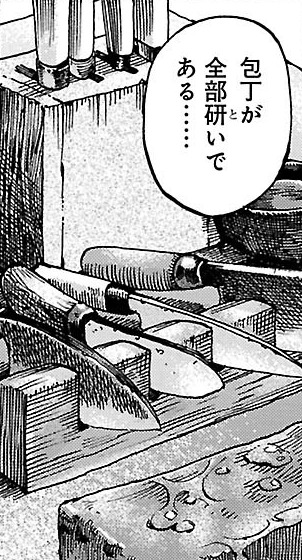
Hakumei is helping the crew repairing the town’s stone walls by washing and sharpening their tools. She stays up all night making them a chart and shows up exhausted, so Iwashi sends her home to sleep. She promises to sharpen twice as much tomorrow. Later, Mikochi comes home and finds Hakumei asleep in bed.
- ミコチ:
- 「包丁が全部研いである……」
- “All the knives have been sharpened…”
Hakumei was sent home from the work site to sleep, and Mikoto finds her in bed. 包丁が全部研いである describes the knives as they are now, sharpened by someone on purpose. The て becomes で because 研ぐ ends in ぐ. The sentence leaves the sharpener unnamed, but Mikoto can guess who it was.
〜っぱなし often criticizes leaving a state unattended. 窓を開けっぱなしにする can suggest leaving the window open when it should be closed, but does not by itself mean someone forgot. 窓を開けておく presents keeping it open as intentional. 〜っぱなし also describes uninterrupted continuation, as in 立ちっぱなし, “standing the whole time”.
Further Reading
- ておく, Bunpro (bunpro.jp)
- Using the 〜ておく form as preparation for the future, Tae Kim's Guide to Learning Japanese (guidetojapanese.org)
- 〜ておく: To Do Something for Future Convenience, Tofugu (tofugu.com)
- How to use Vておく, Maggie Sensei (maggiesensei.com)
Related Grammar
- Connecting actions with 〜て・〜で
- おく attaches to the て-form, like the helper verbs in 〜てみる and 〜てしまう.
- Trying it out with 〜てみる
- 〜てみる does something to find out the result. 〜ておく does something to prepare for later.
- Doing completely or ending up doing with 〜てしまう and 〜ちゃう
- Both helper verbs contract in casual speech. てしまう becomes ちゃう, and ておく becomes とく.
- Ongoing actions and resulting states with 〜ている
- 窓が開いている just says the window is open. 窓を開けておく says someone opens it and keeps it that way on purpose.
- Leaving something as-is with 〜っぱなし
- 開けっぱなし often criticizes leaving a window open. 開けておく presents keeping it open as intentional.
- Leaving as is with 〜まま
- そのままにしておく, "leave it as it is", combines the two.
- Volitional with 〜う・〜よう
- 〜ておこう, "I'll go ahead and" or "let's", uses the volitional form of おく.
- The plain imperative
- 〜ておけ and casual 〜とけ use the plain imperative of おく.
- During with 〜うちに
- 〜うちに〜ておく means getting something done while there's still time.
- How casual contractions work
- 行っといで looks like the とく contraction, but it comes from おいで, "come", not from おく.