Doing in advance with 〜ておく
Grammar: Time and Sequence » 〜ておく
〜ておく describes an action performed now to prepare for a later need or preserve a useful result. It attaches おく to a verb’s て form and may contract to 〜とく or 〜どく in speech.
Alternate Explanations
The て form of a verb, followed by the verb おく or おきます (“put”), expresses an action done deliberately for a future convenience. Here, おく or おきます is used as an auxiliary and is conventionally written in hiragana, not kanji.
Kamiya, Taeko. “Actions: in Progress, Completed, Successive, Simultaneous, and Miscellaneous.” Japanese Sentence Patterns for Effective Communication, Kodansha, 2005, p. 113
V て + おく “do something in advance”
V て + おく expresses an action which is performed in advance for future convenience. The verb おく (put) is used as an auxiliary.
Kamiya, Takeo. “Usage of Verb Forms.” The Handbook of Japanese Verbs, Kodansha, 2001, p. 171
N は V おきます。
N does V beforehand.
This pattern provides a means of saying a certain action (て form verb) is done in preparation for an upcoming event: e.g. putting the beer in the refrigerator in preparation for a party, or putting the papers for a meeting on the director’s desk so that he can go over them prior to the meeting. “To do something beforehand” is represented by おきます.
Chino, Naoko. “Basic Pattern 41.” A Dictionary of Basic Japanese Sentence Patterns, Kodansha, 2000, p. 237
Doing Something in Advance
When the て form is followed by the verb おく, the meaning is to do something in advance or as preparation for something else; it can also mean to put away or preserve for later use.
Chino, Naoko. “Expressing Time Relationships.” Japanese Verbs at a Glance, Kodansha, 2000, pp. 95–96
do something in advance for future convenience
おく as a main verb means “put” or “place”. However, when it is used with V て, it is an auxiliary verb meaning “to do something in advance and leave the resultant state as it is for future convenience”.
With a causative verb, V て おく can express the idea that someone lets someone or something remain in his / its present state.
V て おく may be contracted into とく or どく in informal conversation.
Makino, Seiichi and Michio Tsutsui. “Main Entries.” A Dictionary of Basic Japanese Grammar, The Japan Times Ltd., 1989, pp. 357–358
Further Reading
- How to use Vておく (maggiesensei.com)
Examples
A saved-up story with 〜ておく
Grammar Explanation: Doing in advance with 〜ておく

A sleep-over at Chino’s place turns into a late-night scary story-telling session.
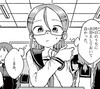
- 千夜:
- 「とっておきの話があるの」
- “I have a special story in reserve.”
- 「切り裂きラビットっていう実話なんだけど…」
- “It's a true story called The Slasher Rabbit...”
- シャロ:
- 「雷!?」
- “Lightning!?”
Choosing a menu item with 〜ておく
Grammar Explanation: Doing in advance with 〜ておく

After a misunderstanding brings Rize and her friends to the teahouse where Syaro works, the group stays to have some tea.
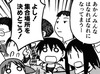
- リゼ:
- 「ハーブティーの種類ってよく分からないな」
- “I don't really know the different kinds of herbal tea.”
- 「適当に選んどくか」
- “Shall I just pick something at random in advance?”
Clearing out a room with 〜ておく
Grammar Explanation: Doing in advance with 〜ておく

After Cocoa suggests if she were saying at Chiya’s place rather than Chino’s, that she’s be working for Chiya’s family’s tea house, Chiya takes to the idea.
- 千夜:
- 「じゃあ部屋を空けておくから早速荷物をまとめて来てね」
- “Then I'll clear out a room in advance, so go gather your things and come right away.”
- ココア:
- 「誰か止めてよ!」
- “Somebody stop her!”