During the same time with 〜間(に)
Grammar: Time and Sequence » 〜間に
間 says that two situations continue over the same span. Adding に makes the main event occur at some point within that span. The clauses may have different subjects.
Usage Notes
間 is used when two situations cover the same span of time, and 間に when something happens at some point within that span. The に narrows the main event to a point or occurrence inside the larger period.
Related Grammar
- Concurrent events with ながら
-
During with うちに
- Used when referring to a period of time, especially when taking advantage of an opportunity.
-
While with うちは
- Used when contrasting with another period of time.
Examples
Keeping still while her ribbon dries with 〜間
Grammar Explanation: During the same time with 〜間(に)
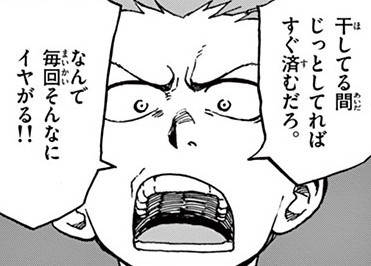
Kyouko’s ribbon needs to be washed. Since she is a jiāngshī (vampire), she will uncontrollably attack people to drink their blood when her ribbon is removed. For this reason, her brother tries to tie her up with a rope. Kyouko hides in the bathroom, then sneaks out the window only to find Kenji waiting outside.
- ケンジ:
- 「干してる間じっとしてればすぐ済むだろ。」
- “While it's drying, if you'd just keep still it'd be over soon.”
- ケンジ:
- 「なんで毎回そんなにイヤがる!!」
- “Why do you seem to hate it so much every time?!”
Leaving the room while Yukiko was out with 〜間
Grammar Explanation: During the same time with 〜間(に)
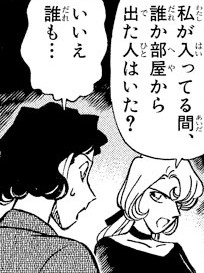
A murder victim was last heard from via phone call at 9PM. Her body was found outside later that night. Yukiko was in the main room with everyone except when she was bathing.
- 有希子:
- 「私が入ってる間、誰か部屋から出た人はいた?」
- “While I was in the bath, was there anyone who left the room?”
- 広美:
- 「いいえ誰も…」
- “No, no one...”
Placing the chocolate while his back is turned with 〜間に
Grammar Explanation: During the same time with 〜間(に)
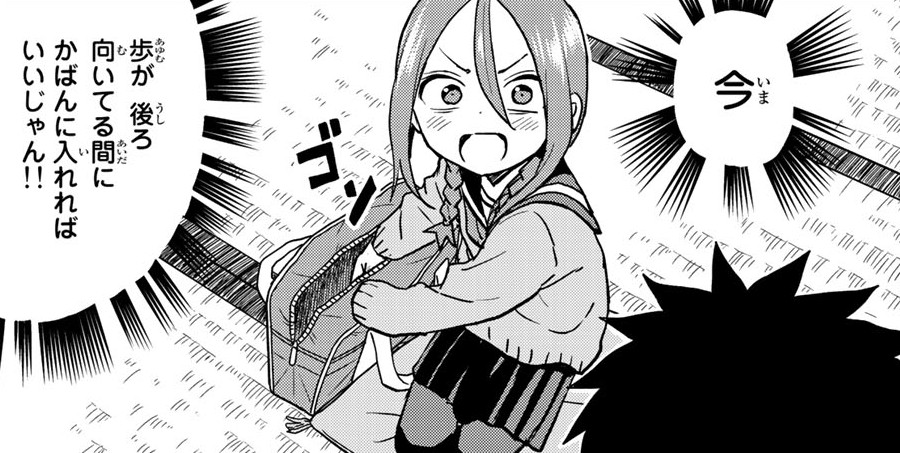
Urushi prepared chocolate to give Ayumu for Valentine’s Day but is too nervous to give it to him. After the two play shogi during their club, Ayumu turns away from Urushi as he puts the shogi table away.
- うるし:
- 「今。歩が 後ろ向いてる間にかばんに入れればいいじゃん!!」
- “Now! While Ayumu's back is turned, I can put it into his satchel!”