Easy to do with 〜やすい
Grammar: Difficulty » 〜やすい
Add the auxiliary adjective やすい to a verb stem to describe an action as easy to do or likely to happen.
Usage Notes
〜やすい can describe ease for the person doing the action or a tendency for something to happen. A tool can be 使いやすい because it is easy to use, while glass can be 割れやすい because it breaks easily.
The resulting word behaves like an い-adjective. It can modify nouns or take forms like 〜やすくない and 〜やすかった.
Further Reading
- Describing actions as easy or hard - Tae Kim's Japanese grammar guide (guidetojapanese.org)
- V + やすい & V + にくい (maggiesensei.com)
Examples
Easy to drink with 〜やすい
Grammar Explanation: Easy to do with 〜やすい
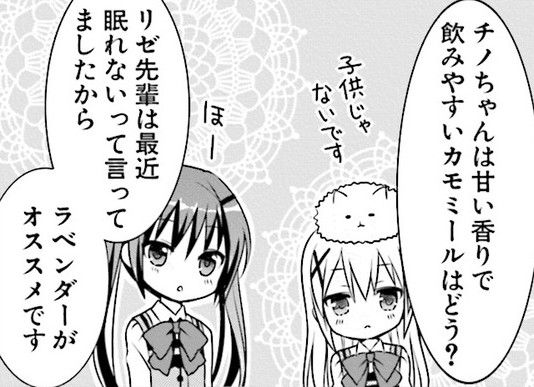
Syaro’s friends stop by the tea house where she works. The group has difficulty deciding what to order.
- シャロ:
- 「チノちゃんは甘い香りで飲みやすいカモミールはどう?」
- “For Chino, how about the fragrant and easy to drink chamomile?”
- チノ:
- 「子供じゃないです」
- “I'm not a child.”
- シャロ:
- 「リゼ先輩は最近眠れないって言ってましたから」
- “Since you said you haven't been sleeping well lately, Rize-senpai...”
- 「ラベンダーがオススメです」
- “I recommend lavender.”
- リゼ:
- 「ほー」
- “Oh?”
Easy to understand with 〜やすい
Grammar Explanation: Easy to do with 〜やすい
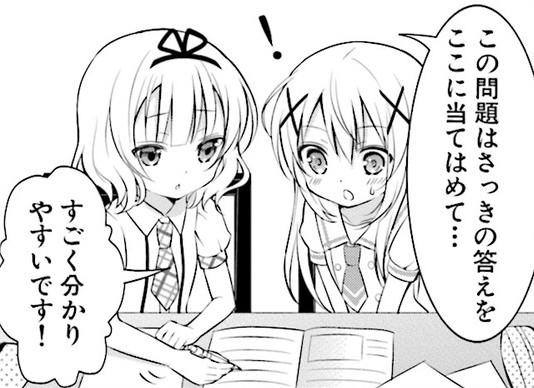
During a library study session, Syaro helps Chino with her homework.
- シャロ:
- 「この問題はさっきの答えをここに当てはめて…」
- “For this problem, substitute the answer from before here...”
- チノ:
- 「すごく分かりやすいです!」
- “That's very easy to understand!”