Even and as long as with 〜さえ
Grammar: Emphasis » 〜さえ
さえ is a particle with two main jobs.
On its own, it means “even”. It points to an extreme case, so more ordinary cases go without saying: 子供さえ知っている, “even kids know that”. With a negative, it’s “not even”: 名前さえ知らない, “I don’t even know their name”.
In a conditional, it means “as long as” or “if only”. It marks the one thing that’s enough: 時間さえあれば行ける, “as long as I have time, I can go”.
Usage Notes
さえ goes after the word it singles out. It usually replaces が and を, and other particles stay in front of it: 家族にさえ, 隣の村へさえ. Noun + でさえ and さえも are both stronger than plain さえ.
“Even” さえ usually describes what’s already true: something that happened, a state, or what someone can or can’t do. It rarely follows a number or a bare question word: 誰さえ or 何さえ would sound odd. A question clause ending in か is fine: どこで亡くなったかさえ. For “not even an hour” or “a whole hour”, use 一時間も.
The conditional さえ〜ば can sound like “even if”, but it isn’t. “Even if” is 〜ても.
さえ isn’t limited to writing. “As long as” さえ〜ば and ただでさえ are everyday speech. For a casual “even”, だって is also common.
Formation
View formation details
- Noun + さえ
- 子供さえ知っている
- "even kids know that"
- Noun + particle + さえ
- 家族にさえ話していない
- "I haven't told even my family"
- Noun + でさえ
- 専門家でさえ間違える
- "even experts make mistakes"
- Verb (stem) + さえ + しない
- 本を開きさえしない
- "doesn't even open the book"
- Noun + さえ + conditional
- 時間さえあれば行ける
- "as long as I have time, I can go"
- Verb (stem) + さえすれば
- 行きさえすれば分かる
- "just go and you'll see"
- Verb (て-form) + さえ + いれば / くれれば
- 約束を守ってさえいれば
- "as long as you keep your promise"
- い-adjective (く) + さえあれば
- 安くさえあればいい
- "it just has to be cheap"
- な-adjective or noun + でさえあれば
- 元気でさえあれば
- "as long as you're well"
- Noun + さえ + noun or な-adjective + なら
- 体さえ健康なら
- "as long as I'm healthy"
- Noun + さえ + negative conditional
- あいつさえいなければ
- "if only that guy weren't around"
- ただでさえ + predicate
- ただでさえ忙しい
- "I'm busy enough as it is"
Saying “Even” with さえ
さえ points to the case you’d least expect. If it holds even there, it holds for the ordinary cases too. この問題は小学生さえわかる is “even a grade-schooler can do this problem”, which suggests it’s easy for everyone else.
さえ adds surprise. 小学生も知っている just puts grade-schoolers on the list of people who know. 小学生さえ知っている says that’s surprising.
After a noun, でさえ is common and a little stronger: 専門家でさえ間違える, “even experts make mistakes”. さえも is stronger than plain さえ too. Particles other than が and を stay in front of さえ: 太郎君とさえ, 家族にさえ.
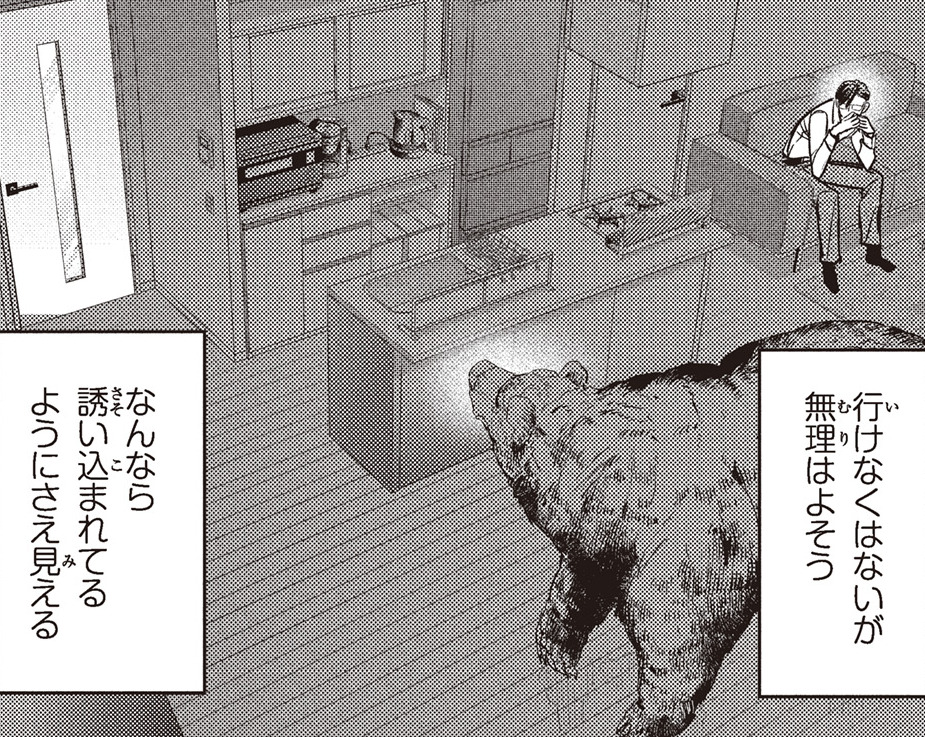
Kumada comes home from work to find a huge, very real bear in his apartment. A cup of coffee doesn’t calm him down. He tells himself to sort out the situation, admits he knows nothing about bears and has no physical strength to speak of, and resolves to raise his odds of survival. His first concern is an escape route.
- 熊田:
- 「行けなくはないが無理はよそう」
- “I could make it, but let's not push my luck.”
- 「なんなら誘い込まれてるようにさえ見える」
- “If anything, it even looks like I'm being lured in.”
Kumada is looking for a way out past the bear in his kitchen. He could probably reach the door, but the open path bothers him. 誘い込まれてるように見える is “it looks like I’m being lured in”, and さえ marks that as the extreme reading: the route doesn’t just look risky, it even looks like a trap. ように ends in the particle に, so さえ comes after it.
Saying “Not Even” with さえ〜ない
With a negative, さえ names the bare minimum, and says even that isn’t the case. Anything beyond it is out of the question. パンさえ買えない is “I can’t even buy bread”. 挨拶する暇さえなかった is “there wasn’t even time to say hello”.
For an action, put さえ after the verb’s stem and use しない: 本を開きさえしない, “he doesn’t even open the book”. If the verb is in the ている form, さえ goes after て: 走ってさえいない, “they aren’t even running”. Or turn the action into a noun with こと: 歩くことさえできない, “I can’t even walk”.
A question inside the sentence takes さえ too: どこで亡くなったかさえわからない, “we don’t even know where he died”.
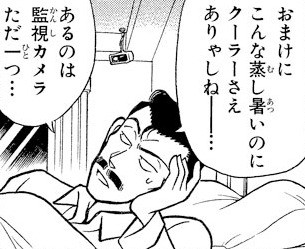
Kogoro, Ran, and Conan are guests on a Sherlock Holmes fan tour at a pension. At four in the morning, Kogoro lies awake grumbling that the room has no TV, no phone, and no newspaper.
- 小五郎:
- 「おまけにこんな蒸し暑いのにクーラーさえありゃしねー…」
- “And on top of that, it's this muggy and there isn't even an air conditioner…”
- 「あるのは監視カメラただ一つ…」
- “All we've got is one security camera…”
Kogoro lies awake at a Sherlock Holmes tour’s pension, grumbling that his room has no TV, no phone, and no newspaper. On a night this muggy, an air conditioner is the least he’d expect, and クーラーさえありゃしねー says there isn’t even that. ありゃしねー is a rough ありはしない, a blunt “there just isn’t”.
As Long as with 〜さえ〜ば
In a conditional, さえ marks the one thing that’s enough. If it holds, nothing else matters. これさえあれば大丈夫 is “as long as I have this, I’m fine”. 暇さえあれば本を読んでいる is “she reads whenever she has a spare moment”, literally “as long as there’s free time, she’s reading”.
English has several ways to say it: “as long as”, “if only”, “all it takes is”.
The conditional is usually ば. たら also works: 東京は物価さえ安かったら、住みやすいところだ, “as long as prices are low, Tokyo is an easy place to live”, but it’s a little less natural. と doesn’t work: 教科書さえあると is wrong.
When the condition isn’t met, endings like のに, んだけど, or なあ turn it into a wish or regret: 山田さんさえいたら、この試合には勝てるのに, “if only Yamada were here, we could win this game”.
With a verb, さえ can often go on either the noun or the verb with much the same meaning. いい大学にさえ入れれば and いい大学に入れさえすれば both mean “as long as he gets into a good university”. To put it on the verb, use the stem plus さえすれば: 行きさえすれば分かる, “just go and you’ll see”. With a て-form helper verb, さえ goes after て: 守ってさえいれば, 返してさえくれれば.
Adjectives and nouns have their own forms:
| Pattern | Example | Meaning |
|---|---|---|
| Noun + さえ + い-adjective (ければ) | 値段さえ安ければ | as long as the price is low |
| い-adjective (く) + さえあれば | 安くさえあれば | as long as it’s cheap |
| な-adjective or noun + でさえあれば | 元気でさえあれば | as long as you’re well |
| Noun + さえ + な-adjective or noun + なら | 体さえ健康なら | as long as I’m healthy |
Watch the forms: it’s 安くさえあれば, not 安いさえあれば, and 食べさえすれば, not 食べるさえすれば.
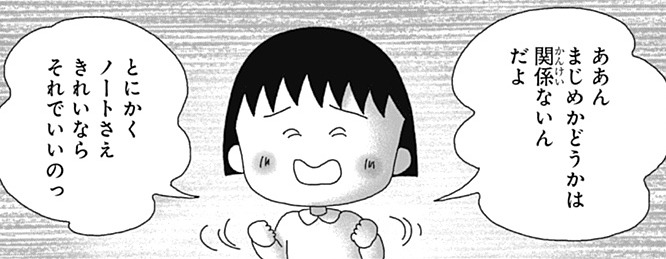
Maruko’s classmates showed off their neatly kept notebooks, and Maruko, who has never put any effort into hers, wants to fix hers before anyone asks to see it. Her older sister’s notebook turns out to be beautiful, and Maruko wonders how two sisters raised by the same parents ended up so different. Her sister says she, at least, doesn’t forget her homework or show up late, and that if Maruko lived a little more seriously, her notebook might get neater too.
- まる子:
- 「ああん まじめかどうかは関係ないんだよ」
- “Ugh, whether I'm serious or not has nothing to do with it!”
- 「とにかくノートさえきれいならそれでいいのっ」
- “Look, as long as my notebook is neat, that's all I need!”
Maruko’s sister says living more seriously would make Maruko’s notebooks neater too. Maruko wants the neat notebook without the effort. ノートさえきれいなら uses the noun + さえ + な-adjective + なら form: the notebook being neat is the one condition, and それでいい says that alone would be enough.
Negative Conditions with 〜さえ〜なければ
With a negative condition, さえ names the one obstacle in the way. テストさえなければ学校は楽しいんだけどなあ is “school would be fun if only there were no tests”. あいつさえいなければ, “if only that guy weren’t around”, is a common line in manga. Said on its own and left trailing off, it’s a resentful wish.
The forms follow the ones in the last section: 雨さえ降らなければ, 怒られさえしなければ, 辛くさえなければ, 有名人でさえなければ. Casual speech shortens なければ to なけりゃ or なきゃ: これさえなけりゃ.
As with positive conditions, regret comes from the rest of the sentence, not from the negative. 大雨さえ降らなければ予定通り行われます, “it’ll go ahead as planned as long as there’s no heavy rain”, is a plain condition. The wishful tone in テストさえなければ comes from んだけどなあ.
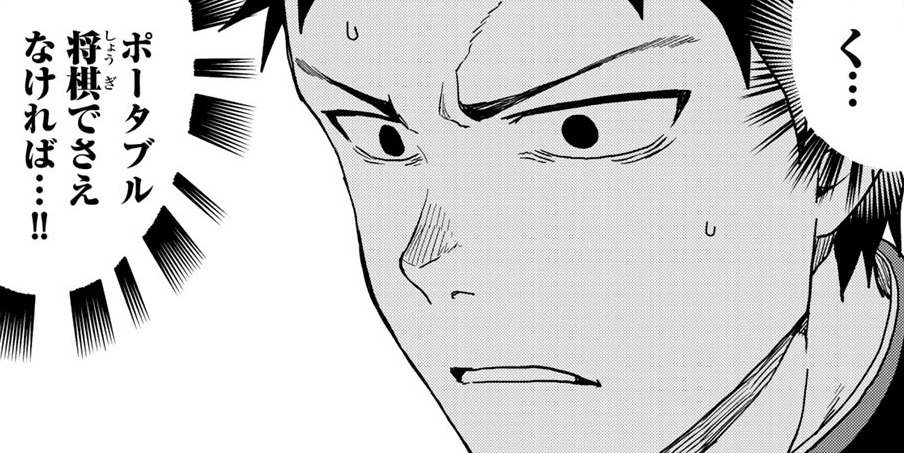
Takeru, the shogi club’s new member, is playing Urushi on the club’s board, so Ayumu is left with a portable shogi set. Urushi praises the crisp sound Takeru makes when he snaps a piece down. Ayumu tells her he can make a much better sound than Takeru and slaps down a piece of his own, but it only makes a feeble “peko”.
- 歩:
- 「く…」
- “Ngh...”
- 「ポータブル将棋でさえなければ…!!」
- “If only this weren't portable shogi...!!”
Urushi praised the click of Takeru’s shogi pieces, and Ayumu’s piece only went “peko” on his portable set. ポータブル将棋でさえなければ uses the noun + でさえなければ form: the portable set is the one obstacle he blames. He leaves the result unsaid, so the line is a sore loser’s “if only”.
Adding One More Thing
さえ can also add one more thing to a pile-up, usually something more severe: 雨ばかりではなく、風さえ吹いてきた, “not only is it raining, now the wind’s picking up too”.
さえ works best when the build-up is clear from context, as ばかりではなく makes it here. Otherwise まで usually sounds more natural: 女まで酔っぱらっている, “even the women are drunk”.
As It Is with ただでさえ
ただでさえ means “even normally” or “as it is”. It sets a baseline before something more is added. ただでさえ暑いのに走ることになるとは is “it’s hot enough as it is, and now I have to run?”
What’s added often makes things worse, but it can go the other way too: 唯でさえ安いのに、バーゲンともなると破格の安さだ, “it’s cheap to begin with, and in a sale it’s a steal”.
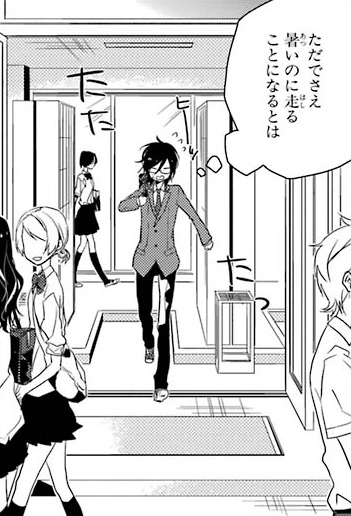
Hori plans to rush to the supermarket after school for its egg time sale, which ends at 4:00, as long as no surprise committee meeting comes up. The next day, one does. Stuck at the meeting, she texts Miyamura, leaving the eggs to him.
- 宮村:
- 「ただでさえ暑いのに走ることになるとは」
- “To think I'd end up running when it's hot enough as it is...”
Hori is stuck at a committee meeting, so she texts Miyamura to grab the time-sale eggs before 4:00. ただでさえ暑い sets the baseline: the heat is bad enough by itself. のに piles the running on top, and the closing とは, “to think”, shows he can’t believe his luck.
Comparing さえ with Other Words for “Even”
Several particles can mean “even”. 最近は子ども{も/さえ/すら/でも/だって/まで}パソコンを使っている, “these days even kids use computers”, works with any of them.
- For “even”, すら works much like さえ, but it’s less common.
- まで says the range has spread that far. It’s the more natural choice for adding one more thing when the build-up isn’t clear, and it rarely takes a negative ending.
- も can mean “even” too. In a plain list, though, it just adds an item: 小学生も知っている puts grade-schoolers on the list, while 小学生さえ知っている marks that as surprising.
- でも and だって can also mean “even”: 子どもでもできる. だって is the more casual of the two. See 〜だって.
Further Reading
- 〜さえ〜ば, 日本語文型バンク (NINJAL) (ninjal.ac.jp)
- さえ/でさえ, 教科書を作ろう (Japan Foundation) (jpf.go.jp)
- さえ…ば, 教科書を作ろう (Japan Foundation) (jpf.go.jp)
- 副助詞, 東京外国語大学言語モジュール (coelang.tufs.ac.jp)
- さえ, デジタル大辞泉 and 精選版 日本国語大辞典 (Kotobank) (kotobank.jp)
Related Grammar
- Even with 〜だって
- だって is a more casual "even".
- Hypothetical condition with 〜ば
- さえ〜ば is the ば conditional with さえ marking the one condition that's enough.
- Even if with 〜ても
- 〜ても is "even if". It says the condition doesn't change the result. さえ〜ば says the condition is all it takes.