Even if with 〜たって
Grammar: Unexpected » 〜たって
〜たって is a casual 〜ても, “even if”. With いくら or a question word in front, it means “no matter how” or “no matter what”. A verb takes it the way it takes the past tense, so 行く becomes 行ったって, “even if you go”, and 食べる becomes 食べたって. Verbs whose past ends in だ take 〜だって, as in 読んだって.
An い-adjective takes くたって, and いい becomes よくたって. A negative takes なくたって. 〜たっていい is a casual 〜てもいい, “it’s okay to”.
Usage Notes
〜たって is spoken. It’s common in casual talk, including arguments and complaints, often with いくら or どんなに in front for “no matter how much”. In formal writing and careful speech, use 〜ても.
The same sounds can be a quote. 行ったって on its own can mean “they said they went”. A verb that reports the words, as in 行ったって言ってた, also points to a quote. A result that holds anyway points to “even if”.
Formation
View formation details
- Verb (past) + って
- 謝ったって許さない
- "I won't forgive you, even if you apologize."
- Verb (past in だ) + って
- いくら呼んだって来ないよ
- "It won't come, no matter how much you call."
- Note: Verbs ending in ぐ, ぬ, ぶ, and む take だって.
- い-adjective (drop い) + くたって
- 高くたって買う
- "I'll buy it even if it's expensive."
- Note: いい becomes よくたって.
- Verb (ない-form, drop ない) + なくたって
- 言わなくたってわかる
- "I know even if you don't say it."
- 〜たっていい (it's okay to)
- 今日くらい休んだっていいよ
- "You can take today off, at least."
- 〜なくたっていい (no need to)
- そんなに怒らなくたっていいじゃん
- "You don't have to get so mad."
- Noun + だって
- 雨だって行くよ
- "I'm going even if it rains."
- Note: Nouns and な-adjectives take だって, the same だって that means "even".
- Noun + じゃなくたって
- 今日じゃなくたっていい
- "It doesn't have to be today."
- Question word + 〜たって
- 何を言ったって無駄だ
- "No matter what you say, it's no use."
- 〜ったって (you say..., but)
- 安いったって、千円はするよ
- "You say it's cheap, but it still costs at least a thousand yen."
- Note: A contraction of と言ったって.
Saying “Even If” with 〜たって
〜たって sets up a condition and then says it won’t change anything. It’s a casual 〜ても.
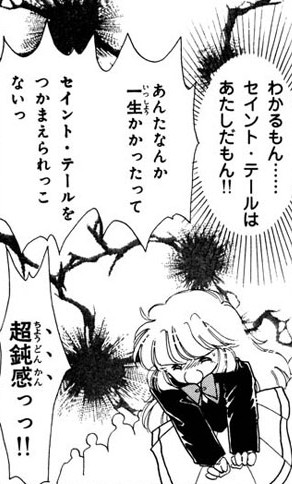
Asuka Jr. is feeling down after Saint Tail committed a theft without giving him advance notice. When Meimi tries to console him, he tells her she doesn’t understand Saint Tail.
- 芽美 (thinking):
- 「わかるもん…… セイント・テールはあたしだもん!!」
- “I do understand... Because I'm Saint Tail!!”
- 芽美:
- 「あんたなんか一生かかったってセイント・テールをつかまえられっこないっ」
- “Someone like you can take a lifetime and there's no way you can catch Saint Tail!”
Asuka Jr. has been moping since Saint Tail pulled off a theft without the usual advance notice. When Meimi tries to cheer him up, he tells her she doesn’t understand Saint Tail. Meimi fumes. She understands Saint Tail perfectly, because she is Saint Tail, but that part has to stay in her head. 一生かかる means “take a whole lifetime”, and 一生かかったって is “even if it takes your whole life”. つかまえられっこない rules out success even then. There’s no way he’ll catch her.
〜っこない pairs naturally with 〜たって. The first clause names an extreme case, and the second rules out success even then.
Attaching 〜たって to Verbs
For verbs, 〜たって follows the same shape as the past tense. Take the past form and add って. It doesn’t make the sentence past. 明日行ったって is “even if you go tomorrow”.
| Dictionary form | Past | Even if |
|---|---|---|
| 行く | 行った | 行ったって |
| 食べる | 食べた | 食べたって |
| 書く | 書いた | 書いたって |
| 読む | 読んだ | 読んだって |
| 泳ぐ | 泳いだ | 泳いだって |
| 死ぬ | 死んだ | 死んだって |
| する | した | したって |
Verbs whose past ends in だ, those ending in ぐ, ぬ, ぶ, and む, take だって. 死んだって嫌だ, a casual 死んでも嫌だ, is “I’d rather die”.
Telling “Even If” from a Quote
Because 〜たって looks like a past verb plus って, it can also be a quote. 呼んだって can mean “even if you call” or “I hear they called”. The rest of the sentence decides.
- いくら呼んだって来ないよ。
It won’t come, no matter how much you call it.
- 先生が呼んだって。
- I hear the teacher called for you.
Look at what comes next. A verb that reports the words, as in 呼んだって言ってた, “they said they called”, or 呼んだって聞いた, “I heard they called”, points to a quote. So does a noun like こと or 話. A result that holds anyway, as 来ないよ does in the first example, points to “even if”. That result can itself use 聞く, “listen”. 何度言ったって聞かない is “no matter how many times you tell him, he won’t listen”. いくら or どんなに in front points that way too. A bare 〜たって at the end of a sentence is usually a quote, unless the speaker has flipped the clauses, as in 無駄だよ、いくら呼んだって. Quoting and reporting with と and って covers the quoting use.
No Matter How with いくら and どんなに
いくら and どんなに, “however much”, often come before 〜たって. Together they mean “no matter how much”. A question word works the same way, as in 何を言ったって, “no matter what you say”.
- いくら探したって見つからない。
I can’t find it, no matter how much I look.
- どう見たって子供だろ。
- Any way you look at it, that’s a kid.
どう見たって, “any way you look at it”, is common enough to treat as a set phrase. どうしたって, “no matter what”, is another.
Adjectives and Negatives with くたって and なくたって
An い-adjective drops its い and takes くたって. いい uses its other form, よい, so it becomes よくたって. A negative does the same with ない, so it takes なくたって.
- 怖くたってやるしかない。
Even if it’s scary, I have to do it.
- 言わなくたってわかるよ。
- I know even if you don’t say it.
It’s Okay to with 〜たっていい
〜たっていい is a casual 〜てもいい, “it’s okay to”. 〜なくたっていい is “there’s no need to”. With じゃん or じゃない at the end, the speaker pushes the point on the listener. It can mean “what’s wrong with…?” or, with 〜てくれる, complain that someone could at least have done something.
- そんなに怒らなくたっていいじゃん。
You don't have to get so mad.
- たまには休んだっていいんだよ。
It’s okay to take a break once in a while.
- 起こしてくれたっていいじゃない!
- You could at least have woken me!
Permission to do with 〜てもいい covers the neutral form.
Nouns with だって and じゃなくたって
Nouns and な-adjectives use だって, matching でも in 〜ても. 雨だって行く is “I’ll go even if it rains”. This is the same だって as in Even with 〜だって, and the line between “even if it’s rain” and “even rain” is thin.
The negative is じゃなくたって, “even if it isn’t”.
- 今日じゃなくたっていいよ。
- It doesn't have to be today.
Even If You Say So with 〜ったって
と言ったって, “even if you say”, shrinks to 〜ったって. It picks up a word, grants it, and then limits it.
- 安いったって、千円はするよ。
- You say it’s cheap, but it still costs at least a thousand yen.
This 〜ったって attaches to whatever is being quoted, whether a plain form, a command, or a noun. It isn’t built on the past form the way 〜たって is. 行くったって is “you say you’re going, but”, and 来いったって is “you say come, but”. 行ったって is “even if you go”.
そう言ったって, “even if you say so”, isn’t a contraction. It’s 言う with the ordinary 〜たって. It pushes back on what someone just said, and it can come across as “easy for you to say”. なんてったって comes from なんと言ったって, “whatever anyone says”, and it has settled into meaning “above all” or “after all”.
Comparing 〜たって with 〜ても
〜たって and 〜ても mean the same thing in most sentences. The main difference is register.
- 今さら謝っても遅い。
Even if you apologize now, it’s too late.
- 今さら謝ったって遅いよ。
- Even if you apologize now, it’s too late!
〜ても works anywhere, from casual talk to formal writing. 〜たって belongs in casual conversation. Arguments often use it, but it doesn’t have to sound annoyed, as in 笑われたってかまわない, “I don’t mind if they laugh at me”.
One exception is a single past event and its outcome, stated as fact. 薬を飲んでも治らなかった, “I took the medicine, but it didn’t help”, is less natural with 〜たって. Use 〜ても there. A past habit is fine with either, as in 若いころは徹夜したって平気だった, “when I was young, staying up all night was no problem”.
Further Reading
- たって, Bunpro (bunpro.jp)
- たって, デジタル大辞泉 via Weblio (www.weblio.jp)
Related Grammar
- Permission to do with 〜てもいい
- 〜たっていい and 〜なくたっていい are casual 〜てもいい and 〜なくてもいい.
- Even with 〜だって
- After a noun, だって means "even" or "too". 雨だって行く sits between the two pages.
- Anyone and always with 誰だって and いつだって
- A question word with だって covers every case, the noun version of 何を言ったって.
- That said with だって
- At the start of a sentence, だって gives a reason or an excuse.
- Quoting and reporting with と and って
- At the end of a sentence, 行ったって is usually a quote, "they said they went".
- A strong denial with 〜っこない
- 〜たって can set up a flat denial, as in 一生かかったってつかまえられっこない.
- Grammar in the Kansai dialect
- Kansai speech uses 〜たかて, as in 行ったかて.