〜のに joins two facts when the second goes against what the first would lead you to expect: “even though A, B”. It’s a stronger “but” than けど or が, and it usually carries the speaker’s feelings about the mismatch, such as surprise, complaint, or disappointment.
勉強したのに、落ちた means “even though I studied, I failed”. The speaker is not happy about it.
Usage Notes
のに follows the plain form. In the non-past, だ after a noun or な-adjective becomes な: 休日なのに, 静かなのに. Past and negative forms don’t change: 休日だったのに, 休日じゃないのに. Polite ますのに and ですのに exist, but they sound overly polite.
In the usual AのにB pattern, the speaker presents the mismatch as established, rather than merely imagining it. The second half normally cannot be a command, request, invitation, intention, guess, or ordinary question. Use けど for those: もう12時だけど、もう少し勉強しよう, “it’s already midnight, but I’ll study a bit more”. Explanatory questions with のだ, such as 雨なのに行くんですか, “you’re going even though it’s raining?”, are allowed. These include why-questions about an unexpected fact. So are rhetorical questions and requests to stop an action already under way or about to happen.
The feeling is usually negative, but it doesn’t have to be. のに can also meet good news with surprise, or kindness with thanks.
Speakers often end a sentence with のに and leave the second half unsaid, since the situation supplies it. This trailing のに can sound disappointed, complaining, or surprised. After a condition, it describes what would happen, or would have happened, if things were different.
Don’t confuse this with のに for purpose, which follows a verb’s dictionary form and comes before words like 使う, 必要, and 便利: 果物を切るのに使う, “used for cutting fruit”. That のに marks no contrast.
Formation
View formation details
Verb (plain form) + のに
一生懸命練習したのに、負けた
"Even though I practiced so hard, I lost."
い-adjective + のに
寒いのに、半袖で出かけた
"Even though it was cold, he went out in short sleeves."
な-adjective + な + のに
この問題は簡単なのに、誰も解けない
"Even though this problem is easy, nobody can solve it."
Noun + な + のに
休日なのに、仕事がある
"Even though it's a day off, I have work."
Noun / な-adjective + だった + のに
休日だったのに、仕事があった
"Even though it was a day off, I had work."
Note: Only non-past だ becomes な. Other forms stay as they are.
Sentence-final のに
あんなに頑張ったのに…
"After all that effort…"
Note: The second half is left unsaid. Here, it's that the effort didn't pay off.
Condition + のに (what would have happened)
もっと早く来れば、間に合ったのに
"If you'd come earlier, you would have made it."
なのに (starting a sentence)
毎日水をやった。なのに、花は枯れてしまった
"I watered it every day. And yet the flower died."
A Result Against Expectations
The first half sets up an expectation, and the second half breaks it. The speaker is usually surprised or unhappy about it, but sometimes the surprise is a welcome one.
のに states that S2 holds even though it conflicts with what S1 would normally lead you to expect. In many cases, it expresses surprise or dissatisfaction about that.
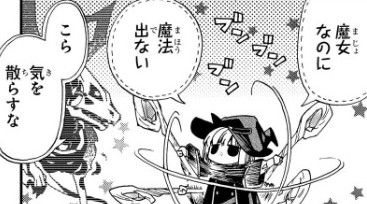
In order to make money to survive and continue her path of becoming a mage, Eve takes on a request to defeat a fanged lynx that has been attacking a merchant in the forest. She attempts to use her new magick staff against the beast, but no magick materializes from it.
Eve’s staff gives her nothing when she tries to use it against the lynx. A mage is supposed to make magic come out, so 魔女なのに sets up the expectation and 魔法出ない breaks it. 魔女 is a noun, so it takes な before のに.
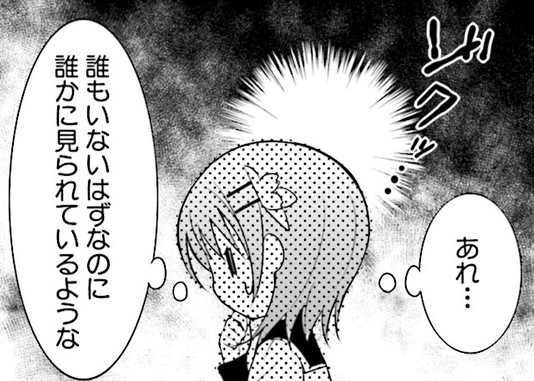
Cocoa is alone in the changing room. 誰もいないはず, “nobody should be here”, is what she expects, and the feeling of being watched goes against it. はずなのに is a common pairing: “it should be so, and yet”.
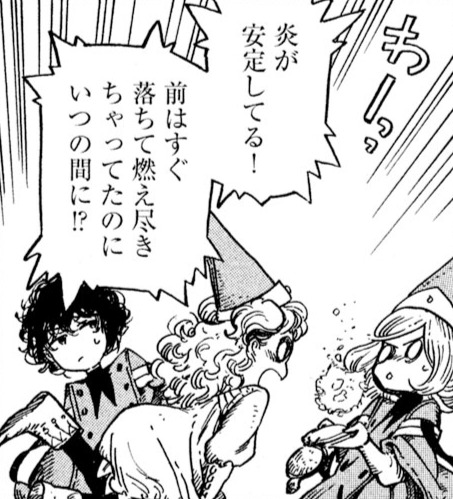
Coco and her friends are trapped in a maze and trying to find a way past a dragon. Seeing the others working out magic to use, Coco tries her hand at a spell, creating a flame. Agott isn’t impressed, but Tetia feels otherwise.
テティア:
「炎が安定してる!」
“The flame is stable!”
「前はすぐ落ちて燃え尽きちゃってたのにいつの間に!?」
“It used to go out and burn out right away, so when did this happen!?”
Coco’s flame used to drop and burn out right away, so the steady flame is a surprise. Here the surprise is a happy one. のに sets the past failures against what the friends see now, and いつの間に!?, “since when!?”, spells out the surprise. Here it is an exclamation rather than an ordinary request for information.
Example 4 of 7: Hearing you're only sixteen with 〜そうだ
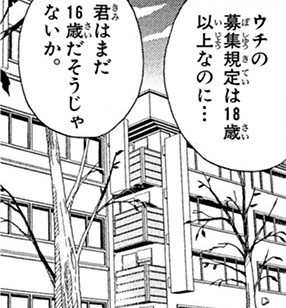
Hayate is a first-year high school student who works as a bicycle courier, even on Christmas Eve, because both his parents refuse to work. When he gets back to the office, the manager tells him he’s fired. Hayate protests that he does his job properly, and the manager agrees he’s the fastest and best courier they have. So why fire him? The manager says Hayate has been lying about his age.
Hayate’s manager is firing him. The company hires only people eighteen and older, so 18歳以上なのに sets up the rule. The manager trails off, and his next line breaks it: he hears Hayate is only sixteen. 18歳以上 works as a noun, so it takes な before のに.
Example 5 of 7: Not even an air conditioner with 〜さえ
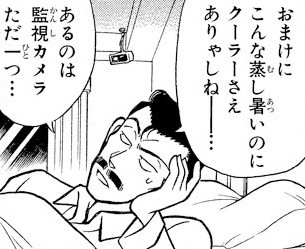
Kogoro, Ran, and Conan are guests on a Sherlock Holmes fan tour at a pension. At four in the morning, Kogoro lies awake grumbling that the room has no TV, no phone, and no newspaper.
小五郎:
「おまけにこんな蒸し暑いのにクーラーさえありゃしねー…」
“And on top of that, it's this muggy and there isn't even an air conditioner…”
Kogoro lies awake in a pension room that has no TV, phone, or newspaper. こんな蒸し暑いのに sets up the expectation: a night this muggy calls for an air conditioner. クーラーさえありゃしねー breaks it, since the room doesn’t even have one.
Example 6 of 7: Buying finches instead of waiting with 〜きれずに
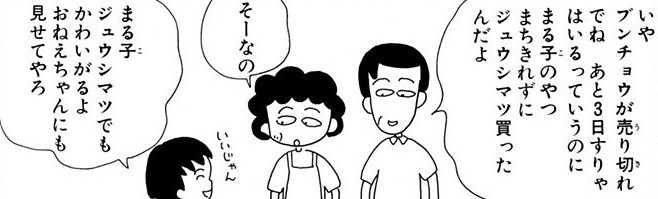
Dad agreed to buy Maruko a Java sparrow chick, and she went with him to the pet shop. They come home with a pair of society finches instead, and Mom asks why they aren’t Java sparrows.
Dad explains why Maruko came home with finches. The shop said Java sparrows would come in three days, and yet Maruko couldn’t wait. っていうのに sets up what should have happened, and the main clause says what she did instead.
Example 7 of 7: Interrupted in a restroom stall with 話しかける
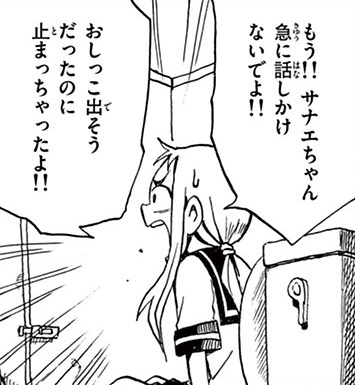
In the girls’ restroom, Sanae and Yukari wonder whether Nishikata and Takagi are dating. Sanae teases Yukari by calling out to Mina, who is inside a stall, that Yukari wants to flirt with boys. When Mina doesn’t answer, Sanae keeps shouting her name.
Sanae’s shouting has startled Mina in a restroom stall. 出そうだったのに止まっちゃった sets what was about to happen against what did: it was about to come out, and now it has stopped. Mina blames Sanae.
Complaints and Protests
Often the speaker uses のに to point at behavior that ignores what the situation calls for. The second half normally describes an established situation, so a command does not usually follow のに. Rhetorical and explanatory のだ questions are allowed. A prohibition can also stop an action already under way or about to happen.
S2 of a のに sentence is basically something known to be a fact. For that reason, expressions like ①, ②, and ③ below never appear in S2. (① commands, requests, and intentions; ② speaker judgments such as だろう; ③ questions.)
Prohibitions, which command or request that someone not do an action, can be used in the S2 of のに. However, this is limited to cases where they are said to someone who is already about to do that action.
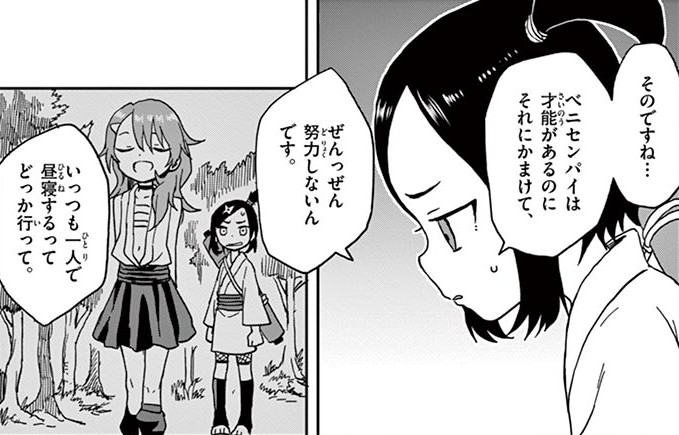
During a free day from training, Touwata and Mizubashou approach Tsubaki to request a favor. She would like Tsubaki to challenge Benisumomo to a one-on-one fight.
トウワタ:
「そのですね… ベニセンパイは才能があるのにそれにかまけて、ぜんっぜん努力しないんです。」
“Well, you see... Beni-senpai has talent, but she takes it for granted and doesn't put in any effort at all.”
「いっつも一人で昼寝するってどっか行って。」
“She always goes off somewhere to take a nap alone.”
Touwata wants Tsubaki to challenge Beni-senpai. Talent ought to lead to great things, so 才能があるのに sets up the expectation. Beni-senpai ignores it: she leans on her talent and makes no effort at all. Touwata’s のに turns the observation into a complaint.
Example 2 of 4: Experiencing danger during hide-and-seek with 〜目にあう
During a hide-and-seek game at the park, Ayumi hides in a car trunk and falls asleep. She wakes to find the car moving and discovers a bag of money, a slimy saw, and what seems like a severed head. Conan, tracking her via their Detective Boys badges, prepares to pursue on his electric skateboard. Genta and Mitsuhiko join him on it, but Conan urges them to stay behind due to the danger.
元太:
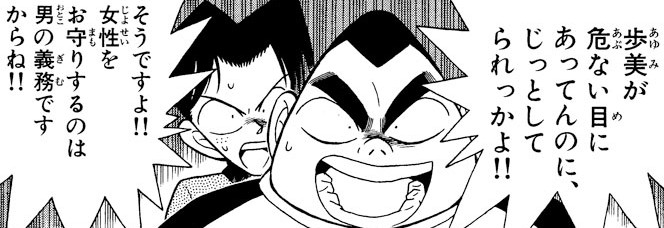
「歩美が危ない目にあってんのに、じっとしてられっかよ!!」
“Ayumi is in danger, so how can I just stand by and do nothing?”
光彦:
「そうですよ!! 女性をお守りするのは男の義務ですからね!!」
“That's right! It's a man's duty to protect women!”
Conan tells Genta and Mitsuhiko to stay behind. Genta protests: Ayumi is in danger, and he’s supposed to sit still? 目にあってんのに is a casual 目にあっているのに. じっとしてられっかよ, “like I could sit still!”, is a rhetorical question that means he can’t. That’s why it can follow のに.
Example 3 of 4: The trouble of forgetting about today with せっかく〜のに
After Cocoa has a string of bad luck throughout the day, Chiya takes her to the tea shop where Syaro works to get her mind off everything that happened.
Just as Cocoa’s finally cheered up, Syaro comments to herself about her own bad luck, returning Cocoa to gloom.
千夜:
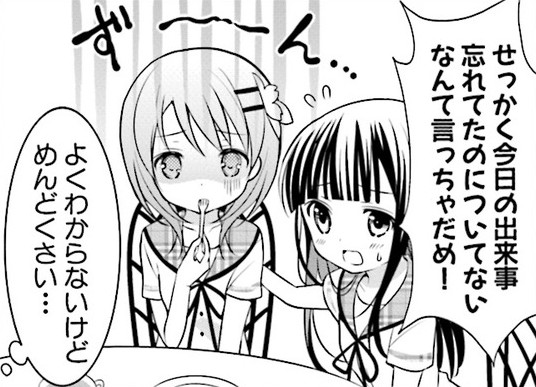
「せっかく今日の出来事忘れてたのについてないなんて言っちゃだめ!」
“We went through the trouble to forget about today, so don't say bad luck!”
シャロ:
「よくわからないけどめんどくさい…」
“I don't really understand, but this is a pain...”
Cocoa had finally forgotten her bad day, and Syaro’s grumble about her own bad luck brings it all back. Chiya scolds Syaro. A command can’t normally follow のに, but Syaro’s grumbling is already under way. 言っちゃだめ, “you mustn’t say that”, tells her to stop, so it fits the limited prohibition exception. せっかく adds that the forgetting took effort.
Example 4 of 4: Can't give up on Tanabata with あきらめきれない
It’s the day before Tanabata, and Maruko needs a bamboo branch to hang her wishes on. Dad brought one home by chance last year but won’t find one this time, so she throws a tantrum. Mom tells her it makes no difference whether she has bamboo, and Dad says sometimes you can’t get what you want.
まる子:
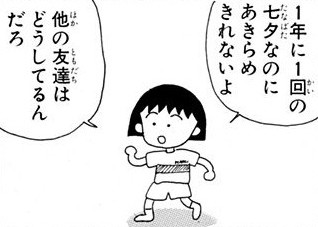
「1年に1回の七夕なのにあきらめきれないよ」
“Tanabata only comes once a year. I can't just give up on it!”
Maruko’s parents tell her to go without a bamboo branch for Tanabata. She protests with 1年に1回の七夕なのに: it only comes once a year, and yet she’s supposed to give it up.
Surprise, Praise, and Thanks
のに isn’t always a complaint. When the second half is good news or someone’s kindness, のに shows surprise or gratitude: 若いのに偉いね, “you’re so young, yet so admirable”. This is less common than complaints. It also shows up in apologies, where the speaker acknowledges what the other person gave up.
Specifically, it expresses surprise, reproach, regret, dissatisfaction, reluctance, praise, and so on. In practice, negative evaluations such as reproach and regret are common, and praise is rare.
(14) [こんなに親切にして頂いたのに、その上お土産まで頂いてしまって…] describes a positive matter piled (unexpectedly) on top of a first clause already judged positive, expressing surprise and gratitude.
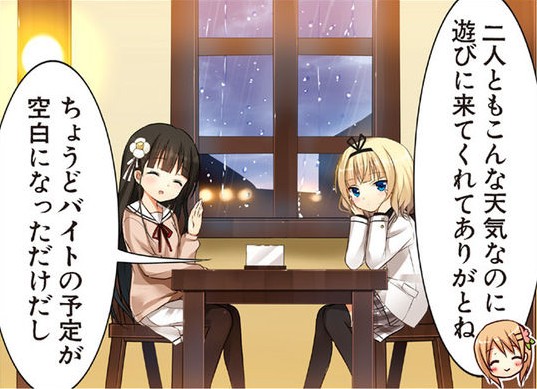
Chiya and Syaro come to the café in bad weather. Weather like this would keep most people home, so Cocoa’s こんな天気なのに makes their visit sound all the kinder, and her thanks follows.
Example 2 of 3: Thank you for always being by side with 本当にありがとう
Due to a condition where she loses all memories of friends every Monday morning, Fujimiya acts cold toward classmates to avoid becoming friends. While eating lunch on the roof with Hase, she remarks how hard it is to act that way. Hase says it’s because she’s naturally a nice person. He recalls when he first tried becoming friends with her, how Fujimiya avoided eye contact with him and gave only brief responses. Fujimiya is shocked to hear how she had treated him.
藤宮:
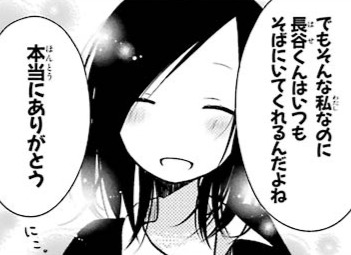
「でもそんな私なのに長谷くんはいつもそばにいてくれるんだよね」
“But even though I was like that, Hase-kun, you're always by my side, aren't you?”
Fujimiya learns how coldly she once treated Hase. そんな私なのに, “even though I was like that”, sets up the expectation that he’d keep his distance. Instead he stays by her side, and she thanks him for it.
Example 3 of 3: Joining me even though it's our day off with やのに
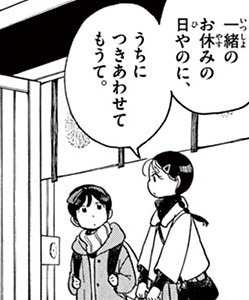
Sumire apologizes to Kiyo for bringing her along on their shared day off. A day off should be Kiyo’s own time, and Sumire has used it up. In Kansai speech, や replaces だ, so やのに matches standard なのに. The apology itself is つきあわせてもうて, “having made you keep me company”, with the rest left unsaid.
Trailing Disappointment
With nothing after it, のに leaves the second half to the situation. The speaker states what should have led somewhere else, and the situation makes the unsaid contrast clear. The tone is usually regret or a complaint.
[Sentence-final particle] (From the sentence-final use of の(に).) Attaches to the attributive form of inflecting words. Expresses complaint, dissatisfaction, resentment, reproach, and the like. "And I thought this would make me happy."
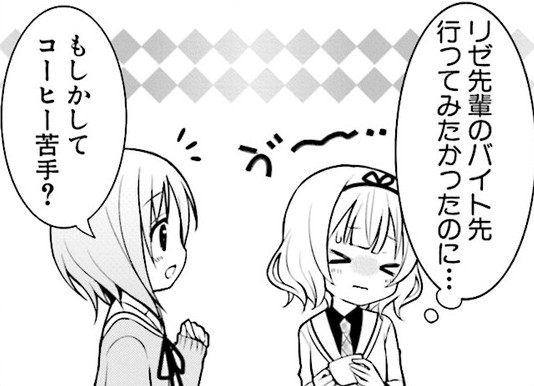
Syaro had wanted to visit Rize’s workplace, but it turns out to sell mostly coffee. The unsaid second half is that she can’t enjoy going there now. Cocoa guesses she doesn’t like coffee.
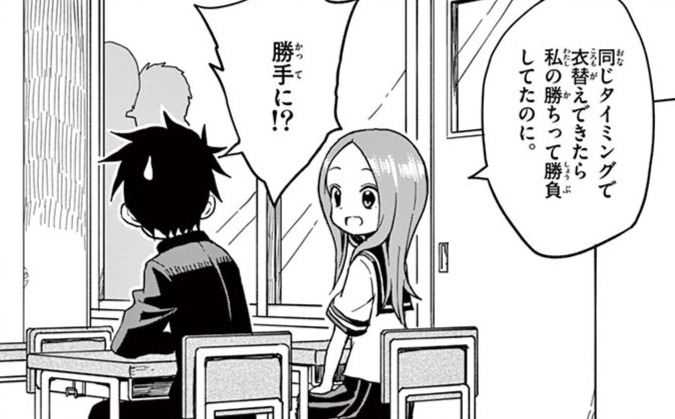
Nishikata arrives at school wearing his winter school uniform. He finds Takagi still wearing her summer uniform. Nishikata’s reason for the switch is that he heard the weather forecast for cooler temperatures. Takagi laments her carelessness.
高木:
「同じタイミングで衣替えできたら私の勝ちって勝負してたのに。」
“We had a contest going where if we switched uniforms at exactly the same time, it would count as my win.”
Takagi had made a private bet: if she and Nishikata switched to winter uniforms on the same day, she’d win. He switched without her, and のに leaves her loss unsaid.
Example 4 of 11: Losing all that built-up friendship with 水の泡になる
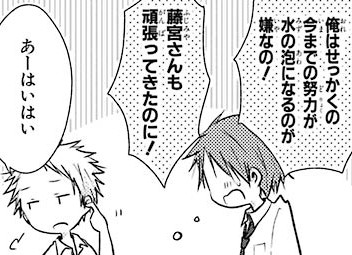
Although Fujimiya loses her memory of friends every Monday morning, she and Hase have become close enough that she feels comfortable around him when meeting him “for the first time” at school each Monday. Hase fears that progress will be lost during summer break.
長谷:
「俺はせっかくの今までの努力が水の泡になるのが嫌なの!」
“I hate seeing all my hard work up to now go down the drain!”
Hase fears summer break will undo the progress he and Fujimiya made. 頑張ってきたのに! points at her effort, and the unsaid half is that it could all be lost. The exclamation turns regret into protest.
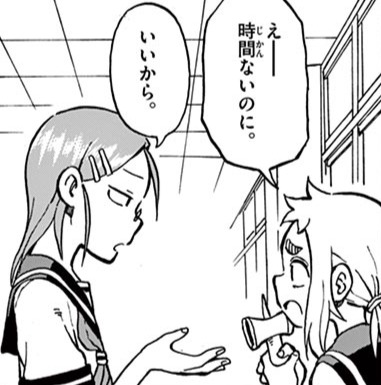
Yukari sees Mina with a kendama while between classes. She tells Mina they need to get to their next class, but Mina has decided not to head to the classroom until she successfully gets the ball onto the spike. Yukari tells Mina to hand it over to her to try.
Mina won’t head to class until she lands the kendama ball, so Yukari asks for a turn. Mina protests with 時間ないのに: there’s no time, and yet Yukari wants a go. The rest of her complaint is left unsaid.
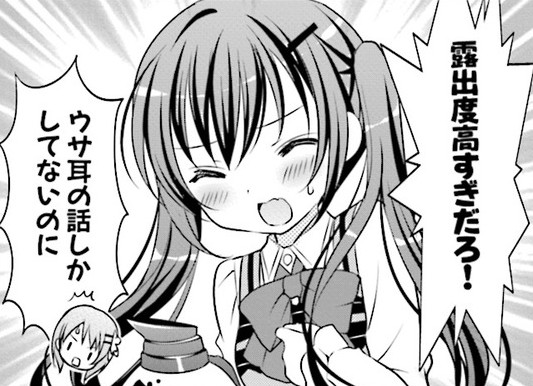
Cocoa only suggested bunny ears, and Rize pictured a skimpy bunny-girl outfit. ウサ耳の話しかしてないのに protests that Rize’s reaction doesn’t fit what was actually said.
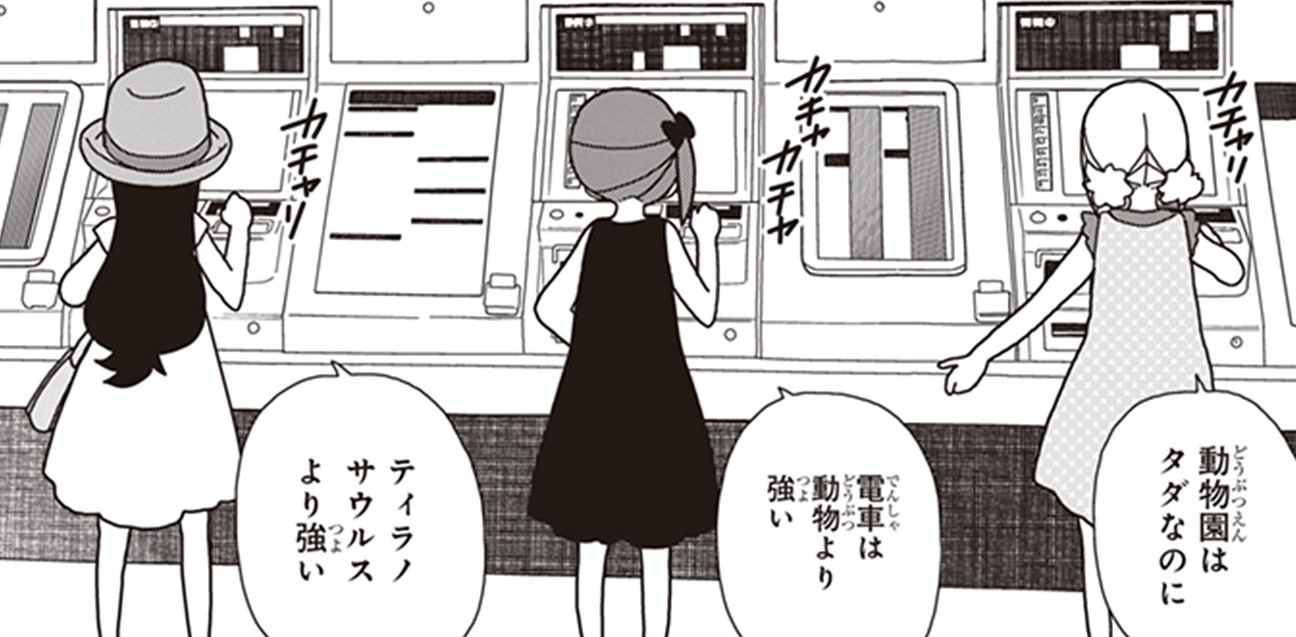
Yui and her friends get permission to ride the train to continue their search for the legendary giant robot. Tickets are listed as 70 yen for children.
The children’s train fare is 70 yen, while the zoo is free. Sacchan sets the free zoo against the paid train and leaves her complaint unsaid. タダ is a noun, so it takes な.
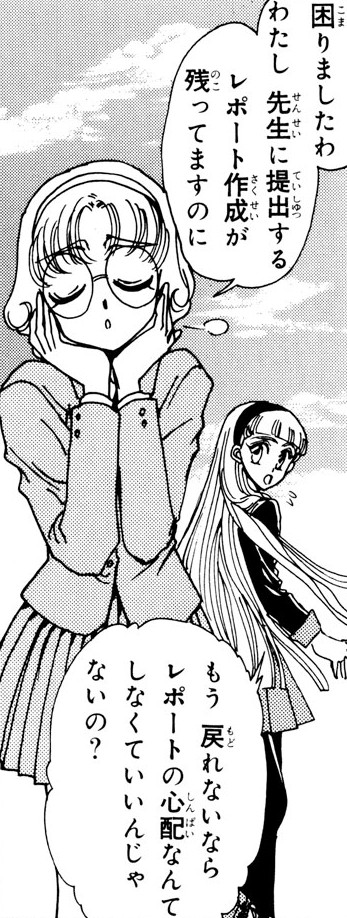
Fuu finds herself spirited away to another world, along with two other girls. A wizard appears before them, saying they cannot return home until they accomplish a specific goal.
風:
「困りましたわ。 わたし 先生に提出するレポート作成が残ってますのに」
“Oh dear. I've still got to write that report to hand in to the teacher...”
海:
「もう 戻れないならレポートの心配なんてしなくていいんじゃないの?」
“If we can't go back anyway, isn't there no point worrying about the report?”
Fuu has been pulled into another world with a report still due. Her 困りましたわ shows she’s troubled, and のに leaves unsaid that she can’t go home to write it. Polite ますのに is unusual and sounds very formal, which suits Fuu’s refined speech.
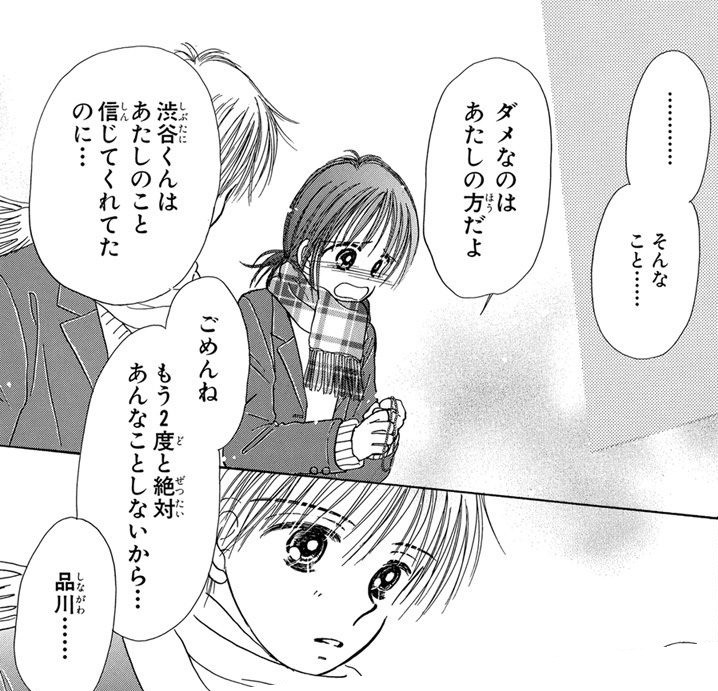
Miku secretly opened a text message on Shibuya’s phone and came to suspect him of seeing their senior, Yoyogi. Shibuya has just cleared up the rumors about him and Yoyogi, given Miku her White Day present early, and apologized for being such a hopeless boyfriend.
みく:
「………そんなこと……」
“...That's not...”
「ダメなのはあたしの方だよ」
“I'm the hopeless one.”
「渋谷くんはあたしのこと信じてくれてたのに…」
“You trusted me the whole time, and I...”
「ごめんね もう2度と絶対あんなことしないから…」
“I'm sorry. I'll never, ever do anything like that again...”
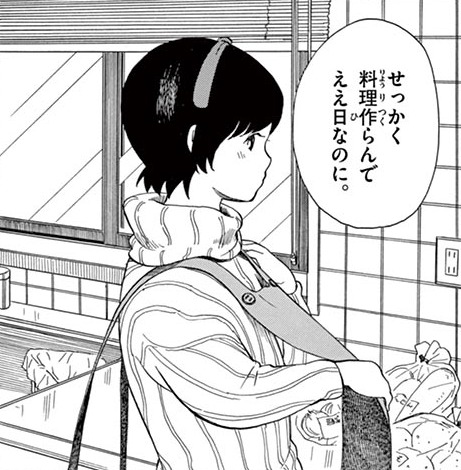
Kiyo cooks for a maiko house, and she has come to her aunt’s place to cook on her day off. Her aunt points out that she finally doesn’t have to cook today. The unsaid half is that she’s cooking anyway. 日 is a noun, so it takes な before のに.
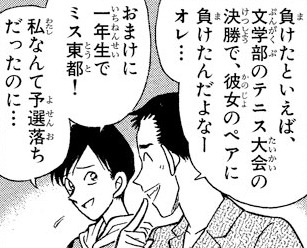
Example 11 of 11: Knocked out in the preliminaries with 予選
Kogoro, Ran, Sonoko, and Conan are guests at a villa where a university mystery club is celebrating member Asami’s birthday. The club’s vice president adds that the party also honors Asami’s novel, which just won a newcomer award. Morimoto, whose own story reached the final round of judging, says he can’t complain about losing to the club’s rising star.
野口:
「負けたといえば、文学部のテニス大会の決勝で、彼女のペアに負けたんだよなーオレ…」
“Speaking of losing, I lost to her doubles team in the final of the literature department's tennis tournament...”
宮崎:
「おまけに一年生でミス東都!私なんて予選落ちだったのに…」
“On top of that, she was Miss Toto as a freshman! I didn't even make it past the preliminaries...”
The mystery club is listing everything Asami has won, and Miyazaki adds that Asami became Miss Toto in her first year. 私なんて予選落ちだったのに…, “and I got cut in the preliminaries”, sets her own failure against Asami’s success. のに trails off with a touch of envy.
Trailing Surprise
Trailing のに also reacts to something unexpected the speaker has just seen or heard. The speaker sets the situation against what they expected or what is normally true. That contrast can also bring out embarrassment about an unusual situation.
(The second clause of conjunctive のに is omitted as obvious.) Expresses surprise at something contrary to expectation, or dissatisfaction at a disappointed expectation.
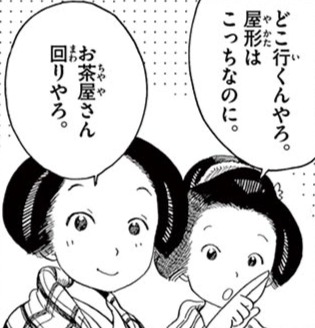
Two maiko watch Momohana leave a shop and head away from their lodge. 屋形はこっちなのに, “the lodge is this way”, states what they assumed, and her heading the other way is the surprise.
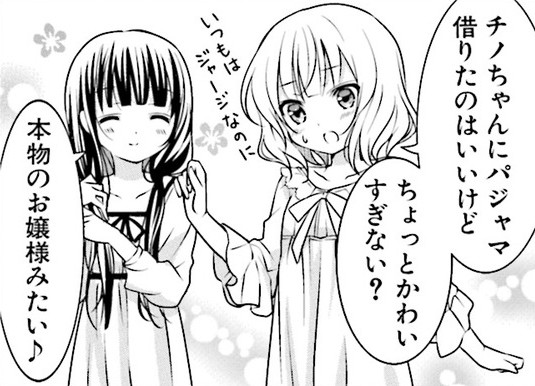
Syaro is wearing Chino’s cute borrowed pajamas. いつもはジャージなのに sets her usual tracksuit against how she looks tonight. Here のに voices a self-conscious contrast with her usual clothes.
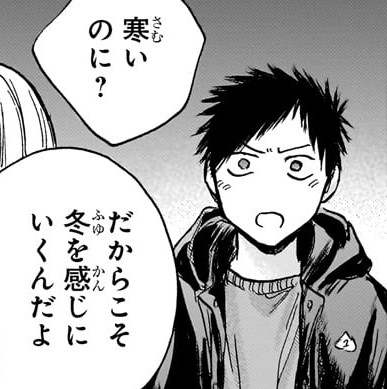
Example 3 of 5: That's exactly why I'm going for a walk with 〜だからこそ
Chinatsu is heading out for a walk just as Taiki gets home. Taiki’s 寒いのに? echoes her plan with a question: it’s cold, so why go out? Chinatsu answers that the cold is exactly the reason.
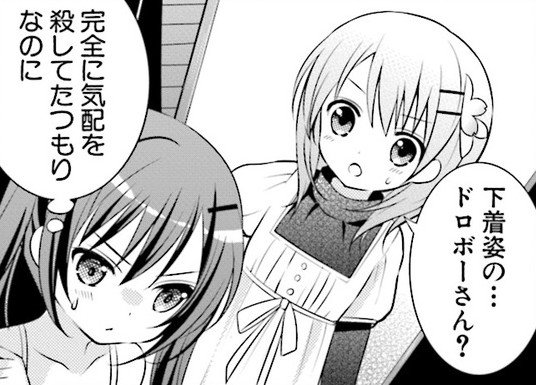
While changing into her uniform, Rize hid in the closet when she sensed someone unfamiliar nearby. Cocoa, feeling as though she was being watched, opened the closet door.
ココア:
「下着姿の…ドロボーさん?」
“A burglar… in their underwear?”
リゼ:
「完全に気配を殺してたつもりなのに」
“I thought I completely suppressed my presence, and yet...”
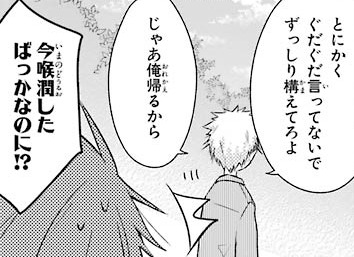
Fujimiya’s mother has asked Hase to meet her at the park on Sunday, and he’s anxious about what she wants. On Saturday he calls Kiryuu out to the same park to talk it over. Kiryuu, thirsty and without his wallet, gets Hase to buy him a drink. Hase admits he could have just phoned, but he wanted Kiryuu to set him straight in person.
桐生:
「とにかく ぐだぐだ言ってないで ずっしり構えてろよ」
“Anyway, quit whining and hold steady.”
「じゃあ俺帰るから」
“Okay, I'm heading home.”
長谷:
「今喉潤したばっかなのに!?」
“You only just wet your whistle, and you're leaving?!”
Hase has just bought Kiryuu a drink, and Kiryuu says he’s heading home. 喉潤したばっかなのに sets the drink he only just finished against leaving right away. ばっか works like a noun here, so it takes な.
What Would Have Happened
After a condition with 〜ば or 〜たら, のに describes what would happen if things were different. In reality they aren’t, and the speaker regrets it. The condition can also go unsaid. With いい, as in 〜ばいいのに or 〜たらいいのに, it becomes a wish (“if only…”) or advice tinged with reproach (“you should just…”).
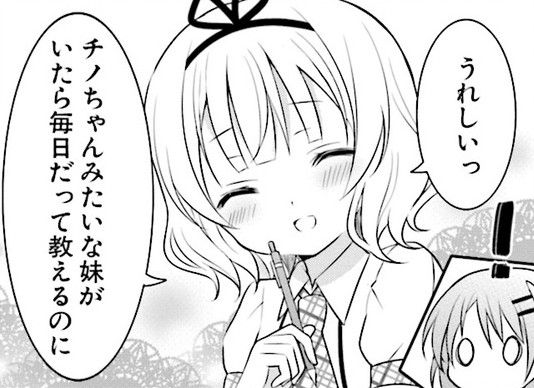
Syaro is delighted that Chino finds her the better teacher. 妹がいたら sets up a condition that isn’t real, and 教えるのに says what she’d do. She has no little sister like Chino, and のに carries the wistfulness.
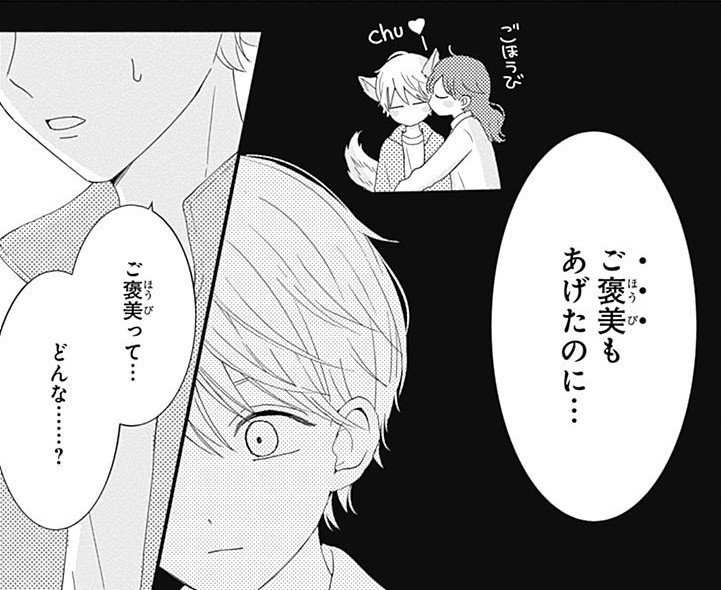
Ayumu tries to throw a basketball into the basket, only to have it bounce back and hit her in the face. After waking in the infirmary, she learns from her friend that Luna carried her there. When Luna denies it, Ayumu says she would have been happy if he did.
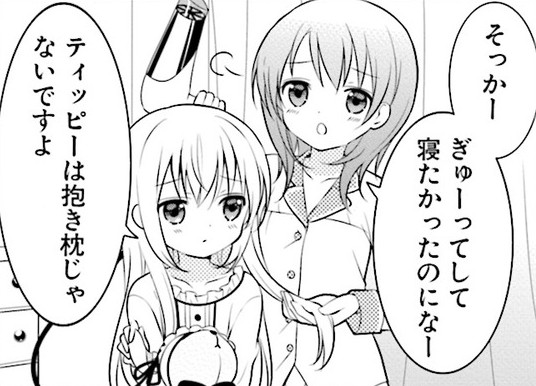
Ayumu heard that Luna carried her to the infirmary, but he denies it. ご褒美もあげたのに… means “I would even have given you a reward”. The unspoken condition is “if you’d admitted it”. Here あげた describes what would have happened, not something that did.
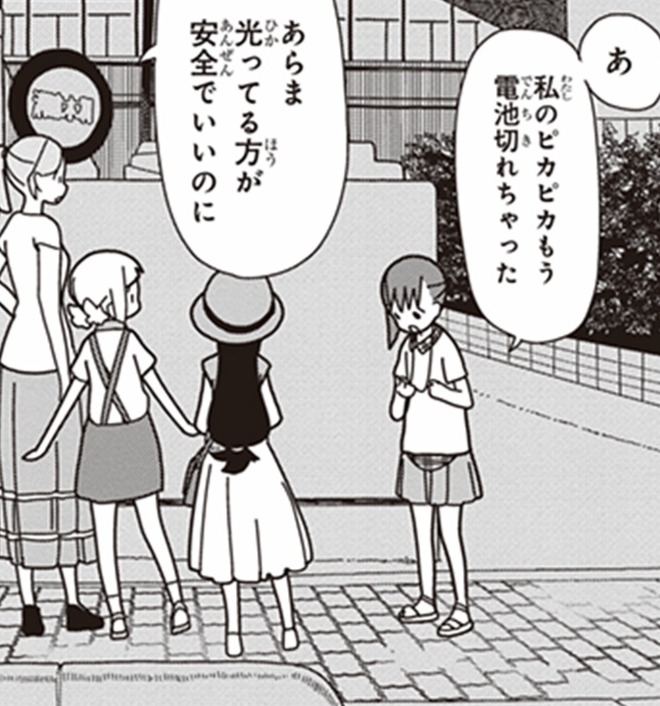
Yui’s glowing necklace from the night festival has run out of battery. Sacchan’s mother says it would be safer if it were still lit. The condition is left unsaid: if the necklace were still lit, it would be safer. Here 〜方がいいのに expresses a wish for a better situation, much like 〜ばいいのに.