Evidence-based guessing with 〜ようだ
Grammar: Conjecture » 〜ようだ
〜ようだ draws a conclusion from what the speaker has noticed: “it seems that…” or “it appears that…”
The clue can be a sight, a sound, a feeling in the speaker’s own body, or something remembered. The speaker judges what it means.
Usage Notes
ようだ follows the plain form of a clause. In the non-past, a な-adjective takes な and a noun takes の: 好きなようだ, 故障のようだ. Past and negative forms attach directly: 静かだったようだ, 学生じゃないようだ. The polite form is ようです.
どうやら and どうも often come before ようだ and mark the sentence as a guess. まるで marks the likening ようだ instead.
みたいだ makes the same kind of guess in a more conversational style. ようだ is more common in writing, narration, and formal or careful speech. 〜らしい can also guess from the situation, but it often relays what the speaker has heard and sounds more detached. ようだ presents the speaker’s own judgment of what they see or feel.
Formation
View formation details
- Verb (plain form) + ようだ
- 誰か来たようだ
- "It seems someone has come."
- い-adjective (plain form) + ようだ
- この問題は彼には難しいようだ
- "This problem seems difficult for him."
- な-adjective + な + ようだ
- 彼女は甘いものが好きなようだ
- "It seems she likes sweet things."
- Noun + の + ようだ
- 犯人はあの男のようだ
- "It appears the culprit is that man."
- Polite 〜ようです
- 時間が来たようです
- "It seems our time is up."
- Past 〜ようだった
- 彼は何も気づいていないようだった
- "He seemed not to have noticed anything."
- 〜ようで (connecting)
- 風邪をひいたようで、声が出ない
- "I seem to have caught a cold, and I've lost my voice."
Concluding from Evidence
The speaker notices something and states what it suggests. The clue can be outside, like lights that are off, or inside the speaker’s own body, like a sore throat. どうやら or どうも in front makes the guess explicit.
Example 1 of 2: Not just Machisu, but also Kyou with 〜だけでなく〜も
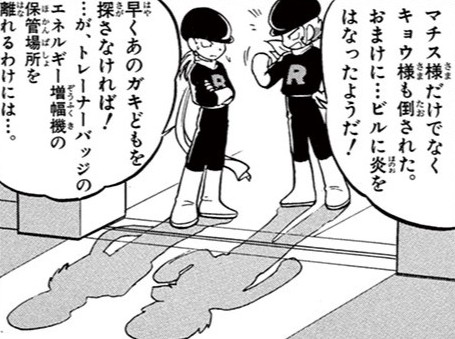
After infiltrating a Team Rocket hideout, Red, Green, and Blue take on the various Gym Leaders inside, including Machisu, Natsume, and Kyou. A couple of Team Rocket grunts discuss the fallout.
- したっぱ 1:
- 「マチス様だけでなくキョウ様も倒された。 おまけに…ビルに炎をはなったようだ!」
- “Not only Master Machisu, but Master Kyou was defeated too. On top of that... it looks like they set fire to the building!”
- したっぱ 2:
- 「早くあのガキどもを探さなければ! …が、トレーナーバッジのエネルギー増幅器の保管場所を離れるわけには…。」
- “We have to find those brats quickly! ...But we cannot leave the place where the Trainer Badge energy amplifier is being stored...”
The grunt adds another piece of bad news: the intruders apparently set fire to the building. ようだ presents this as his assessment. The panel doesn’t show what he bases it on.
Example 2 of 2: Rest through a cold with 安静
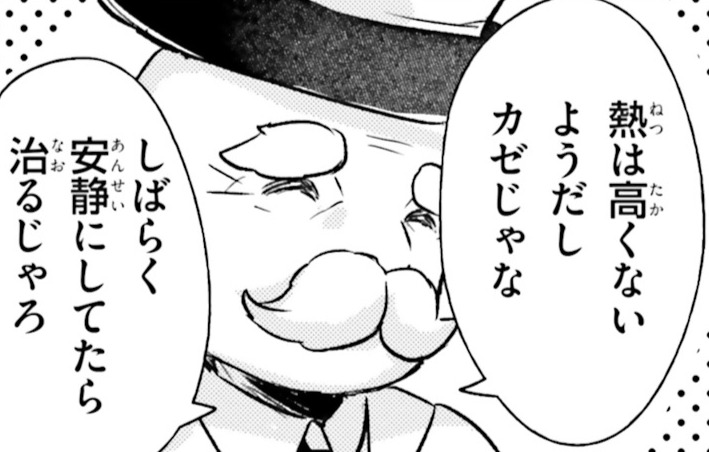
Wolf isn’t feeling up to patrolling. She sends a bird to call the doctor to visit her.
- 亀のおじいさん:
- 「熱は高くないようだしカゼじゃな」
- “It doesn't seem like you have a high fever, so it's probably just a cold.”
- 「しばらく安静にしてたら治るじゃろ」
- “If you rest for a while, you'll probably get better.”
The old turtle doctor gives his read on Wolf’s condition. 熱は高くないようだ is his judgment: her fever doesn’t seem high. ようだ attaches to the negative 高くない, and し adds it as a reason for the diagnosis that follows, カゼじゃな.
Softening a Statement
Sometimes the speaker already knows the facts and uses ようです anyway. Stating them flatly could sound blunt, so ようです makes it gentler. It turns up in polite speech and in set hedges like きついようですが, “this may sound harsh, but…”.
Vague Impressions with ような
ような気がする, “I have a feeling that…”, turns a ようだ guess into a vague impression or a hazy memory. In casual speech and inner thoughts, the sentence can stop at ような… or ような気が…, leaving the rest unsaid.
Example 1 of 3: Classroom bag inspection with 検査
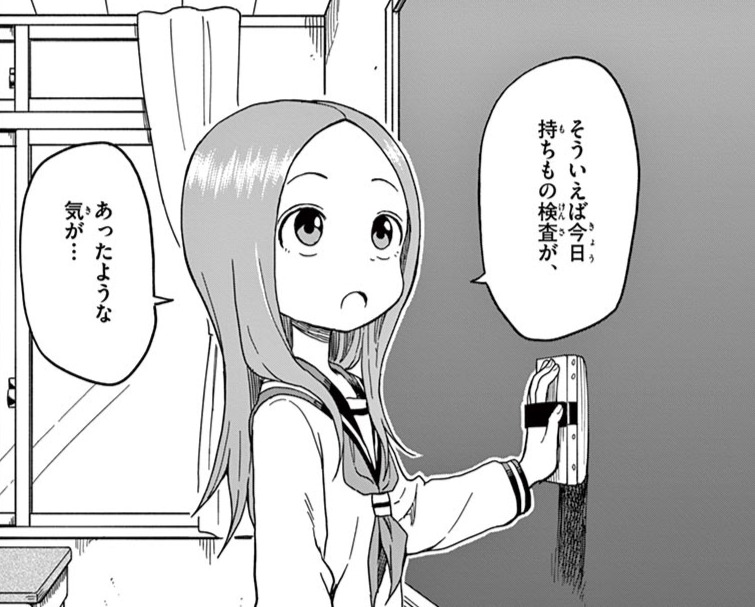
Nishikata and Takagi are on duty preparing the classroom before class.
- 高木:
- 「そういえば今日持ちもの検査があったような気が…」
- “Come to think of it, I think we have a bag inspection today…”
Takagi half-remembers something about today. ような気が… trails off before する, so the line sounds like a memory surfacing, not a firm statement. そういえば, “come to think of it”, fits the same mood.
Example 2 of 3: Have met with 〜た+ことがある
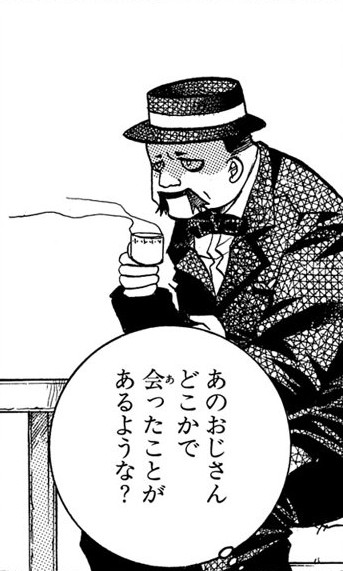
Akari and President Aria walk with Alicia to her meeting location. Rather than head back home, Akari and President Aria decide to sit at the café across the street until the meeting is over. There, Akari notices a gentleman sitting at another table.
- 灯里:
- 「あのおじさんどこかで会ったことがあるような?」
- “It feels like I have met that man somewhere before.”
Akari thinks she may have met the gentleman somewhere before but can’t place him. The sentence ends at ような?, with a question mark, as if she were asking herself. The full thought would be something like 会ったことがあるような気がする.
Example 3 of 3: Receiving a watching with 〜れる
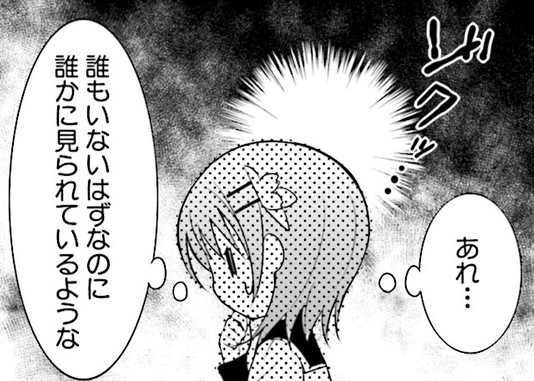
After Chino shows Cocoa to the changing room, Chino goes to get Cocoa’s uniform. Left alone, Cocoa gets a feeling otherwise.
- ココア:
- 「あれ… 誰もいないはずなのに誰かに見られているような」
- “Huh? Even though nobody should be here, it feels like I'm being watched by someone.”
Cocoa is alone in the changing room, feels a shiver, and thinks she’s being watched. 見られているような stops before any 気がする, leaving just the uneasy impression. はずなのに sets that impression against what she expected.
Narration
ようだ and ようだった fit written narration. Casual dialogue more often uses みたい.
Related Grammar
- Likening things with 〜みたい
- みたい makes the same guesses in a more conversational style.
- Conjecture with 〜らしい
- らしい often relays what the speaker has heard and sounds more detached. ようだ gives the speaker's own judgment.
- Looking like with 〜そうだ
- そうだ guesses a quality from how something looks, or says an event looks likely or possible. ようだ draws a judgment from clues, and that judgment can be about the future too.
- Presuming with 〜だろう and 〜でしょう
- だろう can guess without pointing to any particular clue. ようだ points to something noticed.
- Thinking or feeling something with 〜気がする
- ような気がする turns a ようだ guess into a vague feeling.
- Metaphor with 〜ようだ
- The same ようだ can liken one thing to another instead of making a guess.