〜たら is the most versatile conditional. It means “if” or “when”: once the first part is true or has happened, the second part follows. It covers plans, possibilities, things that happened, and things that aren’t so.
The first part comes first, in time or in logic, and the second part follows from it.
Usage Notes
Verbs and い-adjectives take the plain past form plus ら: 行ったら, 食べなかったら, 安かったら. Nouns and な-adjectives take だったら: 雨だったら, ひまだったら. もし at the start of the sentence makes it clear that the condition is hypothetical.
The second part can be a request, an invitation, or the speaker’s plan. Conditional と can’t take those, so 駅に着いたら電話して, “call me when you get to the station”, needs たら.
When the second part reports a real past event, たら tells what happened. Sometimes that’s a discovery, as in 開けたら誰もいなかった, “when I opened it, no one was there”.
Formation
View formation details
Verb (た-form) + ら
家に着いたら、電話する
"When I get home, I'll call you."
Verb (negative た-form) + ら
急がなかったら、間に合わないよ
"If you don't hurry, you won't make it."
い-adjective (かった) + ら
安かったら、買う
"If it's cheap, I'll buy it."
Noun / な-adjective + だったら
雨だったら、中止です
"If it rains, it's canceled."
Note: な-adjectives work the same way, as in ひまだったら, "if you're free".
もし + 〜たら
もし宝くじに当たったら、何をする?
"If you won the lottery, what would you do?"
Note: もし marks the condition as clearly hypothetical.
〜たらどう? (suggestion)
先生に聞いたらどう?
"How about asking the teacher?"
If This Happens
The basic use sets up a condition that may or may not happen. If it does, the second part follows. The second part can be a request or an offer.
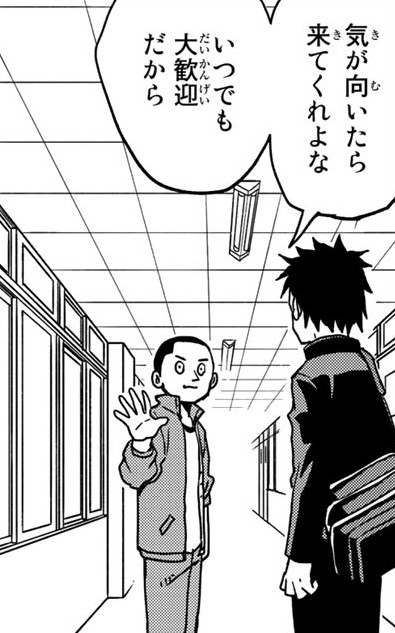
A member of the kendo club asks Ayumu to join the club, so they can win the next tournament. Although Ayumu is well known for his kendo prowess in middle school, he’s in the shogi club now, and rejects the request.
A kendo club member wants Ayumu to join. 気が向く means your interest turns toward something, so 気が向いたら is “if you feel like it”. Ayumu may never feel like it, and that’s fine. The second part, 来てくれよな, is a request: “come by”. と couldn’t take a request here.
Example 2 of 2: Not only physical wounds with 〜だけじゃなくても
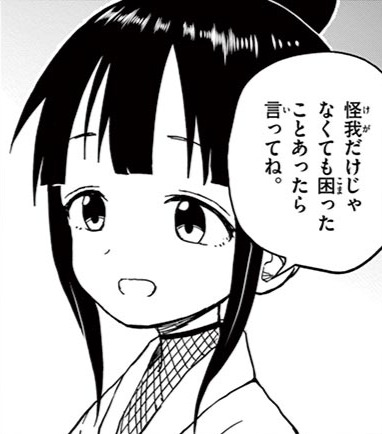
During lunch, Mokurin sees someone new sitting with Tsubaki. She learns that it’s the transfer student, Rindou, who’s joined Tsubaki in the Dog Clan. Mokurin introduces herself as a member of the Monkey Clan, which Tsubaki explains handles medical treatment.
モクリン:
「怪我だけじゃなくても困ったことあったら言ってね。」
“If you're having trouble with anything, not just injuries, let me know.”
Mokurin’s clan handles medical treatment, and she’s just met Rindou. 困ったことあったら is “if you have any trouble”, with the particle が dropped after こと. Nobody knows whether Rindou will have trouble. If it happens, 言ってね, “let me know”, is the request.
Once Something Happens
When the first part is sure to happen, or is treated as the next step, たら means “when” or “once”. It sets the timing of the second part.
Example 1 of 2: Want to say something with 〜たい+ことがある
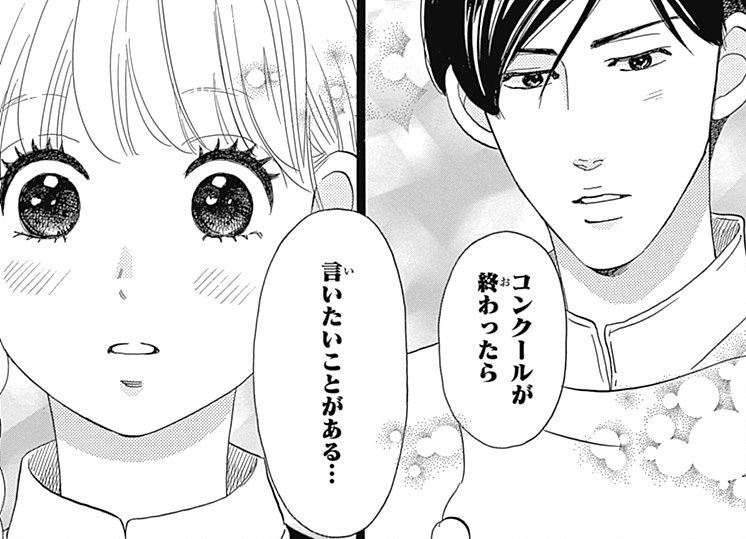
Ichinose normally shuns his inferior co-workers. When Rinko starts working at the confectionery, she unknowingly becomes Ichinose’s muse. Even after learning of her boyfriend, Ichinose still convinces Rinko to spend long hours helping him prepare for an upcoming competition. He plans to confess his feelings to Rinko after he wins the competition.
一之瀬:
「コンクールが終わったら言いたいことがある…」
“When the competition is over, there's something I want to tell you.”
Ichinose plans to confess to Rinko after the pastry competition. The competition will end no matter what, so コンクールが終わったら is “once the competition is over”, not “if”. 言いたいことがある, “there’s something I want to say”, is true now. たら tells Rinko when he’ll say it.
Example 2 of 2: Get me some more cookies with おかわり
Mina and Sanae go to Yukari’s house so the three can study. While Yukari studies, the other two slack off to the point when Mina complains that there are no more cookies. Yukari says that’s what happens when you eat them.
Mina and Sanae have eaten the cookies instead of studying, and Mina asks for more. Yukari answers そのページ終わったらね, “once you finish that page”, and leaves the rest unsaid. Finishing the page is up to Mina, but Yukari treats it as the next step, so “once” fits better than “if”.
What Happened When
When the second part tells something that actually happened, たら isn’t a condition anymore. It tells what happened after the first part, or during it with 〜ていたら. The speaker didn’t plan the second part.
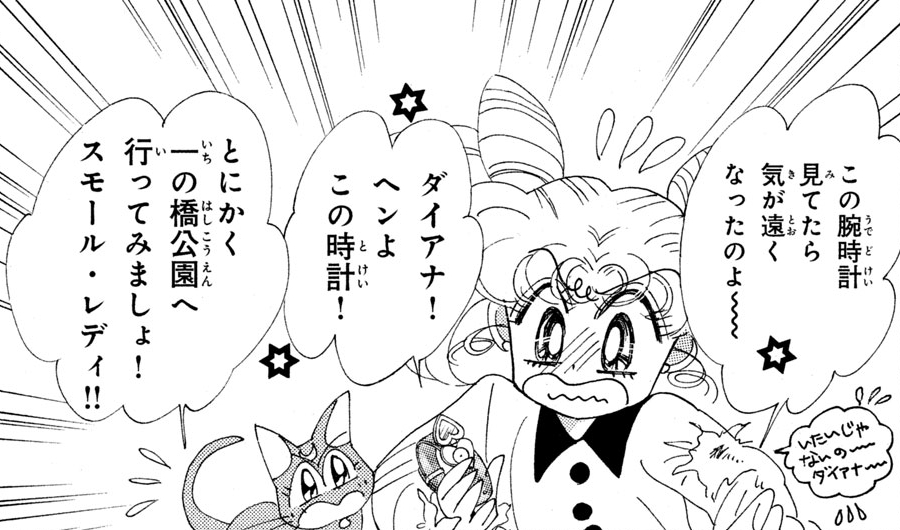
At the stroke of midnight, Chibiusa wakes to a mysterious glow from her new wristwatch. She gets out of bed in a daze, and begins to leave the room. Her cat, Diana, bites her on the arm, returning Chibiusa from her trance.
ちびうさ:
「この腕時計見てたら気が遠くなったのよ〰〰」
“While I was looking at this wristwatch, I became lightheaded〰”
「ダイアナ! ヘンよ この時計!」
“Diana! Something is strange about this watch!”
ダイアナ:
「とにかく 一の橋公園へ行ってみましょ! スモール・レディ!!」
“Anyway, let's try going to Ichinohashi Park! Small Lady!!”
Chibiusa’s new wristwatch glows at midnight, and she gets out of bed in a trance and starts to leave her room. 見てたら is 見ていたら, “while I was looking”, so the watch is still in front of her when 気が遠くなった, “I got dazed”, happens. She didn’t choose to get dazed. It happened to her.
Often the second part is something the speaker found. It was already there, and the first part is how the speaker came across it. This use sounds casual.
たら can also imagine something that isn’t true, the way English uses “if I had” or “if I were”. The second part tells what would happen. It often ends in のに, “but it isn’t so”, or だろう, “probably”.
Example 1 of 2: A little sister like Chino with 〜みたい
Chino finds Syaro a better tutor than Cocoa, and Syaro is thrilled. チノちゃんみたいな妹がいたら, “if I had a little sister like Chino”, imagines a sister she doesn’t have. The のに at the end says it isn’t so: she’d gladly teach such a sister every day, but she doesn’t have one.
Example 2 of 2: Wondering about lodger duties elsewhere with 〜だろう
Cocoa lodges with Chino’s family and helps at their café. She imagines lodging with Chiya instead. 千夜ちゃんの家だったら is “if it were Chiya’s house”, and it isn’t. The second part, お手伝いさせてもらってたんだろう, “I’d probably be helping out here”, is in the past tense but describes something that never happened.
Regret about the past uses the same idea. 〜たらよかった means “it would have been good if”, as in もっと早く言ったらよかった, “I should have said so sooner”.
Warnings with 〜たらだめ
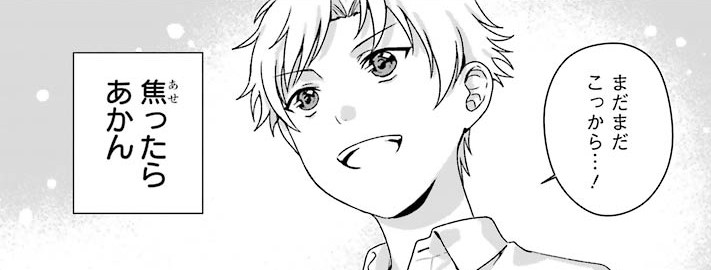
A condition plus だめ, “no good”, says “you mustn’t”. 焦ったらだめ is “if you hurry, that’s no good”, meaning “don’t rush”. Kansai speakers say あかん for だめ.
After transferring schools, Daigo tries to become friends with everyone. However, Makoto repeatedly ignores Daigo before finally saying not to talk to him. The other classmates tell Daigo not to bother with Makoto.
Daigo is a new transfer student, and Makoto has told Daigo not to talk to him. Daigo reins himself in: 焦ったらあかん, “I mustn’t rush it”. He’s warning himself, not someone else.
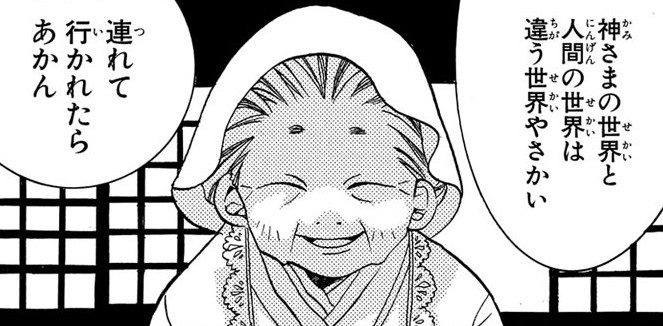
Alicia and Akari visit an island that’s modeled after part of Japan back on Earth. There, an elderly local woman tells the two of the fox spirits that visit the human world there. Akari is excited at the prospect of meeting one, but the old woman gives her a warning: on rare occasion, a fox will take a person back home with them.
おばあさん:
「神さまの世界と人間の世界は違うやさかい」
“Since the god world and the human world are different...”
An old woman tells Akari about the island’s fox spirits, who on rare occasions take a person back with them. 連れて行かれたら is the passive (receptive) form, “if you get taken away”, and あかん makes it a warning.
Suggestions and Advice
〜たらいい, “it would be good if”, gives advice. どうしたらいい? asks for it: “what should I do?”
Yotsuba eats breakfast with her father and grandmother. The grown-ups are talking about all the cleaning Grandma is doing around the house, as she says he hasn’t cleaned the yard at all.