In addition to with それに〜
Grammar: Addition
それに adds another point or reason that supports what came before. It often translates as “besides”, “moreover”, or “on top of that”.
Formation
View formation details
-
A。それに B。
- このレストランは安い。それに美味しい。
- "This restaurant is cheap. Furthermore, it's delicious."
-
A、それに B。
- 彼は頭がいいし、それに親切だ。
- "He is smart, and moreover, he is kind."
Main Patterns Where それに Is Used
1. Stacking Reasons
When making a claim, a single reason can sometimes feel unconvincing on its own. それに lets you stack an additional reason on top.
Furthermore, it's just a bonus item with それに〜
Grammar Explanation: In addition to with それに〜
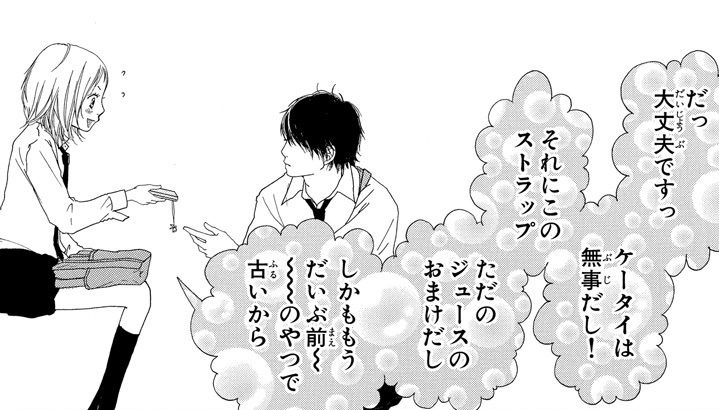
After school, Ninako notices Ren sleeping a few seats away on the train. When Ren wakes and rushes for his stop, he knocks Ninako’s phone from her hand. The phone hits the floor, and the strap charm breaks. Ren misses his exit while apologizing and offers to replace the charm.
- 仁奈子:
- 「だっ 大丈夫ですっ」
- “I—it's all right.”
- 「ケータイは無事だし!」
- “Since my cell phone is safe!”
- 「それにこのストラップただのジュースのおまけだし」
- “Furthermore, this strap is just a juice prize.”
- 「しかももうだいぶ前〜〜〜〜のやつで古いから」
- “Plus, it's from way back when, so it's old.”
2. Expressing Surprise or Emphasis
それに is also used when an already-sufficient situation gains an additional, unexpected element.
3. Adding Information Mid-Conversation, as an Afterthought
Additionally, I'm happier having girls here with それに〜
Grammar Explanation: In addition to with それに〜
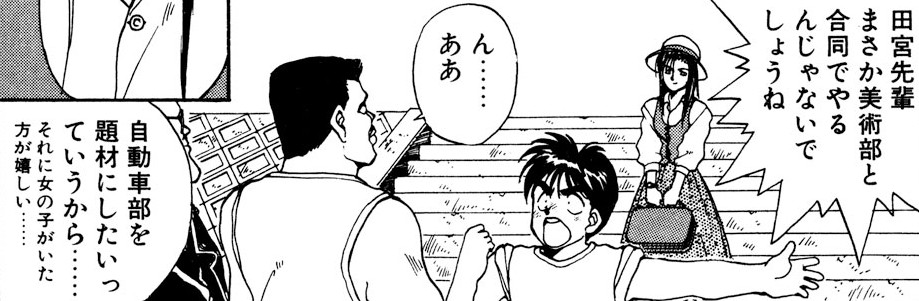
Kei’ichi is excited to spend four days at the beach with his university automobile club and Belldandy. His mood changes when he hears Sayoko call out to him.
- 螢一:
- 「田宮先輩まさか美術部と合同でやるんじゃないでしょうね」
- “Tamiya, don't tell me we're doing this with the art club!”
- 田宮:
- 「ん……ああ。自動車部を題材にしたいっていうから…… それに女の子がいた方が嬉しい…」
- “It's because they said they wanted to use the automobile club as a subject... Additionally, I'm happier having girls here.”
Differences from Similar Expressions
There are several expressions that are easily confused with それに. Let’s look at the nuances that distinguish them.
| Expression | Nuance | Characteristics |
|---|---|---|
| それに | Adds information or a reason | Casual and conversational; often used when stacking reasons |
| そして | Temporal sequence, or simple parallel listing | Often expresses the flow of events |
| また | Adds information in parallel | Somewhat formal; common in written Japanese |
| でも/しかし | Contrast or reversal | Introduces information that conflicts with what came before |
Comparative examples:
- 彼はハンサムだ。それに、性格もいい。
- “He’s handsome. On top of that, he has a great personality.”
- Stacking appealing qualities or reasons
- Carries more of the speaker’s subjective emphasis
- 彼はハンサムだ。そして、優しい性格をしている。
- “He’s handsome, and he has a kind personality.
- Simply listing descriptions side by side
- 彼はハンサムだ。でも、性格は最悪だ。
- “He’s handsome. However, his personality is terrible.
- Contrast
Points to Note
- それに is fundamentally used to add information that doesn’t contradict what came before. It cannot be used to express contrast.
- It’s generally placed at the beginning of a sentence (using it mid-sentence is uncommon).
- While frequently used in casual conversation, it can also be used in written Japanese.
Further Reading
- それに And, Besides, Moreover, In addition (bunpro.jp)
- それに〜|日本語能力試験 JLPT N4 (edewakaru.com)
- 「それに」「さらに」「その上」の違いについて (nihongo-appliedlinguistics.net)
- 「それに」「そして」「また」の違いと使い分け【カジュアル表現ガイド】 (kotoba-note.com)
Related Grammar
-
Furthermore with さらに〜
- Use さらに for more formal additions.
Examples
Besides, it's just practice with それに〜
Grammar Explanation: In addition to with それに〜
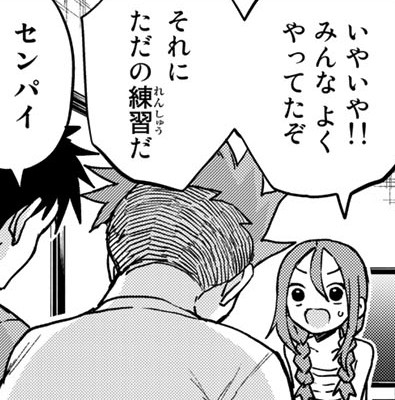
Urushi plays three shogi games at once against the other members of the shogi club. After she wins all three, she worries she has hurt their confidence right before the upcoming tournament.
- うるし:
- 「いやいや!!みんなよくやってたぞ」
- “No, no! You guys did great!”
- 「それにただの練習だ」
- “Besides, it's just practice.”