Insisting with 〜ってば
Grammar: Particles » 〜ってば
At the end of a sentence, 〜ってば presses a point the listener isn’t taking in. 大丈夫だってば is “I told you, I’m fine!”, and 早くしてってば is “Come on, hurry up!” The speaker is impatient, and sure of the point.
After a name, it calls someone who isn’t answering: お母さんってば!, “Mom! Hey!” And before a comment, it brings up a person with surprise or exasperation: うちの子ってば, “honestly, my kid…”
Usage Notes
ってば is casual. Don’t use it to a superior or in a formal setting. Polite sentences can take it, as in 違いますってば, but the impatience stays.
At the end of a sentence, ってば pushes back at a listener who doubts, nags, or won’t act. It doesn’t fit a plain answer that only gives information, a guess you aren’t sure of, or a first, friendly offer. A reply that pushes back can still take it, even when the point is new to the listener. The topic use, covered below, works differently.
After ん, the small っ can drop: お母さんてば, ませんてば. Both spellings turn up.
ってば comes from と言えば, but the modern uses don’t mean “if.” Watch for lookalikes: 待てば and 勝てば are conditionals of 待つ and 勝つ, 歌ってばかり is the て-form plus ばかり, and 例えば and そういえば are fixed words.
Formation
View formation details
- Plain sentence + ってば
- 本当に見たんだってば
- "I really did see it!"
- Noun or な-adjective + だ + ってば
- 弟だってば
- "I told you, he's my brother!"
- Polite sentence + ってば
- もう帰りますってば
- "I'm going home, all right?"
- Request, command, or prohibition + ってば
- 早くしてってば
- "Come on, hurry up!"
- Volitional (an invitation) + ってば
- 行こうってば
- "Come on, let's go!"
- Name or ねえ + ってば
- ねえってば!
- "Hey! I'm talking to you!"
- Person + ってば + comment
- 私ってば、また買っちゃった
- "Silly me, I bought it again."
Insisting When You’re Not Being Heard
ってば at the end of a statement means “I’m telling you” or “I said”. The listener doubts it, keeps asking, or won’t do what they’re told, so the speaker pushes the point. Often they’ve already said it once. 本当に見たんだってば is “I really did see it!” to someone who won’t believe it.
You don’t have to have said it before. ってば also works in a reply. Told to watch out for cars, you can answer わかってるってば, “I know”, meaning you didn’t need telling. What ってば needs is a point the speaker is sure of. 彼は絶対無実だってば, “he’s innocent, I’m telling you”, works. A guess like “he’s probably innocent” can’t take ってば. A plain answer that only gives information can’t either, even when you’re sure of it: いい天気だ to “How’s the weather there?” has nothing to push back against.
There’s a scale here. A parent tells their son to wrap up his video game with よ. An hour later, it’s いい加減やめなさいって. Two hours after that, it’s いい加減やめなさいってば. His answers climb too, from わかってるって to わかってるよってば. Each step means the speaker is more fed up. Going the other way, from ってば down to よ, sounds odd.
Polite speech can take ってば too. A section chief who keeps being told to go home for their kid’s birthday answers もう帰りますってば, “I’m going home, all right?” です and ます make it polite, but they don’t hide the impatience.
Example 1 of 3: Not thinking that far with 〜ってば
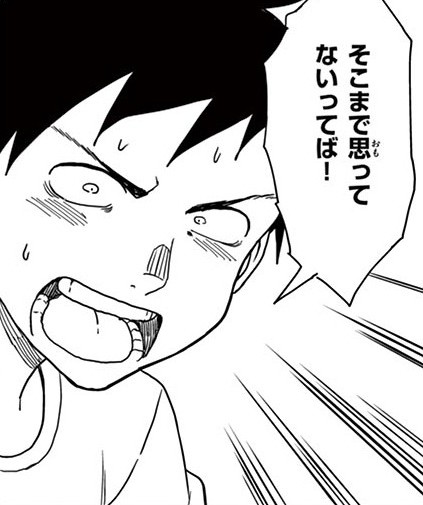
Nishikata and Takagi watch their daughter Chii play in the typhoon wind, pretending she’s the one making it blow. Takagi says it really looks like Chii is stirring up the wind. Nishikata nearly agrees, then catches himself. Takagi then puts his thoughts into words for him, guessing that he wonders whether this is a power only children have, and whether Chii has it because she’s his own child.
- 西片:
- 「そこまで思ってないってば!」
- “I'm telling you, I don't think it goes that far!”
Takagi has been putting Nishikata’s thoughts into words for him: maybe Chii really is making the wind, and maybe because she’s his child. He shoots back そこまで思ってないってば, “I’m telling you, I don’t think it goes that far!” ってば follows the plain negative and pushes the denial at a listener who’s sure she knows better.
Example 2 of 3: Not going camping with 〜ってば
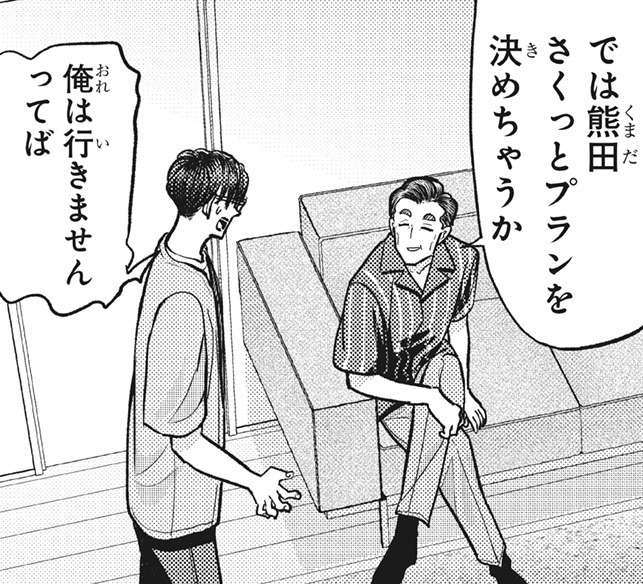
Kumada’s boss has shown up at his apartment uninvited to ask him on a company camping trip next week. Kumada refuses on the spot, listing the risks involved. His boss just answers that camping is fun.
- 上司:
- 「では熊田さくっとプランを決めちゃうか」
- “Well then, Kumada, let's hammer out the plan real quick.”
- 熊田:
- 「俺は行きませんってば」
- “I told you, I'm not going.”
Kumada has already turned down his boss’s camping trip, but the boss starts planning it anyway. 俺は行きませんってば, “I told you, I’m not going”, keeps the polite ません for his boss, and ってば still shows he’s fed up.
Example 3 of 3: Ordering four curries with 〜ってば
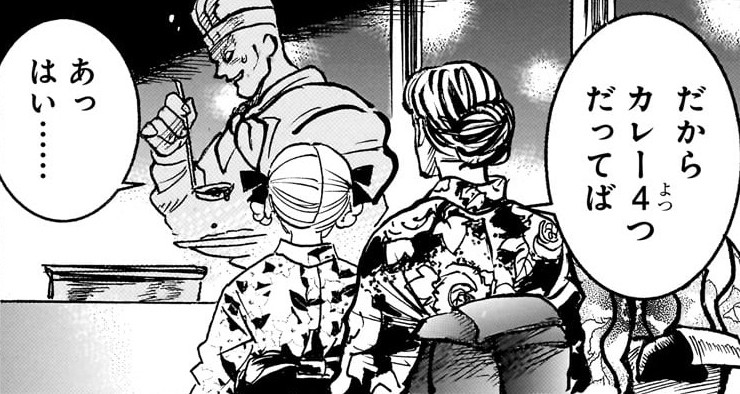
At the summer festival, Lulu and her friends join a long line at a popular food stall. It turns out to be the curry stand of Chii-bou, a rough guy they know. When the girls order four curries, he snaps at them and demands to know whether they came to mock him or to get in his way.
- 響子:
- 「だからカレー4つだってば」
- “I said, four curries.”
- チー坊:
- 「あっ はい……」
- “Oh... right...”
The girls order four curries, and Chii-bou demands to know whether they came to mock him or get in his way. Kyouko just says the order again: だからカレー4つだってば, “I said, four curries.” カレー4つ is a noun phrase, so だ comes before ってば, and だから adds “like I said”.
Repeating a Request or Invitation
ってば can follow a request or an order the listener is ignoring: 早くしてってば (“come on, hurry up!”), 食べないでってば (“I said don’t eat that!”), やめろってば (“I said stop!”), and 触るなってば (“I said don’t touch it!”). It works the same way after a て-request, a ないで request, a plain command, or な.
An invitation with the volitional form can take it too. 行こうってば is “come on, let’s go!” to a friend who’s dragging their feet. A volitional that only states your own plan can’t: そろそろ帰ろうってば doesn’t work for “I think I’ll head home.”
ってば presses the listener to act, so it doesn’t fit a first, friendly offer. ちらし寿司つくったの。よかったら食べて行って, “I made chirashi sushi. Have some if you’d like”, can’t take ってば.
Calling Someone Who Isn’t Answering
After a name, a family word like お母さん, or ねえ, ってば calls someone again when they didn’t answer the first time. ねえってば! is “Hey! I’m talking to you!”, and お母さんってば! is “Mom! Come on!”
The speaker is sure the first call was heard. The person doesn’t answer, so ってば calls again, with some impatience.
After a name, plain って sounds off as a call: お母さんって is questionable. ねえって works, but after a name, ってば is the natural choice.
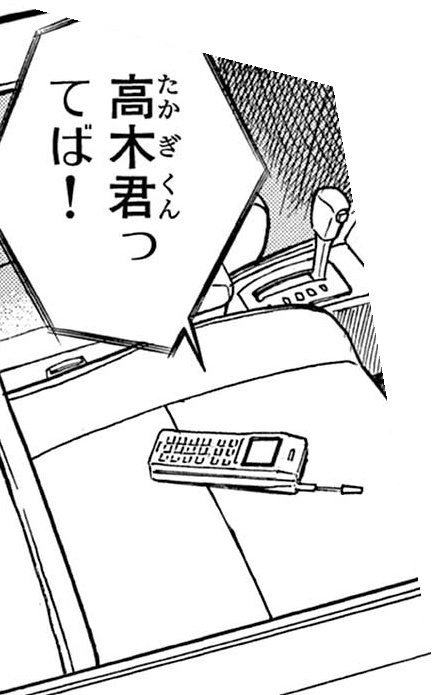
Yumi phones Takagi to ask whether he saw her message about Sato’s arranged-marriage meeting. Before he can answer, a convenience store robber runs past, and Takagi drops the phone in the car to chase him with Chiba. Still on the line, Yumi calls to him, but nobody answers.
- 由美:
- 「高木君ってば!」
- “Takagi! Hello?!”
Yumi has Takagi on the phone, but he drops it in the car to chase a robber. Her ちょっと高木君? gets no reply, so she calls again: 高木君ってば!, “Takagi! Hello?!”
Talking About Someone with ってば
ってば can also go mid-sentence, after a person, to set them up as the topic of a comment. The comment is often a complaint: お父さんってば、ずっとホテルにいたのよ, “your father, honestly, stayed in the hotel the whole time.” It can also be surprise, even a pleasant one: 彼ってば案外親切なのよ, “he’s surprisingly kind, you know.”
The person may not be there to hear it. The speaker isn’t calling them. They’re talking about them, often to someone else. A pet can be the topic too.
私ってば or あたしってば aims it at the speaker: “silly me.” 私ってば、またマヨネーズ買ってきちゃった is “Silly me, I bought mayonnaise again.” The speaker is running themselves down over something they did.
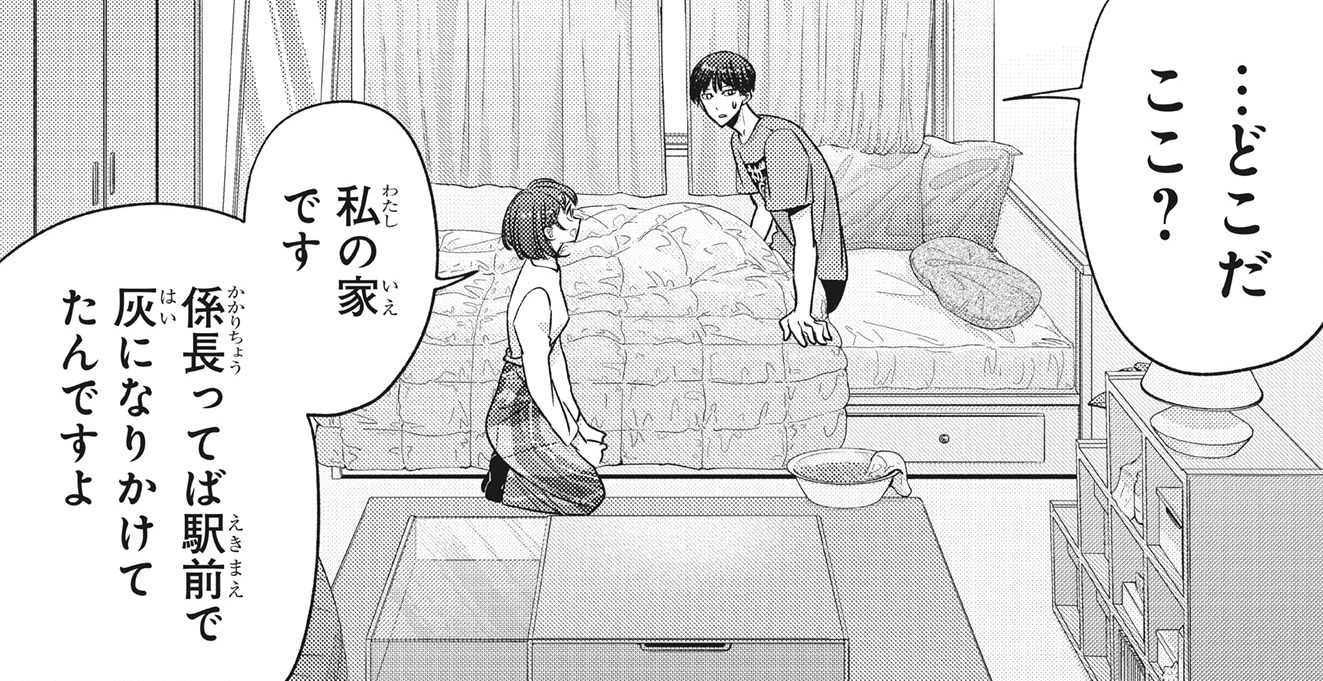
Kumada, a section chief who avoids other people, has spent the night being dragged into one subordinate’s home after another. Worn out, he slumped on the steps by the station, where Akagi, another of his subordinates, found him. He passed out, and he has just woken up in a bed he doesn’t recognize.
- 熊田:
- 「…どこだここ?」
- “…Where am I?”
- 赤城:
- 「私の家です 係長ってば駅前で灰になりかけてたんですよ」
- “My place. Honestly, sir, you were about to turn to ash outside the station.”
Akagi found her section chief, Kumada, collapsed by the station and took him home. When he wakes up, she tells him 係長ってば駅前で灰になりかけてたんですよ, “honestly, sir, you were about to turn to ash outside the station.” Here the person before ってば is the listener. Japanese often uses a title like 係長 in place of “you”.
ってば, って, and ったら
Sentence-final って can insist too: 大丈夫だって! But って has other jobs. 行くんだって can report what someone else said, and 何だって? asks someone to repeat themselves. As a sentence ending, ってば does neither. It only pushes, and it pushes harder.
ったら, from と言ったら, overlaps with ってば in almost every use. やめろったら, お母さんったら!, and 彼ったら案外はにかみやね all work like the ってば versions. ったら also has an extra use ってば lacks: つまらないったらない is “it’s unbelievably boring.”
Dictionaries also list a “speaking of” use, as in 鎌倉ってば、小林君はどうしてるだろう, “speaking of Kamakura, I wonder how Kobayashi’s doing.” Here, ってば means といえば.
Further Reading
- 〜ってば, 日本語文型バンク (NINJAL) (ninjal.ac.jp)
- てば, デジタル大辞泉 (Kotobank) (kotobank.jp)
- ってば, 精選版 日本国語大辞典 (Kotobank) (kotobank.jp)
- 辻加代子「東京方言「ッテ」「ッテバ」の用法について」『阪大社会言語学研究ノート』3 (osaka-u.ac.jp)
- 舩木礼子「引用表現形式に由来する文末詞の対照」『阪大社会言語学研究ノート』2 (osaka-u.ac.jp)
Related Grammar
- Quoting and reporting with と and って
- 大丈夫だって! insists too. ってば pushes harder, and unlike って, it never reports what someone else said.
- Informing with よ
- よ is often the first, milder push. When that doesn't work, って and then ってば follow.
- Hypothetical condition with 〜ば
- ってば began as と言えば, "if you say", but it doesn't mean "if" anymore.