It might be one thing if with 〜ならともかく
Grammar: Comparison and Contrast
ならともかく contrasts two situations. The speaker may accept or understand the first, but rejects the second as unreasonable.
A basic translation to English is, “(A) is fine, but (B) is not.”
Usage Notes
The speaker may accept the first situation but judge the second as unreasonable or unacceptable. The pattern often sounds critical.
Formation
View formation details
-
Noun + ならともかく
- 学生ならともかく、社会人はそんな時間がない
- "A student might be one thing, but a working adult doesn't have that kind of time."
-
Verb (plain form) + ならともかく
- 勉強するならともかく、遊ぶのは許されない
- "Studying might be one thing, but playing is not allowed."
-
い-adjective (plain form) + ならともかく
- 安いならともかく、高いものは買えない
- "If it's cheap, that's one thing, but I can't buy expensive things."
- な-adjective (stem) + ならともかく
Further Reading
- Lesson 78: 〜ならともかく (marshallyin.com)
Examples
Indiscriminate murder would be one thing if with 〜ならともかく
Grammar Explanation: It might be one thing if with 〜ならともかく
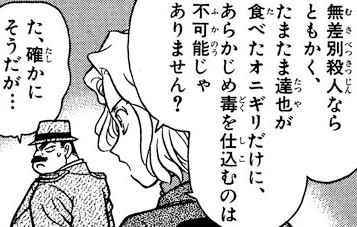
Sonoko is invited to a band’s after party. During the get-together, the band’s singer Tatsuya eats a rice ball only to collapse and die. The police are called in, and Inspector Megure discovers the victim was poisoned. He accuses the man who prepared the food, but Conan bites into a rice ball to show it’s safe. The victim’s manager, Mari, agrees.
- 麻理:
- 「無差別殺人ならともかく、たまたま達也が食べたオニギリだけに、あらかじめ毒を仕込むのは不可能じゃありません?」
- “If it were indiscriminate murder, that's one thing but since it was just the rice ball Tatsuya happened to eat, wouldn't it be impossible to poison it beforehand?”
- 目暮:
- 「た、確かにそうだが…」
- “Th-that's true.”