It's not the case with 〜ではあるまいし
Grammar: Reason and Cause » 〜ではあるまいし
〜ではあるまいし dismisses an excuse or assumption by saying “it’s not as if ~” or “you’re not ~”.
A criticism, warning, piece of advice, or order often follows し. Speakers may omit that conclusion when it is obvious.
After a verb, ん or わけ may appear before で.
The colloquial counterpart is 〜じゃあるまいし.
Further Reading
- 〜ではあるまいし|日本語能力試験 JLPT N1 (edewakaru.com)
- 【N1文法】~ではあるまいし/でもあるまいし/じゃあるまいし (nihongonosensei.net)
Examples
It's not like I'm a grade-schooler with 〜じゃあるまいし
Grammar Explanation: It's not the case with 〜ではあるまいし
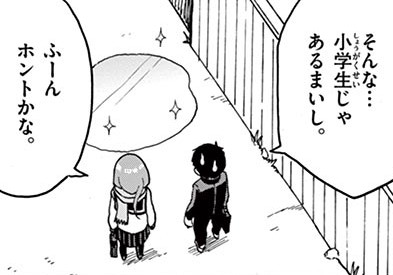
Seeing a frozen puddle on the ground, Nishikata is excited at the thought of picking it up and holding it. Takagi asks if this is what he’s thinking, and he quickly denies it.
- 西片:
- 「そんな… 小学生じゃあるまいし。」
- “It's not like I'm some kind of...grade-schooler.”
- 高木:
- 「ふーん。ホントかな。」
- “Hm, I wonder...”
It's not like this is science fiction with 〜じゃあるまいし
Grammar Explanation: It's not the case with 〜ではあるまいし
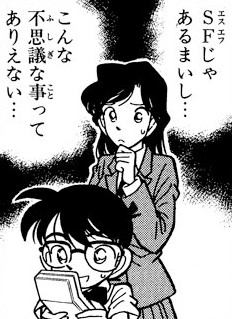
Evidence piles up for Ran that Conan, the smart young boy staying with her family, may actually be Shin’ichi, her missing childhood friend. She’s convinced that he’s Shin’ichi on the inside, but the sticking point is how he went from being a teenager to a child.
- 欄:
- 「SFじゃあるまいし…」
- “It's not like this is sci-fi.”
- 「こんな不思議な事ってありえない…」
- “Such an incredible thing is inconceivable...”
It's not like you're a foreigner with 〜じゃあるまいし
Grammar Explanation: It's not the case with 〜ではあるまいし
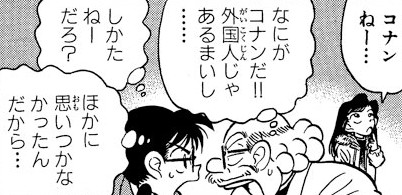
Shin’ichi’s teenage friend Ran enters Professor Agasa’s house looking for him, unaware that he was forced to take a poison that inadvertently turned the teenager into a young child. When Ran sees the boy and asks his name, Shin’ichi recalls Agasa’s suggestion to not reveal who he is. Panicking, he gives the name “Conan”, explaining the oddness of it by saying his father is a fan of author Arthur Conan Doyle.
- 欄:
- 「コナンねー…」
- “Conan, huh?”
- 阿笠:
- 「なにがコナンだ!! 外国人じゃあるまいし」
- “What's with 'Conan'!? It's not like you're a foreigner...”
- コナン:
- 「しかたねーだろ? ほかに思いつかなかったんだから…」
- “It couldn't be helped, all right? I couldn't think up anything else...”