Leaving something as-is with 〜っぱなし
Grammar: Condition » 〜っぱなし
Add っぱなし to a verb stem when an action continues unchecked or leaves something in the resulting state. It usually criticizes the person responsible: ドアを開けっぱなし “leave the door open”. The form comes from 放す.
Usage Notes
〜っぱなし criticizes an unattended state. The focus stays on the state after the action.
Further Reading
- How to use 〜ぱなし (maggiesensei.com)
- Using 「っぱなし」 to leave something the way it is (guidetojapanese.org)
Examples
Leaving a door unlocked with 〜っぱなし
Grammar Explanation: Leaving something as-is with 〜っぱなし
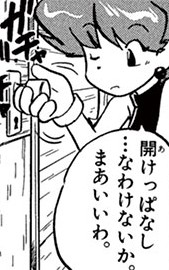
Blue tries to sneak into Masaki’s cottage, but the door is locked.
- ブルー:
- 「開けっぱなし…なわけないか。まあいいわ。」
- “There's no way it'd be left unlocked. Well, that's fine.”
Leaving the futon out with 〜っぱなし
Grammar Explanation: Leaving something as-is with 〜っぱなし

Yotsuba invites her neighbors over for coffee. She first gives the three a tour of the house, leading up to the kitchen.
- 風香:
- 「洗い物がたまってるのが気になる…」
- “It bothers me that these dishes are piled up...”
- あさぎ:
- 「私は廊下のスミにホコリがたまってるのが気になる」
- “What bothers me is the dust built up in the hallway.”
- 恵那:
- 「おふとんだしっぱなしが気になる」
- “It bothers me that the futon is left laying out.”
Leaving toys scattered about with 〜っぱなし
Grammar Explanation: Leaving something as-is with 〜っぱなし
高木さん/からかい上手の(元)高木さん-volume-11-page-34-panel-3.jpg)
Chii’s mother comes into the room.
- お母さん:
- 「おもちゃ散らかりっぱなしだよ。」
- “Your toys are left scattered about.”