〜たり〜たりする lists actions as examples rather than a complete sequence: “doing things like A and B”. The list leaves room for other things.
Many textbooks present only the paired pattern, but real dialogue often uses a single たり. It means “doing things like A, among others”, and it can make a statement sound less blunt.
Usage Notes
Add り to the た-form of each listed word: 読んだ becomes 読んだり. The たり forms have no tense of their own. Whatever closes the list carries the tense, usually する: 読んだり書いたりした “did things like reading and writing”. When a pair of opposites describes a state, it can also end in だ or でしょう, and sometimes no する follows the last たり at all.
A single たり picks out one example and hints at others like it. Speakers use it to widen a warning or denial to anything similar, or to soften a claim or guess. It often pairs with など or なんか, and in casual speech with とか.
Sentence-final たりして floats an unlikely possibility, often as a joke: “what if…” or “…or something”. The guess can be about what might happen or about what’s going on right now.
Formation
View formation details
Verb (た-form) + り、Verb (た-form) + り + する
休日はマンガを読んだり、昼寝をしたりする
"On days off I do things like reading manga and napping."
Verb (た-form) + り + する (single たり)
人の物を触ったりしないで
"Don't go touching people's things and such."
い-adjective (かった) + り
値段は高かったり、安かったりだ
"The prices are sometimes high, sometimes low."
Noun / な-adjective + だったり
朝ご飯はパンだったり、ご飯だったりする
"Breakfast is sometimes bread, sometimes rice."
〜たりして (sentence-final)
実は彼が犯人だったりして
"What if he was the culprit all along?"
Listing Representative Activities
The listed actions stand in for a fuller picture. The speaker names two or three things and leaves room for others. In careful speech, every item takes たり: 本を読んだり音楽を聴いたりして, not 本を読んだり音楽を聴いて.
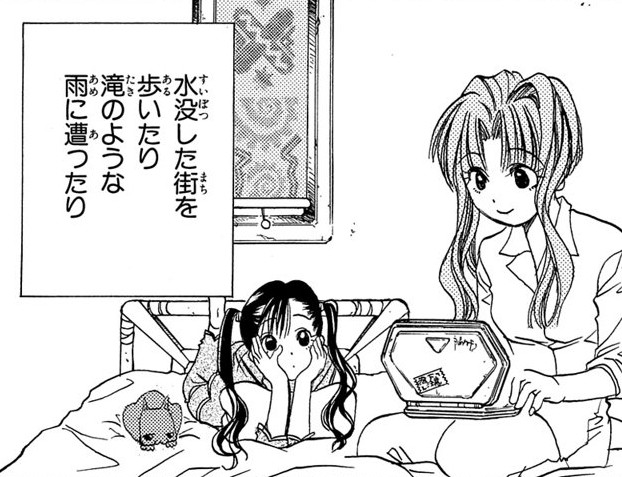
While out buying cat food during acqua alta, when tides have risen onto the streets, Akari is caught in a heavy downpour. She finds herself near Himeya Company, where her friend Aika lives, and she’s invited in to stay the night. As the two watch the falling rain through a window, Akari types an e-mail about her adventure that day.
灯里:
「水没した街を歩いたり滝のような雨に遭ったり」
“Walking through a flooded town, getting caught in a downpour...”
During acqua alta, Akari got caught in a downpour and is spending the night at Aika’s. In her email, 歩いたり and 遭ったり pick out two things from her day: walking through the flooded town and getting caught in the rain. The panel ends on the second たり with no する. Her email goes on to call the day a wonderful adventure.
Cocoa’s fortunes for Chino and Rize didn’t come true, so she lists her own bad luck. Three たり forms name the mishaps: Anko fell on her, her skirt flipped up, and Syaro threw money at her. 色々あって, “all sorts of things happened”, confirms that these are only examples. The たり forms carry no tense. 色々あって closes the list, and the final 大変だった puts it in the past.
A Single たり in Warnings, Worries, and Denials
One たり names an example and leaves the rest open: “…or anything like that”. In warnings, worries, and denials, the warning, worry, or denial covers that thing and anything like it.
Example 1 of 2: Because I won't be hugging you with 〜ので
On the topic of Chino’s height, Rize says it would be funny if Chino outgrew Cocoa, as this would put Cocoa on the receiving end of affection. Cocoa is fine with this.
チノ:
「あ 私抱きついたりとかしないので大丈夫です」
“It will be all right because I won't do things like hugging you.”
Rize jokes that if Chino grew taller than Cocoa, Cocoa would end up on the receiving end of hugs. Chino says that won’t be a problem: she won’t do things like hugging. 抱きついたりとか groups hugging with other shows of affection, and しない denies the whole group. とか stacks on たり to make the example even vaguer.
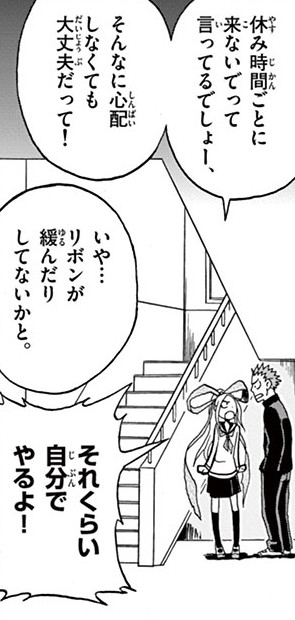
Due to concern about his sister’s ribbon, which seals away her need to attack people for their blood, Kenji takes every opportunity he can to check up on her at school.
キョーコ:
「休み時間ごとに来ないでって言ってるでしょー、そんなに心配しなくても大丈夫だって!」
“I'm telling you, you don't need to check up on me every break period. I'll be fine even without you worrying about me!”
ケンジ:
「いや… リボンが緩んだりしてないかと。」
“No, I'm just checking whether your ribbon's come loose.”
Kenji keeps checking on Kyouko at every break because her ribbon seals away her urge to bite people. 緩んだりしてないか means “whether it’s come loose or anything”. A loose ribbon is the main worry, and だり leaves room for other trouble.
Softening a Statement with たりする
A single たり can also tone down a claim, a guess, or advice. Here the hint of other things is faint or beside the point. The speaker uses たり to avoid stating the thing outright, so the line sounds less blunt. It’s common in requests and questions too.
Example 1 of 3: Getting good grades in school with 成績
Yukari compares her life with those of Takagi and Mina. She says Mina is good at cooking. 得意だったりする avoids saying it flatly, and じゃない asks the others to agree. Though だった looks past, the line is about Mina now.
Makoto and her family head out on a trip to the river. When they stop to pick up Kei’s friend Nao, Akane greets her with, “Howdy, Kei’s girlfriend!” Nao tells her she’s wrong.
圭:
「よっオレのカノジョ」
“Yo, my girlfriend.”
なお:
「やめてよ」
“Stop that!”
茜:
「と言いつつ気があったりするんでしょ?」
“Although you say that, you're interested in him, aren't you?”
Kei calls Nao his girlfriend, and she tells him to stop. Akane teases her anyway. 気があったりするんでしょ? is “you’re kind of into him, right?” たりする keeps the accusation light, so it sounds like teasing rather than a flat claim.
Example 3 of 3: Reading a book to distract from waiting for a text message with 気を紛らす
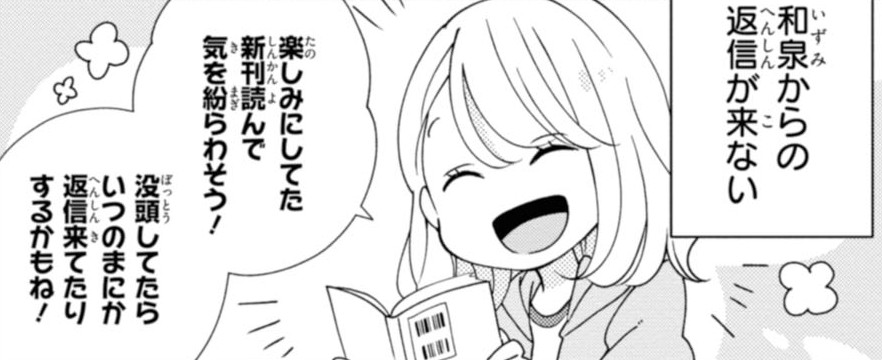
Akari is expecting a text message from Izumi. Unknown to her, Izumi’s response was getting too long, so he switched to his computer to write up an e-mail instead.
Narration:
「和泉からの返信が来ない」
“I haven't received a reply from Izumi.”
あかり:
「楽しみにしてた新刊読んで気を紛らわそう!」
“I'll distract myself by reading the new book I've been looking forward to!”
「没頭してたらいつのまにか返信来てたりするかもね!」
“Maybe if I get really absorbed in it, the reply will show up before I know it!”
Akari is waiting on a reply from Izumi and decides to pass the time with a new book. 没頭してたら, “if I get absorbed”, sets the scene, and 来てたりするかも is “the reply might have come”. 来てたり is 来ていたり with い dropped. たりする and かも both soften the guess.
Alternating Actions and States
With opposite words, the pattern shows something going back and forth: 行ったり来たり, “back and forth”, or 暑かったり寒かったり, “hot one moment, cold the next”. A verb and its negative work too: 来たり来なかったり, “coming some days and not others”. When the pair describes a state, it can also end in だ or でしょう instead of する: 雨が降ったりやんだりでしょう.
Sentence-final たりして floats a possibility the speaker thinks is unlikely, often as a joke. It can guess at what might happen or at what’s going on right now.