Logical conclusion with 〜わけだ
Grammar: Conclusion » 〜わけだ
〜わけだ presents a statement as following from facts that are already known: “so that means…”, “no wonder…”, “that’s how it is”.
The noun わけ means “reason” or “sense”. With わけだ, the speaker presents the statement as something that makes sense given the facts, not as a bare assertion.
Usage Notes
わけだ follows the plain form of verbs and い-adjectives. In the non-past, な-adjectives and nouns take な, or である in formal writing: 静かなわけだ, 学生なわけだ. という, or casual って, can come before わけ after any of these: 学生というわけだ.
Polite speech uses わけです. In casual speech, わけ often takes a particle directly: わけか, わけね, わけよ, わけさ. わけなんだ adds explanatory のだ.
The negative patterns わけではない, わけがない, and わけにはいかない each have their own meaning. どういうわけか, “for some reason”, uses the noun わけ and isn’t this pattern.
Formation
View formation details
- Plain form + わけだ
- 十年も日本にいたのか。日本語がうまいわけだ
- "You were in Japan ten years? No wonder your Japanese is good."
- Noun or な-adjective + な + わけだ
- 明日は日曜だから、学校は休みなわけだ
- "Tomorrow's Sunday, so that means there's no school."
- どうりで 〜 わけだ
- どうりで誰もいないわけだ。今日は休日だ
- "No wonder nobody's here. Today's a holiday."
- という (って) + わけだ
- つまり、犯人は彼だったというわけだ
- "So he was the culprit, in other words."
Sudden Realization
The speaker already knows something, then learns the reason for it, and it suddenly makes sense: “no wonder”, “that explains it”. そうか、双子だったのか。似ているわけだ, “I see, they’re twins. That explains why they look alike.”
どうりで often comes before it, and なるほど or そうか can too, but none is required. With わけか or わけね, the speaker voices the realization as it dawns.
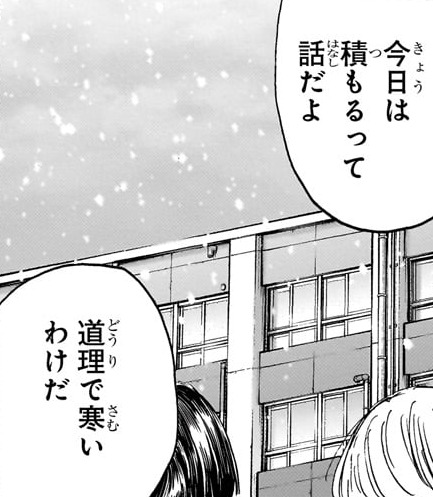
It’s December, three days before the Winter Cup, and the weather report has warned of a major cold wave with snow. As the basketball team heads to practice, snow starts to fall.
- 生徒Ⓐ:
- 「今日は積もるって話だよ」
- “They say it's going to pile up today.”
- 生徒Ⓑ:
- 「道理で寒いわけだ」
- “No wonder it's so cold.”
Snow starts falling three days before the Winter Cup, and a teammate says it’s supposed to pile up. The other student had already felt the cold, and now it makes sense. 道理で寒いわけだ is “no wonder it’s so cold”: the snow explains a cold she’d noticed before she knew the reason.
Working Out What Follows
From a known fact or condition, わけだ states the result that has to follow. The fact often ends in から, ば, or なら. This covers simple arithmetic: この本は150ページだから、毎日五ページ読めば、一か月で読み終わるわけだ, “This book is 150 pages, so if you read five a day, that means you’ll finish it in a month.”
In this use, ことになる can usually replace わけだ.
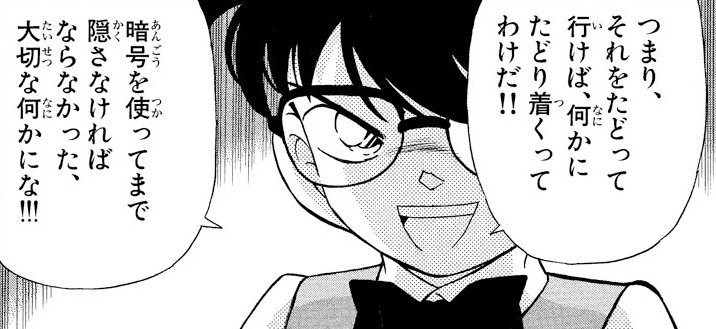
Professor Agasa set up a treasure hunt for the Detective Boys at his late uncle’s villa, but an intruder got there first and slashed the hidden toys. The children found codes of suns, moons, and stars drawn on objects all around the villa. Conan worked out that the symbols stand for hiragana and decoded two of them as “Look at the propeller” and “Look at the oil painting”.
- コナン:
- 「つまり、それをたどって行けば、何かにたどり着くってわけだ!!」
- “So if we follow them, we'll get to something, that's what it means!!”
- コナン:
- 「暗号を使ってまで隠さなければならなかった、大切な何かにな!!!」
- “Something important, important enough that it had to be hidden with codes!!!”
Conan has just noticed that every code in the villa names an object plus を見ろ, “look at”. From that pattern he works out the result: if they follow the codes, they’ll reach something. The condition 行けば sets it up, and ってわけだ states what has to follow.
Restating What Something Amounts To
Often after つまり, 要するに, or 言い換えれば, わけだ restates a known fact from another angle. It doesn’t add a new result: “in other words”. 田中さんは母の妹だ。つまり、私の叔母なわけだ, “Tanaka-san is my mother’s younger sister. In other words, she’s my aunt.”
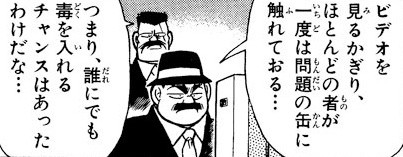
Ran and Sonoko’s middle school teacher collapsed at her wedding after drinking lemon tea laced with caustic soda. The poison was sealed in a capsule that dissolved slowly, so the police can’t pin down when it went into the can. Ran and Sonoko had left a video camera running in the bride’s room, and Inspector Megure has just used the footage to list when each visitor was with her.
- 目暮:
- 「ビデオを見るかぎり、ほとんどの者が一度は問題の缶に触れておる…」
- “As far as the video shows, almost everyone touched the can in question at least once...”
- 「つまり、誰にでも毒を入れるチャンスはあったわけだな…」
- “In other words, anyone had a chance to put the poison in...”
At a poisoning at a wedding, Inspector Megure has watched a video of the bride’s room and seen that almost everyone touched the poisoned can. つまり〜わけだ restates that fact as what it means for the case: anyone could have put the poison in.
Summing Up with というわけだ and ってわけ
というわけだ, or casual ってわけ, sums up an explanation or a chain of events: “so that’s how it was”. 窓が割れていて、床にガラスが落ちていた。犯人は外から入ってきたというわけだ, “The window was broken, and there was glass on the floor. So the culprit came in from outside.”
Because という quotes, the summary can be someone else’s reasoning, restated by the speaker. With か, as in ってわけか, the speaker restates someone else’s explanation or a chain of events to check it. Manga detectives can use というわけだ or ってわけか to close a deduction.
Example 1 of 2: Testing one's detective ability with 能力
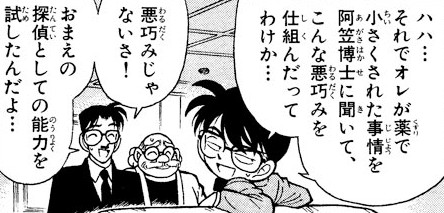
Conan finds himself in the clutches of a dangerous pair, only to discover it’s his parents in disguise.
- コナン:
- 「ハハ… それでオレが薬で小さくされた事情を阿笠博士に聞いて、こんな悪巧みを仕組んだってわけか…」
- “So you heard from Dr. Agasa about how I was shrunk by a drug and cooked up this evil scheme, huh...”
- 父さん:
- 「悪巧みじゃないさ! おまえの探偵としての能力を試したんだよ…」
- “It's not an evil scheme! I was just testing your abilities as a detective...”
Conan has been kidnapped by a menacing couple, who turn out to be his parents in disguise. He pieces it together: they heard from Professor Agasa how he was shrunk and 仕組んだ, “cooked up”, this scheme. ってわけか sums up the whole chain, “so that’s what this was, huh”, as a wry check of his own conclusion. His father’s reply confirms it, though he insists it was a test, not a scheme.
Example 2 of 2: How the body was found with というわけなんです
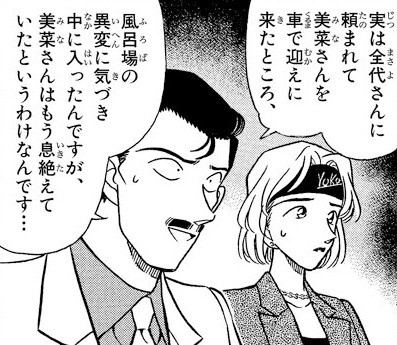
Kogoro lost his ticket to Yoko Okino’s concert. A woman named Masayo gave him a spare on one condition, that he drive her to pick up her sister Mina, who hadn’t shown up. At the house they found the bathroom taped shut from the inside, forced the door, and found Mina dead with a cut wrist. Now Inspector Megure has arrived, and Kogoro tells him why he was there.
- 小五郎:
- 「実は全代さんに頼まれて美菜さんを車で迎えに来たところ、」
- “You see, Masayo asked me to come pick up Mina in my car, and when we got here...”
- 「風呂場の異変に気づき中に入ったんですが、美菜さんはもう息絶えていたというわけなんです…」
- “...we noticed something wrong with the bathroom and went in, but Mina-san was already dead. That's how it happened...”
Inspector Megure has arrived at the scene of Mina’s death, and Kogoro explains how he came to be there. He tells the events in order: Masayo asked him to pick up her sister, they noticed something wrong with the bathroom, and they found Mina dead. というわけなんです wraps up the account, “so that’s how it happened”, and polite なんです fits a report to the police.
Explaining How Things Stand
In an explanation, わけです or わけなんだ presents a statement as resting on facts, not just the speaker’s own view. 〜わけだから sets up a given that makes the next point natural: あなたは皆から選ばれたわけだから、頑張るのは当然だ, “Everyone chose you, so of course you should do your best.”
Used too much, this わけだ can sound pushy or dogmatic.
Moving On with というわけで
At the start of a sentence, というわけで (also そういうわけで or そんなわけで) points back to what was just explained and moves on to what follows from it: “so”, “and so”. Manga characters can use it to wrap up a recap or to launch a plan.
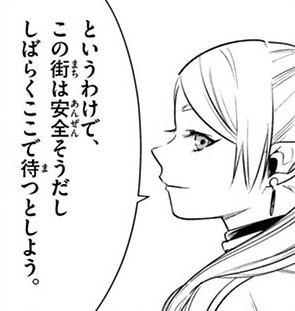
Frieren, Fern, and Stark reach the fortress city of Vaar on their way north. The guard captain tells them the northern checkpoint is closed because monsters are active, and since he took his post, he hasn’t let a single monster or person through. He warns them not to cause trouble in town. Fern finds him unfriendly, but Frieren calls him an excellent guard, since a guard who protects a town should be strict with outsiders.
- フリーレン:
- 「というわけで、この街は安全そうだし、しばらくここで待つとしよう。」
- “So, this town seems safe, so let's wait here for a while.”
The guard captain has just said the northern checkpoint is closed and warned the party not to cause trouble, and Frieren has praised him for being strict with outsiders. というわけで gathers all that up and moves on to her plan: the town seems safe, so they’ll wait here.
Further Reading
- 表現意図 -理由-, Japan Foundation 日本語教育通信 (jpf.go.jp)
- 訳, デジタル大辞泉 (Kotobank) (kotobank.jp)
- わけだ, Bunpro (bunpro.jp)
Related Grammar
- Reasoning with 〜のだ
- Both can explain a situation. のだ presents an explanation. わけだ frames the statement as following from established or understood facts.
- To end up being with 〜ことになる
- When わけだ works out a consequence, ことになる can often replace it.
- Expectation with はず
- どうりで〜わけだ and どうりで〜はずだ both mean "no wonder".
- The reason or result with それで
- それで opens a sentence that gives the result, much like というわけで. Sentence-final わけだ marks its own sentence as the conclusion.
- Not necessarily with 〜わけではない
- The negative pattern that denies an implied conclusion.
- No way with 〜わけがない
- The pattern that denies any possibility at all.