Looking like with 〜そうだ
Grammar: Appearance » 〜そうだ
〜そうだ gives the speaker’s impression of how something looks or seems, or predicts that something looks likely to happen.
With adjectives, it describes an impression: おいしそう means the food looks delicious, whether or not it actually is. With verbs, it says an action seems about to happen, or seems likely to: 雨が降りそうだ, “it looks like it’s going to rain”.
Usage Notes
This そうだ attaches to the stem of a word: the ます-stem of a verb, an い-adjective without its final い, or a な-adjective on its own. This sets it apart from hearsay 〜そうだ, which attaches to complete plain-form words: 降りそうだ, “it looks like rain”, but 降るそうだ, “I hear it will rain”.
The impression often comes from sight, but it can come from other senses or from the situation as a whole. The smell of food is enough for おいしそう. News that an entrance exam will have fewer subjects is enough for 受験生が増えそうだ, “it looks like more students will apply”.
そうだ is for things the speaker hasn’t confirmed. After tasting the food, the speaker says おいしい, not おいしそう. Looking straight at a red apple, they say 赤い, not 赤そう.
そうだ doesn’t follow nouns. To say someone seems to be a student, use 学生みたいだ, 学生のようだ, or 学生らしい. The negative 学生じゃなさそうだ, “doesn’t seem to be a student”, is fine.
Before a noun, そうだ becomes そうな: 楽しそうな顔. Before a verb, it becomes そうに: 楽しそうに話す.
Formation
View formation details
- Verb (ます-stem) + そうだ
- 雨が降りそうだ
- "It looks like it's going to rain."
- い-adjective (minus い) + そうだ
- このケーキはおいしそうだ
- "This cake looks delicious."
- な-adjective + そうだ
- あの人は元気そうだ
- "That person looks well."
- いい + そうだ → よさそうだ
- この店はよさそうだ
- "This shop looks good."
- Note: The adjective ない works the same way. 自信がない becomes 自信がなさそうだ, "seems to lack confidence".
- い-adjective (く-form) + なさそうだ
- このケーキはおいしくなさそうだ
- "This cake doesn't look good."
- Note: For な-adjectives, use じゃなさそうだ or ではなさそうだ, as in 元気じゃなさそうだ.
- Verb (ない-form minus ない) + な(さ)そうだ
- 今日は来なさそうだね
- "It looks like they won't come today."
- Note: 来ない becomes either 来なそう or 来なさそう. Both are used.
- Verb (ます-stem) + そうにない / そうもない
- 宿題は今日終わりそうにない
- "It doesn't look like the homework will get done today at all."
- Note: そうにない and そうもない are a stronger denial than なさそう. They stress that the outcome is unlikely.
- 〜そうな + noun
- 泣きそうな顔
- "A face that looks about to cry."
- 〜そうに + verb
- 楽しそうに話す
- "Talk happily."
- Note: Literally, "talk in a way that looks happy".
- Verb (ます-stem) + そうになる
- 転びそうになった
- "I almost fell."
Judging by Appearance
The speaker gives their impression of something they haven’t confirmed. Sight is the usual source, but other senses, such as smell, work too.
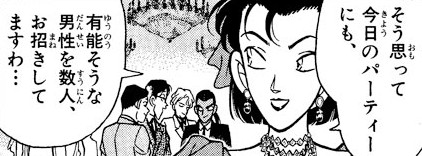
Detective Mouri is invited as a special guest to the birthday party for Reika, daughter of the Yotsui Group’s chairman. At the event, Reika announces her intent to marry.
- 麗花:
- 「そう思って今日のパーティーにも、有能そうな男性を数人、お招きしてますわ…」
- “With that in mind, I've invited several promising gentlemen to today's party...”
Reika has invited several men to her party as possible husbands. She can’t know yet how capable they really are, so そうな marks 有能 as her impression. Before the noun 男性, そうだ becomes そうな. The そう in そう思って at the start of the line is a different word, “so” or “that way”.
Guessing Someone’s Feelings
Nobody can feel another person’s emotions directly, so Japanese speakers usually describe them from the outside: 彼はうれしそうだ, “he looks happy”. Stating someone else’s feelings flatly, as in 彼はうれしい, sounds odd in conversation. With そうだ, the speaker reads the feeling from a face, a voice, or behavior.
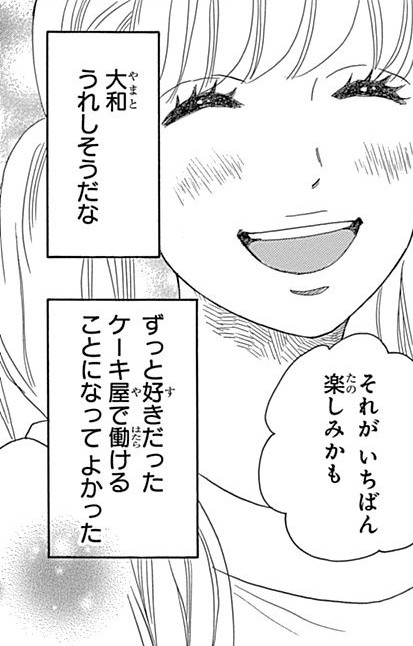
Rinko (Yamato) interviews for a summer job at her favorite cake shop. Following the interview, she is hired and is set to start work the next day. She’s excited at all the new techniques she’ll learn that she’ll use to make various sweets for her boyfriend, Takeo.
- 凛子:
- 「それがいちばん楽しみかも」
- “I think that's what I'm most looking forward to.”
- 猛男:
- 「大和うれしそうだな」
- “Yamato looks happy.”
- 「ずっと好きだったケーキ屋で働けることになってよかった」
- “I'm glad it worked out that she can work at the cake shop she's always loved.”
Rinko has just been hired at her favorite cake shop, and her face shows it. Takeo can’t feel her happiness himself, so he reads it from her expression: 大和うれしそうだな, “Yamato looks happy”. な makes it a remark to himself.
An Action on the Verge of Happening
With a verb, そうだ can say the action is about to happen: 雨が降りそう, “it’s about to rain”, or 泣きそう, “about to cry”. The speaker can’t use this for their own deliberate actions, since they decide those.
Speakers often exaggerate with it. 死にそう, “I’m going to die”, often means “I’m exhausted”, “I’m starving”, or “I’m so embarrassed”.
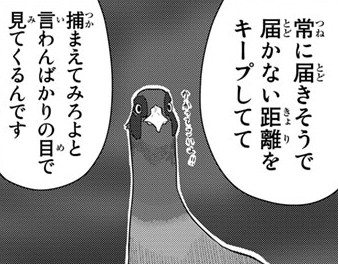
Kei and Chinatsu watch as their cousin, Makoto, chases a pheasant back and forth across the field. During a break in the chase, Makoto explains her fascination with the bird.
- 真琴:
- 「常に届きそうで届かない距離をキープしてて」
- “Constantly seeming like you can reach and keeping a distance you can't...”
- 「捕まえてみろよと言わんばかりの目で見てくるんです」
- “It's been looking with eyes as if to say, try and catch me!”
Makoto has been chasing a pheasant across the field. It always stays just out of reach. 届きそうで届かない means “looks like I can reach it, but I can’t”. 〜そうで〜ない is a common pairing for something that keeps seeming about to happen but never does.
Predicting What Will Happen
A verb with そうだ can also predict an outcome from the situation, even when nothing is about to happen this second. The speaker reads the signs and says how things are likely to go.
Example 1 of 2: Bad at carbonated drinks with 炭酸
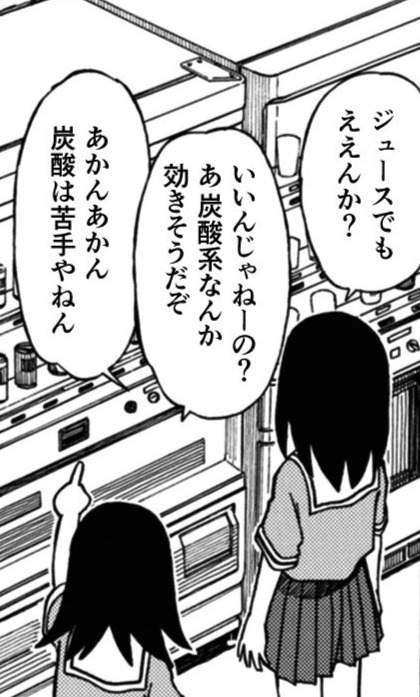
A case of the hiccups sends Ayumu down the path of trying each of her friends’ potential solutions. Tomo suggests drinking water as a cure.
- 歩:
- 「ジュースでもええんか?」
- “Is juice okay too?”
- とも:
- 「いいんじゃねーの?あ炭酸系なんか効きそうだぞ」
- “Yeah, that should be fine, right? Actually, carbonated stuff might work even better.”
- 歩:
- 「あかんあかん炭酸は苦手やねん」
- “No no, I can't do carbonated drinks. I'm bad with them.”
Ayumu has the hiccups, and her friends are suggesting cures. Tomo says a carbonated drink seems likely to work: 炭酸系なんか効きそうだぞ, “something carbonated might do the trick”. She is predicting, not reporting a result she has seen. ぞ gives the guess a confident push.
Example 2 of 2: Hoping to get along well with 〜といい

After Cocoa moves in, Chino’s father and rabbit Tippy discuss their energetic new tenant.
- ティッピー:
- 「やれやれ大変になりそうじゃ」
- “Good grief. This looks like it's going to be a handful.”
- お父さん:
- 「チノ仲良くやれるといいな」
- “I hope Chino is able to get along well (with Cocoa).”
Tippy has just met Cocoa, the café’s lively new tenant, and predicts trouble ahead. 〜になりそう, “looks like it will become”, is a common way to predict how things will turn out. Tippy speaks like an old man, and じゃ is old-fashioned speech for だ.
Nearly Happening with 〜そうになる
In the past tense, 〜そうになった says something came close to happening but didn’t: 転びそうになった, “I almost fell”. It’s usually about a narrow escape. Exaggerations work here too: 死にそうになった often just means “it was awful”.
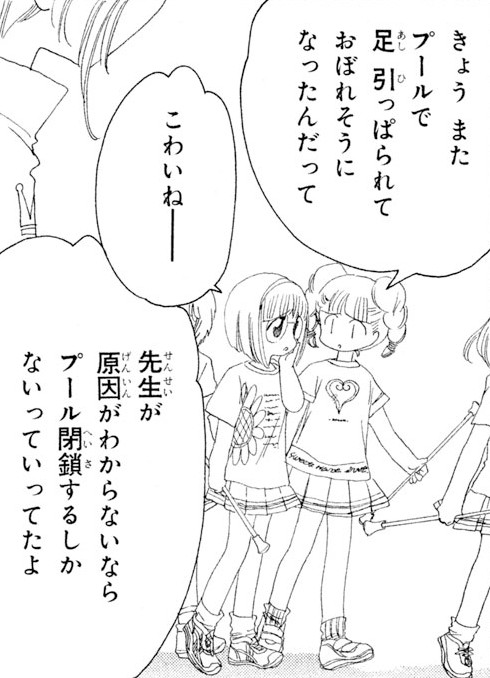
After cheerleading practice, Sakura overhears her friends talking about incidents at the school pool, where Sakura and Chiharu were among those mysteriously pulled underwater.
- 千春:
- 「きょう また プールで足 引っぱられておぼれそうになったんだって」
- “I heard that today, someone got dragged under the water at the pool and almost drowned again.”
- 奈緒子:
- 「こわいねーーー」
- “That's scary!”
- 千春:
- 「先生が原因がわからないならプール閉鎖するしかないっていってたよ」
- “The teacher said that if they can't figure out the cause, they'll have no choice but to close the pool.”
Students keep getting dragged under at the school pool. Chiharu reports that it happened again today, and someone おぼれそうになった, “nearly drowned”. They didn’t drown. The んだって at the end marks this as something she heard.
Saying Something Seems Unlikely
The negatives そうにない and そうもない say that an outcome doesn’t look likely: 終わりそうにない, “it doesn’t look like this will ever get done”. They’re a stronger denial than 終わらなそう, “doesn’t look like it’ll be done”, and often suggest things aren’t going the way the speaker hoped.
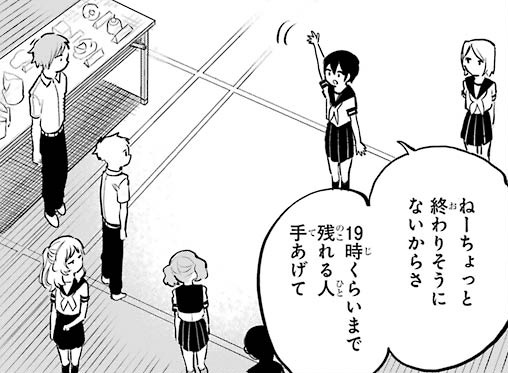
The culture festival is getting close, and the class is in the last stretch of its preparations. It’s almost six in the evening, and Asuka wants to get as much done as possible today. Mie can’t stay, though. Her curfew is six o’clock, and breaking it would mean a scolding and, worse, no cocoa the next morning. Komura figures her parents must be strict.
- あすか:
- 「ねーちょっと終わりそうにないからさ」
- “Hey, it doesn't look like we're going to finish, so…”
- 「19時くらいまで残れる人手あげて」
- “Raise your hand if you can stay until around seven.”
The class is getting ready for the culture festival, and it’s nearly six in the evening. Asuka looks at how much work is left and calls out 終わりそうにないからさ, “it doesn’t look like we’re going to finish, so…”. That’s her reason for asking who can stay until seven.
Related Grammar
- Hearsay with 〜そうだ
- A look-alike そうだ after a complete plain-form word reports something the speaker heard or read, as in 降るそうだ, "I hear it will rain".
- Likening things with 〜みたい
- みたい compares something to something else, and it can also mean "it seems". Unlike そうだ, it can follow a noun.
- Evidence-based guessing with 〜ようだ
- ようだ draws a conclusion from what the speaker has noticed. そうだ tends to give a direct impression or a prediction.
- Conjecture with 〜らしい
- らしい draws a conclusion from information, often something the speaker heard. Like ようだ, it can follow a noun.
- As if with 〜んばかり
- んばかり describes looking so much on the verge of an action that it may as well be happening.