Making an effort to with 〜ようにする
Grammar: Intention » 〜ようにする
〜ようにする means working to bring about a result. Most often that result is the subject’s own behavior: making a point of doing something, or of not doing it. It can also mean arranging things so that something happens or becomes possible, for the subject or for someone else.
Where 〜ようになる reports a change that came about, ようにする puts someone’s effort behind it. The effort doesn’t guarantee success.
Usage Notes
ようにする follows the dictionary form or ない-form of a verb. For something to avoid, 〜ないようにする is the usual choice. Potential verbs fit too, as in 使えるようにする, “make it usable”.
The continuing form 〜ようにしている describes an ongoing practice: something someone takes care to do regularly, or whenever a certain situation comes up.
The past 〜ようにした can mean that someone started making a point of something, or that they made a one-time arrangement. Context decides which.
〜ようにしてください asks the listener to take care to do something, or to make sure it happens. It’s common in advice, reminders, and rules. Its point isn’t politeness: it asks for care toward an outcome, and from a teacher or on a sign it reads as an instruction.
Formation
View formation details
- Verb (dictionary form) + ようにする
- 毎日少しでも日本語を読むようにする
- "I'll make a point of reading at least a little Japanese every day."
- Verb (ない-form) + ようにする
- 甘いものを食べないようにする
- "I'll try not to eat sweets."
- 〜ようにしている (ongoing practice)
- 夜は早く寝るようにしている
- "I make a point of going to bed early."
- 〜ようにしてください (request)
- 時間までに来るようにしてください
- "Please make sure you're here by the set time."
- Verb (potential form) + ようにする
- 誰でも使えるようにした
- "I set it up so anyone can use it."
Making a Point of Doing Something
With the dictionary form, ようにする says someone will make an effort to do something. With the ない-form, it says they’ll take care not to. It often states a resolution: これからは遅れないようにするよ, “From now on, I’ll make sure not to be late.” English uses “make a point of”, “try to”, or “make sure to”.
〜ないようにしないと and 〜ないようにしなきゃ, “I’ve got to make sure not to …”, are common in dialogue when someone reminds themselves to be careful.

Nishikata is sleepy on his day off, but Chii keeps begging him to play. Takagi suggests hide-and-seek, and Nishikata agrees on the condition that Chii is the seeker. Once the game starts, he grins to himself that this is easy. He can sleep while he hides, under the covers of his bed.
- 西片:
- 「音とかでバレないようにしなきゃな。」
- “I've gotta make sure I don't give myself away with noise or anything.”
Chii is the seeker in a game of hide-and-seek, and Nishikata plans to nap under the covers while he hides. バレないようにしなきゃ is “I’ve got to make sure I don’t get found”. He’s reminding himself to be careful, so he creeps into bed without a sound.
An Ongoing Practice with ようにしている
〜ようにしている describes something someone takes care to do as a regular practice. It can be a daily habit, as in 知らない言葉はすぐ調べるようにしている, “I make a point of looking up words I don’t know right away.” It can also be something done whenever a certain situation comes up.
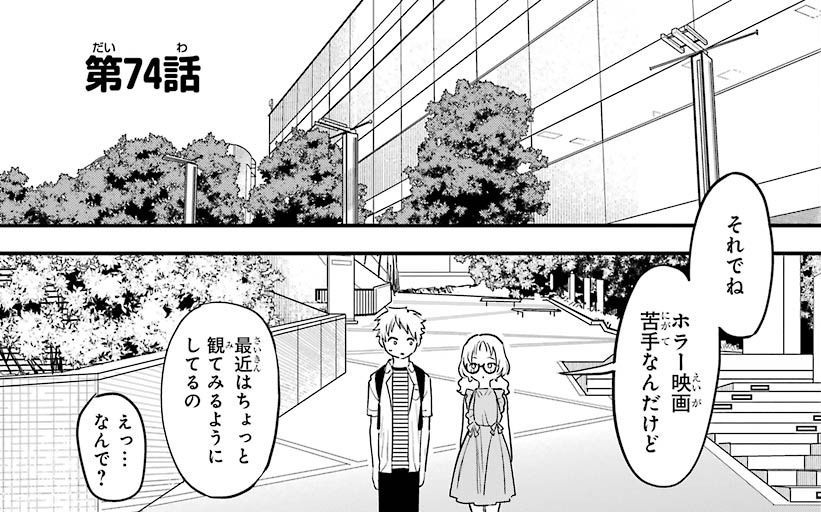
Komura and Mie have spent the day at the aquarium. Now the two of them are walking together outside.
- 三重:
- 「それでね」
- “So, um...”
- 「ホラー映画苦手なんだけど」
- “I'm no good with horror movies, but...”
- 「最近はちょっと観てみるようにしてるの」
- “...lately I've been making a point of trying to watch them a little.”
- 小村:
- 「えっ…なんで?」
- “Huh...? Why?”
After leaving the aquarium with Komura, Mie admits she’s no good with horror movies. 最近はちょっと観てみるようにしてるの is “lately I’ve been making a point of trying to watch them a little.” She isn’t describing one movie night. She has taken up watching horror as a practice, despite the fear.
Asking Someone to Make Sure
〜ようにしてください asks the listener to take care to do something, or to make sure something happens. It fits advice and standing rules: 無理をしないようにしてください, “Please try not to overdo it.” Casual speech uses 〜ようにしてね, blunt speech uses 〜ようにしろ(よ), and 〜ようにしましょう is common in notices.
It isn’t a politeness device. It asks the listener to take care that something happens, rather than to perform one action on the spot. That can be a regular practice or a single occasion, like arriving on time for one appointment.
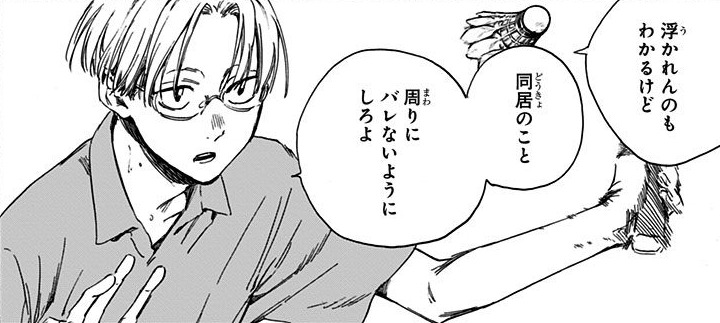
Chinatsu has moved into Taiki’s family’s house. At badminton practice the next day, he’s in high spirits. His friend Kyo is aware of the living arrangement.
- 匡:
- 「浮かれんのもわかるけど」
- 「同居のこと周りにバレないようにしろよ」
- “I get why you're walking on air, but...”
- “...make sure nobody around here finds out you two live together.”
Taiki’s crush Chinatsu has moved into his family’s house, and his friend Kyo is in on the secret. Kyo gets that Taiki is giddy about it, but he warns him: バレないようにしろよ, “make sure nobody finds out”. Kyo isn’t naming one thing to do. He wants Taiki to take care that the living arrangement never gets out.
Arranging Things So Something Can Happen
ようにする can also mean setting things up so that something happens or becomes possible. The clause before it often has its own subject, as in 母親は息子がその部屋に入らないようにした, “The mother made sure her son wouldn’t go into that room.” The verb doesn’t have to describe a deliberate act. Potential forms and non-volitional verbs like 動く “move” are common: ソファで寝られるようにした, “I made it so someone could sleep on the sofa.”
This use doesn’t mean giving anyone a direct order. In 太郎が部屋に入るようにする, the speaker might leave the door unlocked or put a snack inside so that Taro will go in. Ordering him in takes the causative instead: 太郎を部屋に入らせる.
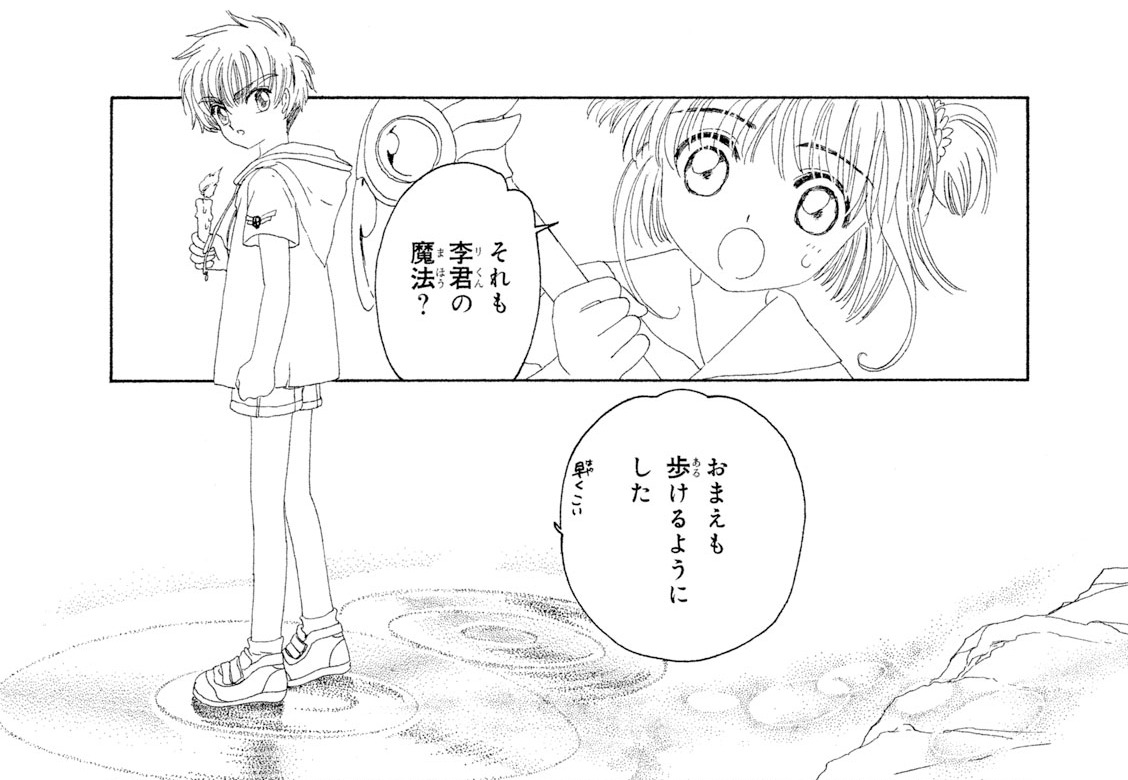
During a test of courage in a cave, Sakura’s classmates vanish one by one. Li senses a Clow Card near the shrine by the spring at the end of the cave, and he lights a candle with fire magic so they can see. The bridge across the water to the shrine has burned. Sakura suggests flying over with the Fly card, but Li says they should approach quietly so the card won’t notice them. He chants a spell, and sparkles swirl around both their feet. Then Li steps out onto the water, and Sakura cries out his name.
- 桜:
- 「それも李君の魔法?」
- “Is that your magic too, Li?”
- 小狼:
- 「おまえも歩けるようにした」
- 「早くこい」
- “I made it so you can walk on it too.”
- “Hurry up and come on.”
The bridge to the shrine has burned, so Li casts a spell and steps out onto the water. When Sakura asks if that’s his magic too, he answers おまえも歩けるようにした, “I made it so you can walk on it too.” Li did the arranging, but Sakura is the one who can now walk. Li hasn’t made her do anything, so he still has to tell her to hurry up and come.
Related Grammar
- Doing for a reason with 〜ように
- Purpose ように states the goal of a separate action; ようにする makes the goal itself what someone works toward.
- Coming to do with 〜ようになる
- ようになる describes reaching a new state; ようにする describes effort or arrangements aimed at it.
- Doing in advance with 〜ておく
- ておく names an action done to prepare or to keep a state in place; ようにする names the result that someone works toward.