〜せる / 〜させる is the causative. One person makes another person do something, lets them do it, or brings about a state of affairs.
Usage Notes
The person causing an action is the subject of the sentence, marked by が, or は when presented as the topic.
When the verb is transitive, the actor is marked with に.
When the verb is intransitive, the actor is marked with を. There are two exceptions to this, in which the actor goes back to に:
When the meaning is permission.
When the verb takes a location を for a path or place.
In practice, を on the actor pairs with the command-type reading, where the subject has direct control over the person. に on the actor shows up when the verb needs its own を, or when the subject is granting permission rather than compelling.
Formation
Godan verbs replace the final vowel of the う-row with the あ-row and add せる. Verbs ending in う replace it with わ. Ichidan verbs add させる. Irregular verbs: する becomes させる and くる becomes こさせる.
After formation, the causative behaves like an ichidan verb. Tense and negation never touch the original verb.
View formation details
Godan verb (あ-row) + せる
母は弟を行かせた
"Mom made my little brother go."
Ichidan verb + させる
子供に野菜を食べさせる
"Make the kids eat their vegetables."
する → させる
先生は生徒に掃除をさせた
"The teacher had the students clean."
来る → 来させる
彼をここに来させて
"Have him come here."
Causative + てあげる/てもらう (letting)
好きなだけ泣かせてあげよう
"Let's let her cry as much as she wants."
〜させられる (causative-receptive)
一時間も待たせられた
"I was made to wait a whole hour."
Forcing an Action
The subject forces another person to do something. The actor is marked by を, unless the verb needs it in which case に is used.
There is often a hierarchical relationship, such as parent-child or teacher-student, where a person of higher status forces a person of lower status.
Hinagiku wants to see behind Rindou’s mask. Since Sazanka was scolded for trying the same, Hinagiku suggests they team up to take Rindou’s mask away. Asagao opposes the proposition, but Sazanka immediately quiets her by offering a bribe for her support.
ヒナギク:
「ふーん。そっちでアサガオ買収してくれるなんて、ノリ気じゃない。」
“Hmm. If you're willing to bribe Asagao on your side, you're pretty into this, aren't you?”
「私の術で言うこときかせる手間が省けたわ。」
“Saves me the trouble using my technique to make her do as I say.”
Hinagiku wants to take Rindou’s mask, and Sazanka has bribed Asagao to go along with the plan. 言うことを聞く is “do as one is told”, and きかせる is its causative, “make someone do as told”. Hinagiku had planned to force Asagao with her ninja technique, so the bribe saved her the trouble. The actor, Asagao, is left unstated.
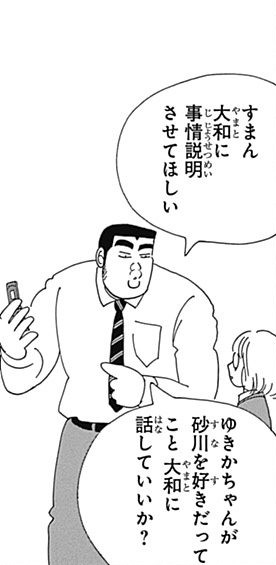
Takeo tries helping the girl who likes his friend Sunakawa. When Takeo receives a call from his own girlfriend, he realizes he’s alone with another girl.
猛男:
「すまん大和に事情説明させてほしい」
“Sorry, I'd like you to let me explain the situation to Yamato.”
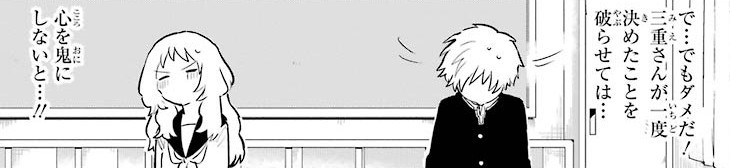
Having gained weight recently, Mie asks Komura to stop her from eating sweets at school, a difficult task as it’s White Day. Komura repeatedly stops Mie from eating the cookies and chocolate she’s received as gifts. His resolve weakens as he finds it adorable how Mie tries to sneak a bite whenever he’s not looking.
小村:
「で…でもダメだ! 三重さんが一度決めたことを破らせては… 心を鬼にしないと…!!」
“But, that's no good! If I let Mie break her decision... I have to be strict for her sake!”
Mie asked Komura to stop her from eating sweets at school, and it’s White Day. 破る is “break” a promise or decision, and 破らせる is “let someone break it”. The actor, Mie, would be marked by に but is left out. 三重さんが belongs to 決めた, “what Mie decided”, which is the thing を marks. Komura won’t let her, so he has to be strict.
Causing an Emotion
Someone’s act or an event causes another person to feel something. The person feeling the emotion is marked by を and the cause is often expressed with て.
This uses an emotion verb, such as 驚く・怒る・笑う・泣く・心配する・安心する.
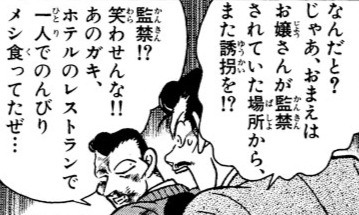
Ran and Kogoro find the kidnapped Akiko and they apprehend the kidnapper. Believing the butler to have arranged the kidnapping, Kogoro accuses the kidnapper being an accomplice. The kidnapper denies working with someone, saying he encountered the child in the hotel by chance.
小五郎:
「なんだと?じゃあ、おまえはお嬢さんが監禁されていた場所から、また誘拐を!?」
“What?! So you kidnapped her all over again, from the very place where the young lady was being held captive!?”
誘拐犯:
「監禁!?笑わせんな!!あのガキ、ホテルのレストランで一人でのんびりメシ食ってたぜ…」
“Held captive?! Don't make me laugh!! That brat was eating a leisurely meal all by herself in the hotel restaurant...”
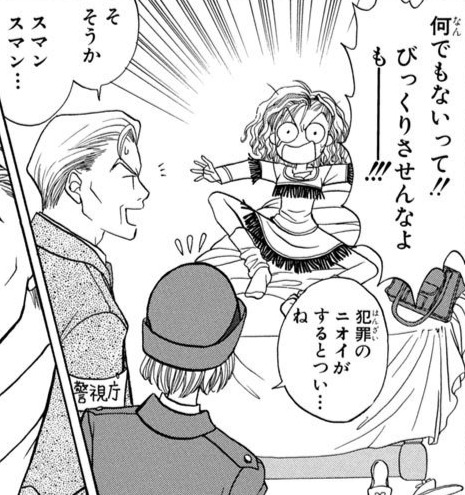
A classmate shows off her new satchel from Meisho Daichi High School. Ran wants one for herself, so she heads down to Shibuya in search of a Meisho Daichi student who’ll give her one. She accidentally steals one, which she later ruminates on in her room. As she talks to herself about how her pride cannot abide stealing, her police officer parents burst into her room, asking what was stolen and who the suspect is.
蘭:
「何でもないって!! びっくりさせんなよ もーーーー!」
“It's nothing!! Don't scare me like that! Seriously!!”
泰三:
「そ そうか スマン スマン…」
“Oh... okay. Sorry, sorry...”
清香:
「犯罪のニオイがするとつい…ね」
“When I smell a crime, I just can't help myself...”
Ran’s parents, both police officers, burst into her room asking about a theft. びっくりする is “be startled”, and びっくりさせる is “startle someone”. させんな is a rough させるな, “don’t”. The person feeling the emotion, Ran, would be marked by を, but she leaves herself out.
Responsibility
Blame or regret is expressed for an undesirable event, often with 〜(さ)せてしまう.
Example 1 of 2: A slip of the tongue with 滑らせてしまった
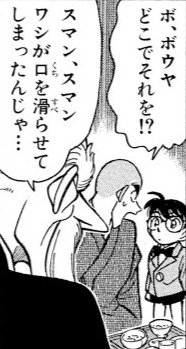
A flat tire and rain send Kogoro, Ran, and Conan to a nearby temple. The priest invites them to stay overnight, but warns them about the Mist Tengu. That night, they dine along with the monks training there. Conan takes an opportunity to ask about the Mist Tengu, catching the monks off guard.
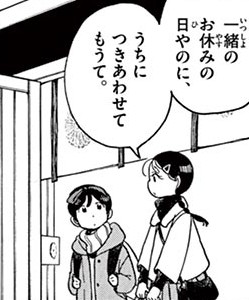
The verb 付き合う is intransitive, so を would mark Kiyo as the actor, and に is not part of the causative.
The subject (the causer, Sumire) would be marked by が, but is omitted.
The actor (the causee, Kiyo) would be marked by を, but is omitted.
The target of the action (the person being accompanied, Sumire) is marked by に.
The Kansai-dialect substitutes もうて in place of しまって as an expression of regret.
Polite Demand or Offer
〜(さ)せてください is a request for permission where the speaker does not check the other person’s wishes but states a demand or offer. The listener has the authority to say yes or no. The actor is usually marked に and is often omitted.
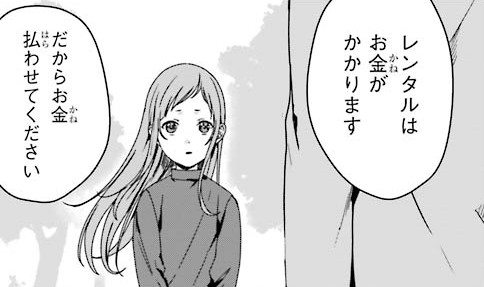
To help ease Kanami’s sorrow due to her situation in life, Makoto offers to let her rent time with him as an older brother. On the first rental, Kanae says she will pay him, something Makoto wasn’t expecting.
The verb 払う is a transitive verb. お金 normally would take the particle を, but it is dropped here. Because the request is to allow Kanami to pay, Kanami would be marked by に if she referred to herself in the request. Makoto is the unspoken subject being asked to allow Kanami to pay.
Example 2 of 3: Please let me help you with 〜させてください
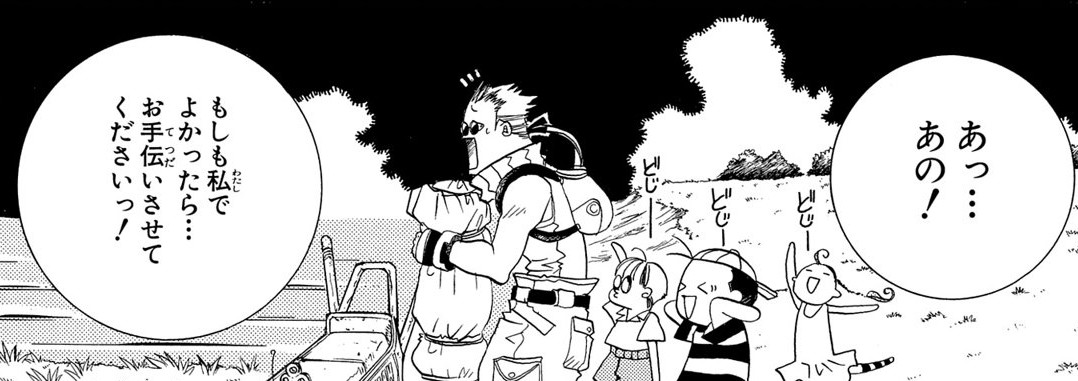
Akari meets Woody as he’s out on a delivery run. He’s in a spot of trouble because he’s lost his map, and there isn’t enough time for him to go back and get it. Akari is familiar with the city and realizes she can lend him her knowledge.
手伝い is a transitive verb. Akari doesn’t need to refer to herself as the one being allowed to help, but would be marked by に if she did. Woody is the unspoken subject being asked to allow Akari to help out.
Example 3 of 3: Please let me hold the baby pandas with 〜させてください
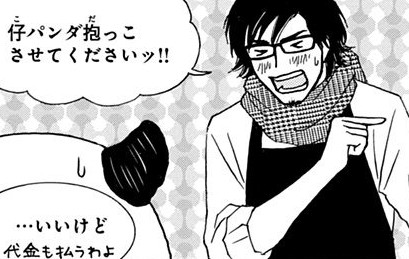
Rin Rin loves pandas such that when he makes a delivery to Panda’s home, he can’t resist the cuteness of the younger siblings. Panda Mama takes out her purse to cover the cost of the delivery, but Rin Rin refuses to accept payment.
抱っこする is a transitive verb. Neither the に-marked Rin Rin nor the が-marked Panda Mama is stated.
Being Allowed to Act
〜(さ)せてもらう frames an action as something the speaker is being allowed to do (or taking the liberty of doing). The action may affect the listener, or the listener may see it as receiving a favor to be able to do the action. It often carries a nuance of gratitude or politeness.
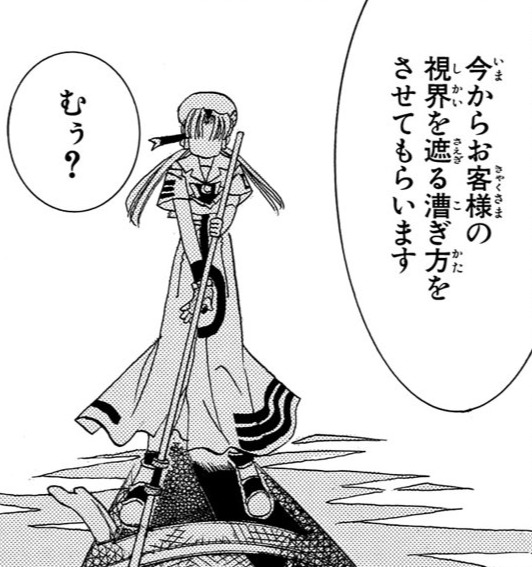
Akatsuki asks Akari for a gondola ride to his destination. Along the way, he asks whether he’ll make his deadline. Akari suggests Alicia should take over, but Akatsuki says he’s Akari’s customer (and paying the cheaper fare). Realizing her responsibility, Akari turns the gondola around so she can use her high-speed backward rowing. Alicia apologizes to Akatsuki for the turnaround.
アリシア:
「今からお客様の視界を遮る漕ぎ方をさせてもらいます」
“From now on, she'll be using a rowing technique that blocks your view.”
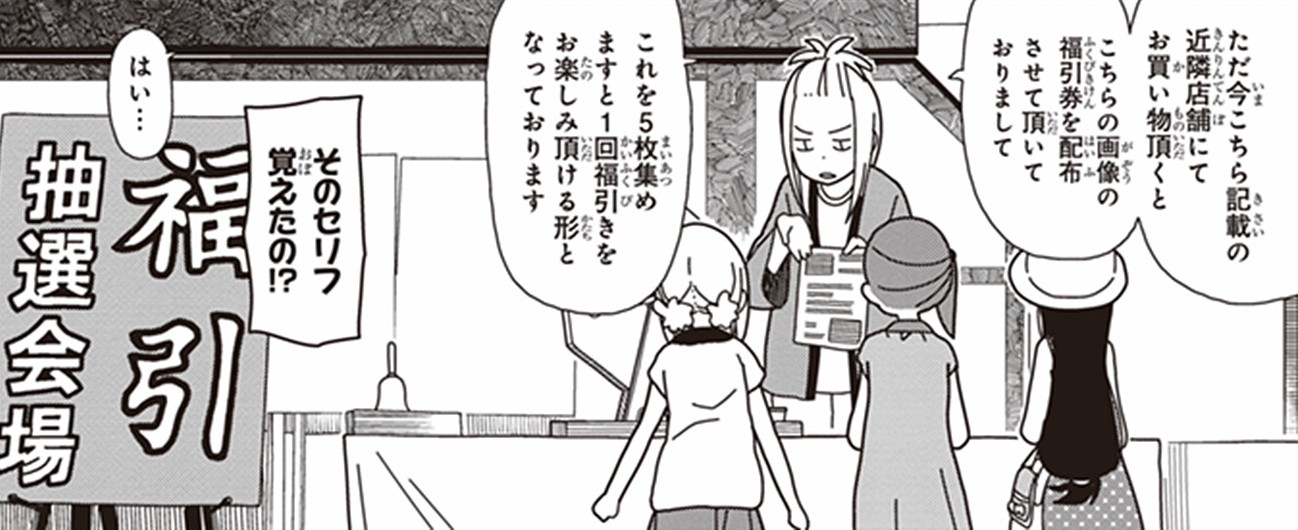
Upon entering the mall, Yui notices a lottery wheel. Sacchan and Kotoha join her, the two quickly pestering Subaru, the part-timer working the lottery, with random questions. Subaru pushes on with her script.
すばる:
「ただ今こちら記載の近隣店舗にてお買い物頂くとこちらの画像の福引券を配布させて頂いておりまして」
“Currently, when you make a purchase at a neighborhood store, we are distributing the raffle tickets shown in this image.”
「これを5枚集めますと1回福引きをお楽しみ頂ける形となっております」
“If you collect five tickets, you'll be able to enjoy one lottery draw.”
Subaru is reciting her script at a mall lottery. 配布させて頂いて is the business formula 〜させていただく, which frames handing out tickets as something the customers allow the store to do. In service speech, it often amounts to a very polite “we are doing”.