Marking the direct object with を
Grammar: Particles
を marks the direct object of an action. It points to the thing that is acted on.
Usage Notes
を is used with many action verbs to show what the action directly affects. It can also mark a path traveled through or a place left behind with movement verbs.
In modern Japanese, を is normally pronounced like お, even though it is written with a different kana.
Formation
View formation details
-
Noun + を + transitive verb
- 本を読む
- "read a book"
-
Noun + を + する
- 宿題をする
- "do homework"
-
Place or route + を + movement verb
- 橋を渡る
- "cross a bridge"
-
Place + を + leaving verb
- 部屋を出る
- "leave the room"
Direct Objects
The main use of を is to mark the direct object of an action. The noun before を is what the action is done to. The action is a transitive verb, which takes something as the target of the action.
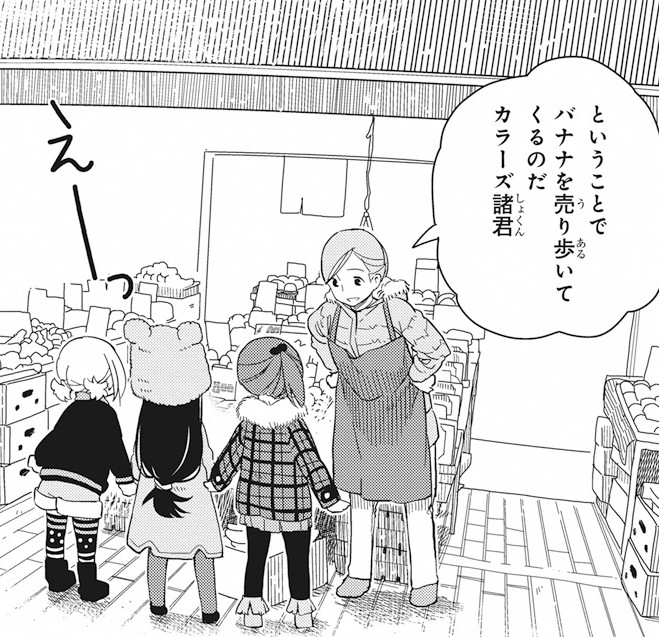
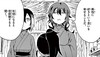
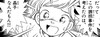
Sacchan receives an urgent message from her mother. She and her friends hurry to Sacchan’s mother’s fruit store to find out what the issue is. Sacchan’s mother explains that the store has too many unsold bananas. If they don’t sell out today, Sacchan will be eating bananas for breakfast, lunch, and dinner for a while.
- お母さん:
- 「ということでバナナを売り歩いてくるのだカラーズ諸君」
- “That said, you're going around selling the bananas for me, my dear Colors.”
The verb 売り歩く is a transitive verb meaning to peddle (goods). The item being sold here is bananas, marked by を.
を with する
Many nouns can combine with する to describe an action. In that pattern, the activity noun is often marked by を.
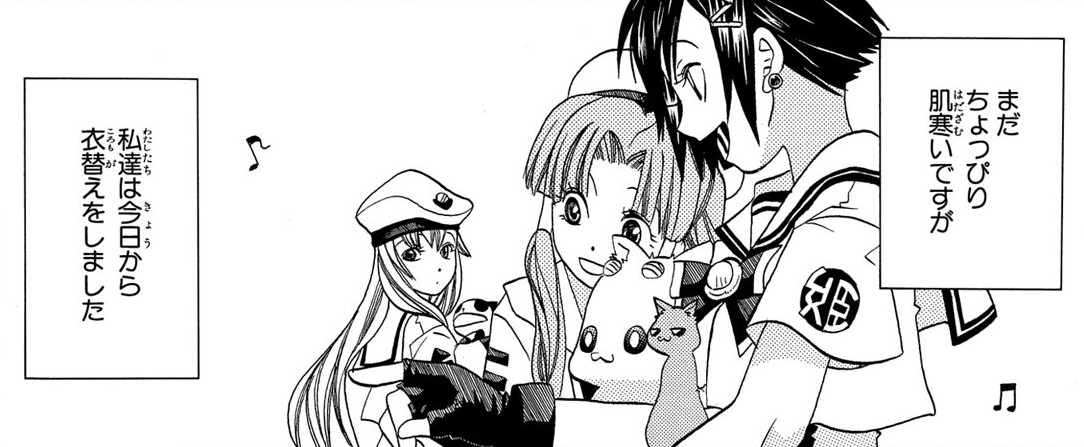
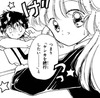
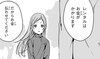
Akari narrates about her group’s change from winter uniforms to summer uniforms.
- 灯里:
- 「まだちょっぴり肌寒いですが私たちは今日から衣替えをしました」
- “It is still a little chilly, but we changed our uniforms today.”
衣替え is a noun for changing one’s clothes with the season, such as changing from a summer school uniform to a winter one. Marking this noun with を and adding する (here in the polite past form, しました) turns it into an action.
The particle can sometimes be dropped in casual speech or compact writing, but をする clearly shows the noun as the action being performed.
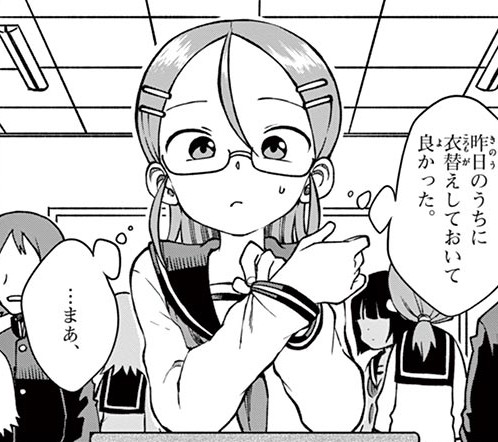
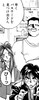
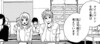
Yukari and her friends have a miscommunication on whether they’ll change from their summer uniforms to their winter uniforms yet. The decision is finalized just in time, as the following day is even colder.
- ユカリ:
- 「昨日のうちに衣替えしておいて良かった。」
- “I'm glad we (took the opportunity and) settled our uniform change (during) yesterday.”
This scene also uses 衣替え with a form of the verb する, but this time を is dropped. It’s implied from context.
Paths and Areas
With movement verbs, を can mark the route or area that movement passes through. This includes movement verbs such as 行く, 歩く, and 飛ぶ.
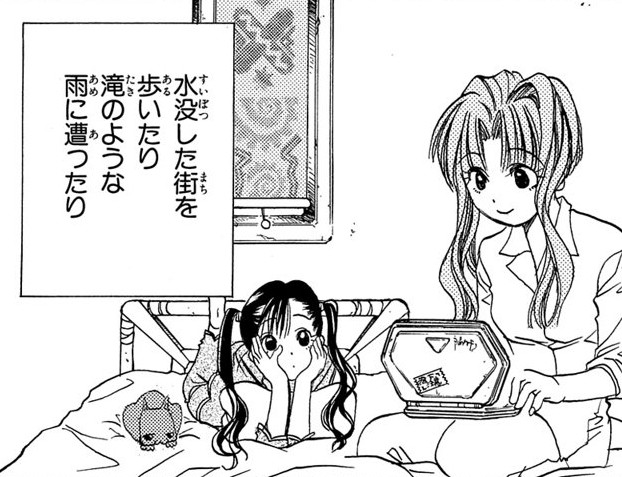
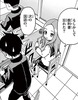
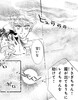
While out buying cat food during acqua alta, when tides have risen onto the streets, Akari is caught in a heavy downpour. She finds herself near Himeya Company, where her friend Aika lives, and she’s invited in to stay the night. As the two watch the falling rain through a window, Akari types an e-mail about her adventure that day.
- 灯里:
- 「水没した街を歩いたり滝のような雨に遭ったり」
- “Walking through a flooded town or getting caught in a downpour...”
Here を marks the space that the movement crosses.
Leaving a Place
With verbs such as 出る, 降りる, and 卒業する, を can mark the place or state being left.
This is an extension from direct object marking. を points to the thing that the movement separates from.
Supplemental Examples