〜かもしれない presents a statement as a possibility. English renders it as “might”, “may”, or “maybe”. The speaker allows that the statement could be true without claiming that it’s likely.
Casual speech often shortens it to 〜かも. The polite form is 〜かもしれません.
The phrase is built from question-marking か, も, “even”, and 知れない, “can’t be known”. Read literally, 雨が降るかもしれない says that whether it will rain can’t be known.
Usage Notes
かもしれない makes no claim about the odds. だろう treats a guess as the likely answer, and はず draws a conclusion from facts the speaker knows. Adverbs such as もしかしたら, もしかすると, and ひょっとしたら, all meaning “possibly”, often come earlier in the sentence and lower the odds further.
Speakers also use かも to soften statements about their own opinions and feelings, as in いいかも, “that could be nice”. In that use the speaker isn’t really unsure. かも keeps the statement from sounding too firm.
Formation
View formation details
Verb (plain form) + かもしれない
明日は雨が降るかもしれない
"It might rain tomorrow."
Note: Past forms work the same way, as in 降ったかもしれない.
Verb (negative) + かもしれない
今日は行けないかもしれない
"I might not be able to go today."
い-adjective + かもしれない
この靴はちょっと小さいかもしれない
"These shoes might be a little small."
Noun or な-adjective + かもしれない
あの人、先生かもしれない
"That person might be a teacher."
Note: Do not add だ. A past guess uses だった, as in 先生だったかもしれない.
Plain form + の + かもしれない
疲れているのかもしれない
"Maybe she's tired."
Note: A noun or な-adjective takes な before の, as in 病気なのかもしれない.
〜かもしれません (polite)
少し遅れるかもしれません
"I may be a little late."
Note: The words before it stay in plain form.
〜かも (casual)
それ、いいかも
"That might be nice."
〜かもしれん (older, blunt)
そうかもしれんな
"That may be so."
Note: ん replaces ない, as in 知らん for 知らない.
Saying Something Might Be True
Put かもしれない at the end of a statement to turn it into a possibility. The verb or adjective before it stays in plain form. 降る becomes 降るかもしれない, “might fall”, and 大きい becomes 大きいかもしれない, “might be big”.
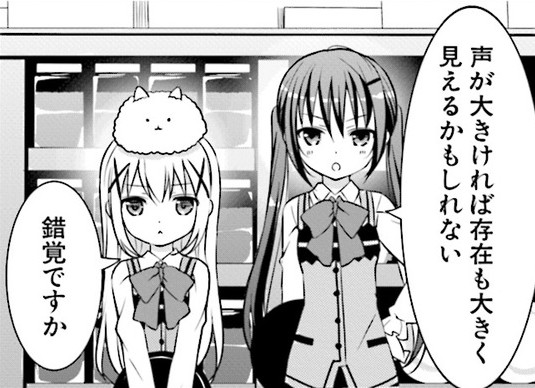
Chino worries that she’s too short, and Rize offers an idea. 大きければ is the “if” form of 大きい, and for a voice it means “loud”. The second half says what might follow. Rize doesn’t promise it will work. With 見えるだろう, she would be predicting that it will. With かもしれない, she’s only floating the idea.
Words like もしかしたら and ひょっとしたら, “possibly”, often appear earlier in the sentence. They make the possibility sound even more remote, close to “there’s a chance that…”.
For “might not”, make the part before かもしれない negative. 来ないかもしれない means “might not come”.
Adding の before かもしれない makes the guess about an explanation. The speaker notices something and offers a possible reason behind it, “maybe it’s that…” or “maybe that’s why…”. A noun or な-adjective takes な before の, as in 病気なのかもしれない.
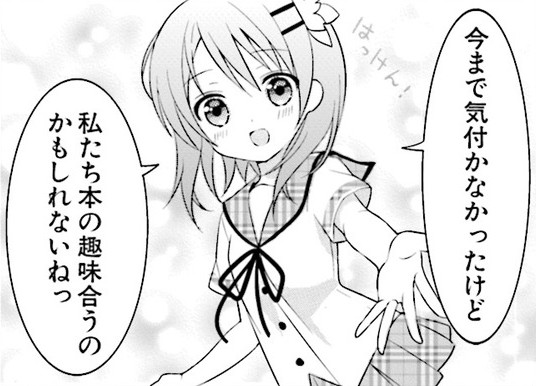
Example 1 of 2: Might have similar tastes with 〜かもしれない
At the library, Chino is looking for a book whose title she has forgotten, and Cocoa thinks she knows which one it is. She reads that as a sign of something she hadn’t noticed before. のかもしれない offers it as the explanation, “maybe it’s that our tastes in books match”. Casual speech drops the が after 趣味, and ねっ invites Chino to agree.
Example 2 of 2: Sometimes pretending to be someone else with 〜ことがある
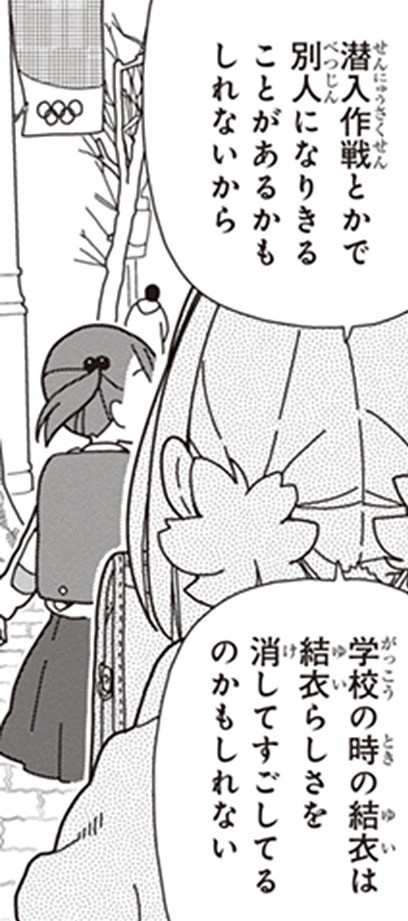
Sacchan and Kotoha notice Yui walking with a couple of her friends from school. The two decide to sneak and follow after them. Sacchan notices Yui doesn’t act quite the same with these friends as she does with Sacchan and Kotoha.
さっちゃん:
「潜入作戦とかで別人になりきることがあるかもしれないから」
“Maybe it's because she's in an undercover operation or something that she sometimes pretends to be a different person....”
「学校の時の結衣は結衣らしさを消してすごしてるのかもしれない」
“...that Yui at school might be trying to hide her true self.”
Sacchan and Kotoha secretly follow Yui and her school friends, and Yui doesn’t act the way she does with them. Sacchan builds a theory. Maybe Yui is on an undercover mission that sometimes requires her to become someone else. Maybe that’s why she hides her usual self at school. Both lines end in かもしれない, so every step of the theory stays a guess. The second line adds の because it explains what the two of them just saw.
The first line continues with から. かもしれない ends in ない and works like an い-adjective, so から, けど, and し can follow it, and the past form is かもしれなかった.
Polite Speech with かもしれません
Polite speech changes the ending to かもしれません. The words before it stay in plain form, so 行くかもしれません is the usual form rather than 行きますかもしれません.
かもしれません often softens bad news or a refusal. ちょっと難しいかもしれません, “that might be a little difficult”, can be a polite way to say no.
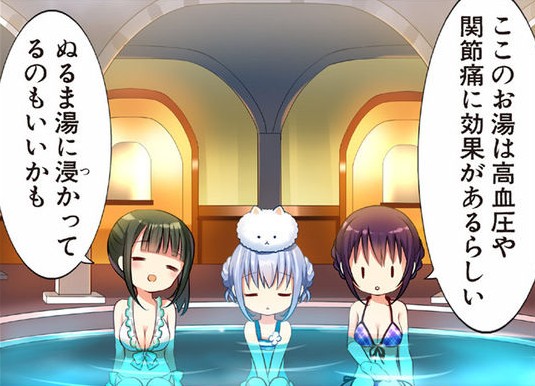
The girls are at an indoor hot spring, and Rize reads out what the water is supposed to help with. In Chiya’s line, 浸かってる is a casual form of 浸かっている, and の turns “soaking in lukewarm water” into a noun. いいかも, “might be nice”, gives a light opinion. It works as a reply on its own too, as in それ、いいかも, “that could be good”.
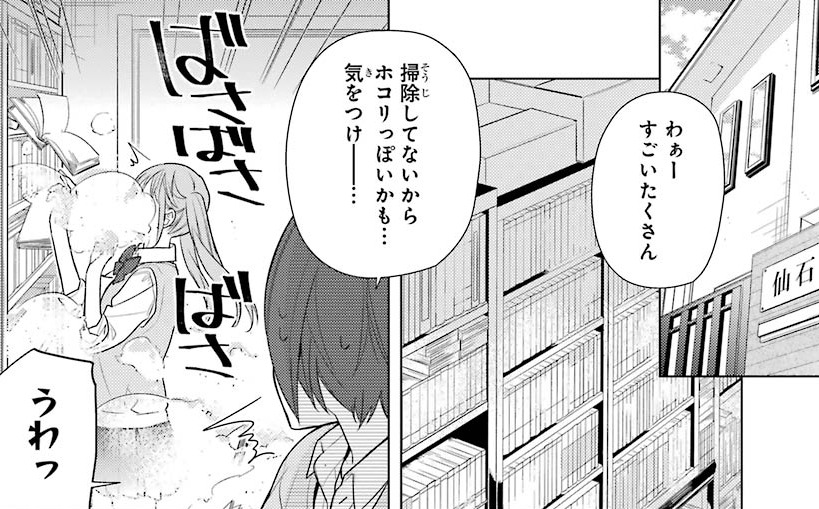
Sengoku has been lending books to his classmate Ayasaki. When he mentions that his parents’ books fill a whole room at home, she says she’d love to see it, and he invites her over.
綾崎:
「わぁー すごいたくさん」
“Wow, there are so many!”
仙石:
「掃除してないからホコリっぽいかも… 気をつけ——…」
“I haven't cleaned, so it might be dusty... Be care—...”
Sengoku shows a classmate his parents’ book room, which he hasn’t cleaned. ホコリっぽいかも is “it might be dusty”. かも goes right after the い-adjective, just as かもしれない would.
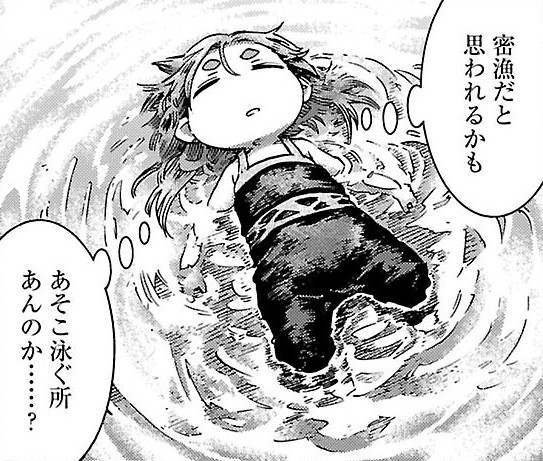
Hakumei can’t swim, so Mimari is teaching her. Hakumei tenses up in the water because she pictures herself drowning, so Mikochi tells her to think about something else, like where she’d go once she can swim. Floating on her back, Hakumei decides she might visit the sea at Arabi with Mikochi. Arabi is a port town known for its seafood.
Hakumei floats on her back during a swimming lesson and pictures a trip to the sea at Arabi, a fishing town. 思われるかも is “(we) might be taken for (poachers)”. かも follows the verb directly, and stopping there suits a passing thought.
Softening Statements About Yourself
かも also shows up when the speaker isn’t really unsure. A statement about one’s own feelings can sound too definite, and かも tones it down, much like “I think” in English.
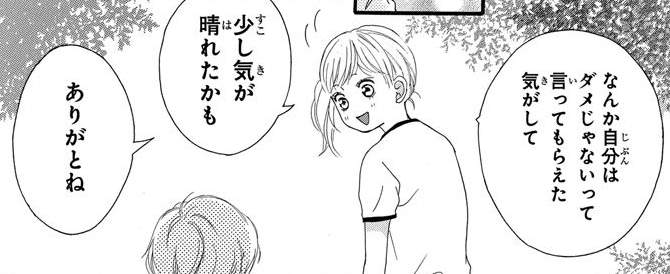
Futaba had been feeling the weight of uncertainty of her standing with Kou. A general discussion about boys and relationships with her friend Kikuchi clears up her feelings.
双葉:
「なんか自分はダメじゃないって言ってもらえた気がして」
“It kind of felt like you were telling me I'm not hopeless.”
Futaba has been unsure where she stands with Kou, and a talk with Kikuchi helps. 気が晴れる means “feel better”, literally “the spirit clears up”. Futaba knows how she feels. かも, together with 少し, “a little”, keeps the admission modest before she says thanks.
Example 2 of 3: Hired to work for the summer with 〜ことになる
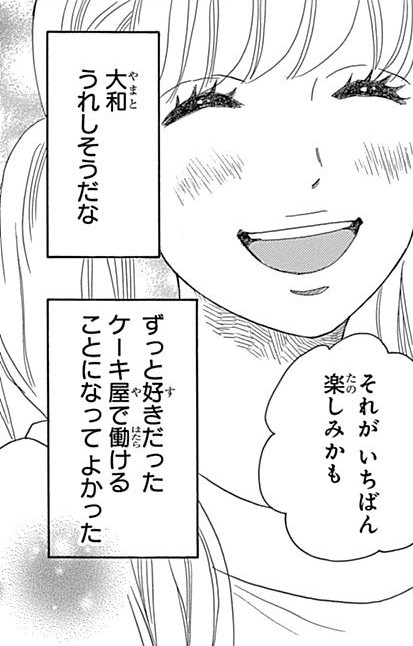
Rinko (Yamato) interviews for a summer job at her favorite cake shop. Following the interview, she is hired and is set to start work the next day. She’s excited at all the new techniques she’ll learn that she’ll use to make various sweets for her boyfriend, Takeo.
凛子:
「それがいちばん楽しみかも」
“I think that's what I'm most looking forward to.”
猛男:
「大和うれしそうだな」
“Yamato looks happy.”
「ずっと好きだったケーキ屋で働けることになってよかった」
“I'm glad it worked out that she can work at the cake shop she's always loved.”
Rinko has just been hired for a summer job at her favorite cake shop, and she’s excited about the techniques she’ll learn there for making sweets for Takeo. 楽しみ is “something to look forward to”, and いちばん, “most”, makes a strong claim. かも softens it to “I think that’s what I’m looking forward to most”.
Example 3 of 3: Admitting to being forgetful with 〜っぽい
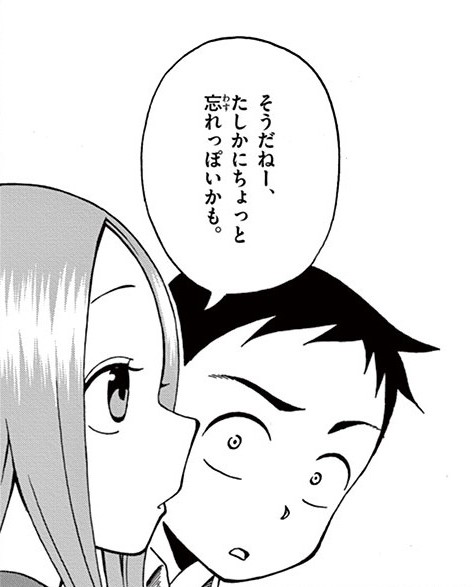
Takagi forgot both her umbrella and her raincoat, so she and Nishikata are walking home together under his umbrella. Hoping to finally tease her for once, Nishikata points out that it’s rare for her to forget anything. He asks whether she’s secretly a klutz.
高木:
「そうだねー、たしかにちょっと忘れっぽいかも。」
“Hmm, you're right. I might be a little forgetful.”
Nishikata, sharing his umbrella with Takagi, asks if she’s secretly a klutz for forgetting hers. She agrees she might be a bit 忘れっぽい, “forgetful”. It’s a trait she knows about herself, and ちょっと with かも keeps the admission mild.
Adding ね and な After かも
Sentence-ending particles can follow かも. Both かもね and かもな make the guess sound like something the speaker is thinking over.
Example 1 of 2: Reading a book to distract from waiting for a text message with 気を紛らす
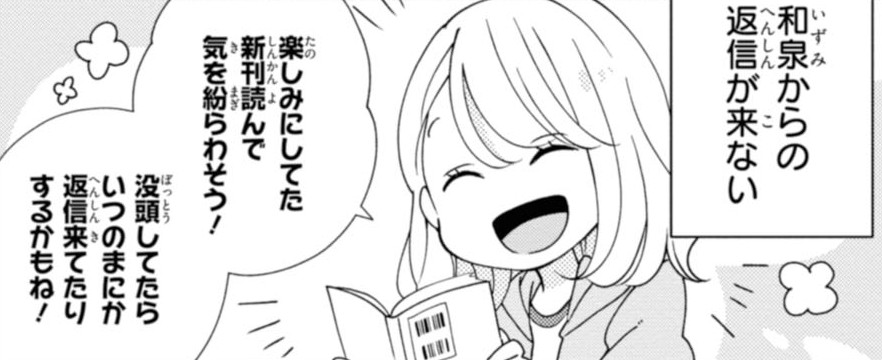
Akari is expecting a text message from Izumi. Unknown to her, Izumi’s response was getting too long, so he switched to his computer to write up an e-mail instead.
Narration:
「和泉からの返信が来ない」
“I haven't received a reply from Izumi.”
あかり:
「楽しみにしてた新刊読んで気を紛らわそう!」
“I'll distract myself by reading the new book I've been looking forward to!”
「没頭してたらいつのまにか返信来てたりするかもね!」
“Maybe if I get really absorbed in it, the reply will show up before I know it!”
Akari is waiting on a reply from Izumi and decides to pass the time with a new book. 没頭してたら sets up the situation, “if I get absorbed in it”, and いつのまにか means “before I know it”. The たりする after 来てた adds “or something like that”, which softens the guess even more. With ね, Akari sounds like she’s cheering herself up.
Example 2 of 2: To end up protecting the peace 〜ことになる
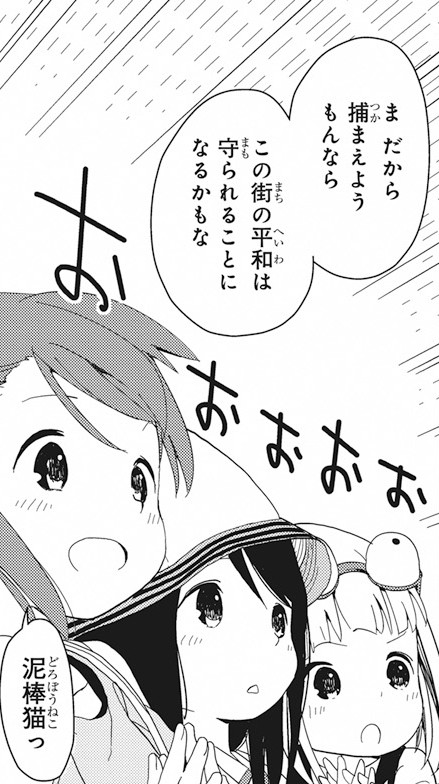
The trio Colors take a drawing of the panda-pattern monster cat to Officer Saitou to see if he knows its whereabouts so they can capture it to protect the peace in their district. Saitou is initially unwilling to help the young girls and admonishes them for wasting his time. But when Yui starts crying, Saitou relents with information. He says it’s a thieving cat. Lately, there’s been an increase in stories about a panda-pattern cat taking things.
斎藤:
「ま だから捕まえようもんなら この街の平和は守られることになるかもな」
“Well, that being the case, if you were to capture it, I suppose it'll end up having protected the peace of this district.”
Officer Saitou didn’t want to help the girls hunt down a thieving cat, but he gives in. 捕まえようもんなら means “if you were to catch it”, and ことになるかもな concedes that the district’s peace might end up protected. The ま at the start, short for まあ, and the な at the end make the concession sound reluctant.
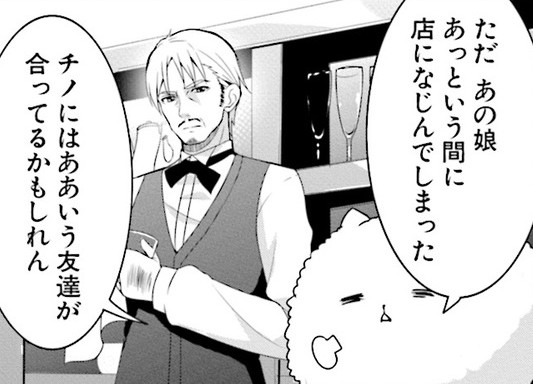
Blunt かもしれん and Casual かもしんない
Some speakers replace the final ない with ん, giving かもしれん. This is the blunt negative covered in Negation with 〜ない.
Chino’s father remarks on how quickly Cocoa fit in at the café. Tippy the rabbit answers in an old man’s speech. ああいう友達 points to Cocoa without naming her, “a friend like that”. 合ってる, short for 合っている, means “is a good match”. チノには marks Chino as the person the match is good for.
Younger casual speakers sometimes say かもしんない, or the rougher かもしんねえ. It’s the same change that turns 分からない into 分かんない, covered in How casual contractions work.
Several endings turn a statement into a guess. Roughly from least to most confident:
Form
Example
Meaning
〜かもしれない
降るかもしれない
might rain
〜だろう
降るだろう
will probably rain
〜はずだ
降るはずだ
should rain, going by what the speaker knows
〜に違いない
降るに違いない
is sure to rain
Only かもしれない sits comfortably next to its opposite. 降るかもしれないし、降らないかもしれない, “it might rain, or it might not”, sounds natural. The same sentence with だろう or はず contradicts itself.