Must not do with 〜てはだめだ
Grammar: Prohibition » 〜てはだめだ
〜てはだめだ directly says that an action is not allowed or will not do. In speech, ては often contracts to ちゃ.
Usage Notes
〜てはだめだ is a direct way to say an action is not allowed or is no good. It can sound more immediate and conversational than 〜てはいけない.
In casual speech, ては contracts to ちゃ, as in しちゃだめ.
Related Grammar
-
Should not do with 〜てはいけない
- Used to discourage (rather than prohibit) an action.
-
Must not do with 〜べからず
- An old-fashioned way to strongly forbid an action.
Examples
Don't grow bigger with 〜てはだめだ
Grammar Explanation: Must not do with 〜てはだめだ

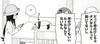
On the topic of Chino outgrowing Cocoa, Cocoa is fine with it until she learns Chino won’t be like a doting big sister to her.
- ココア:
- 「チノちゃんは大きくなっちゃだめ!」
- “You mustn't become bigger.”
Don't leave your vegetables 〜てはだめだ
Grammar Explanation: Must not do with 〜てはだめだ

During breakfast, Cocoa sees Chino avoiding the vegetable on her plate.
- ココア:
- 「あっ チノちゃんアスパラ残しちゃだめだよ」
- “Ah, Chino, you mustn't leave your asparagus.”
- 「ほらちゃんとたべて」
- “Come on, eat your vegetables.”
Don't reveal it with 〜てはだめだ
Grammar Explanation: Must not do with 〜てはだめだ

While telling ghost stories at night, Rize relays the tale from her childhood, of a frightened servant who felt she was being watched while walking home one night.
- リゼ:
- 「犯人はホフク前進の練習をしていた私だ」
- “I was the culprit. I was practicing crawling on my stomach.”
- ◯:
- 「バラしちゃだめじゃん!!」
- “You shouldn't reveal it!”