Natural result with 〜と
Grammar: Condition
と is a conditional particle that joins two clauses. The second clause gives the inevitable result of the first. Depending on context, it can mean “if”, “when”, or “whenever”.
Usage Notes
The clause before と is in plain, non-past form, even when the sentence as a whole is about the past.
The result clause states something that happens on its own once the condition is met.
Formation
View formation details
-
Verb (dictionary form) + と
- 春になると桜が咲く
- "When spring comes, the cherry blossoms bloom"
-
Verb (negative form) + と
- 急がないと遅れる
- "If you don't hurry, you'll be late"
-
い adjective + と
- 値段が高いと誰も買わない
- "If the price is high, nobody buys it"
-
Noun・な adjective + だと
- 雨だと試合は中止になる
- "If it rains, the match is called off"
Natural Results
と is used when one thing leads to another as a natural result.
- 冬になると、日が短くなる。
-
When winter comes, the days get shorter.
- このボタンを押すと、ドアが開く。
- When you press this button, the door opens.
Habitual Results
と also expresses one action reliably following another as a habit or routine. Here it is closer to “whenever”.
- 父は家に帰ると、すぐテレビをつける。
- Whenever my father comes home, he turns on the TV right away.
Discoveries
With a past-tense result clause, と can mark a discovery, when the speaker did one thing and found something unexpected.
- 窓を開けると、雪が降っていた。
- When I opened the window, I found it was snowing.
The clause before と stays in non-past form even though the whole sentence is about the past.
Compared with Other Conditionals
Japanese has several conditionals, and と is the most restrictive of them.
- と presents the result as automatic and certain: press the button, and the door does open.
- 〜たら works for one-time situations and allows the speaker’s will in the result.
- 〜ば focuses on the condition needed for a result, and is common in advice.
- なら takes a topic or assumption and adds a response to it.
Related Grammar
- Hoping with 〜といい
- When the time comes with いざ〜となると
- Proportional to with 〜ば〜ほど
- Quoting and reporting with と and って (an unrelated use of the same particle)
Examples
Don't lean out too far with 〜と
Grammar Explanation: Natural result with 〜と

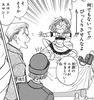
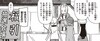
Yotsuba and her father are driving to their new home. As they pass a school letting out, Yotsuba waves to a student.
- 父さん:
- 「あんまりのり出すと危ないぞ」
- “It's dangerous to lean out too far.”
Supplemental Examples