Negation with 〜ない
Grammar: Negation » 〜ない
〜ない negates:
- Verb: 行かない “not go”
- Adjective: 高くない “not expensive”
- Noun: 学生じゃない “not a student”
It conjugates like an い-adjective, with the past as なかった and て-form as なくて. Rough speech bends it to ねえ.
Usage Notes
Godan verbs shift the final syllable to the あ row and add ない (読む → 読まない), with う-ending verbs inserting わ (買う → 買わない). Ichidan verbs replace る with ない. The negative of ある is simply ない.
Formation
View formation details
-
Godan verb (あ-row) + ない
- 彼は何も言わない
- "He doesn't say anything."
- Note: Verbs ending in う insert わ before ない.
-
Ichidan verb + ない
- 朝ご飯を食べない
- "I don't eat breakfast."
-
する → しない、来る → 来ない
- 誰も来ない
- "Nobody is coming."
-
い-adjective + くない
- この本は高くない
- "This book isn't expensive."
-
Noun / な-adjective + じゃない・ではない
- 夢じゃない
- "It's not a dream."
-
〜なかった (past)
- 昨日は何も食べなかった
- "I didn't eat anything yesterday."
-
ない → ねえ (rough speech)
- そんなこと知らねえよ
- "I don't know anything about that."
Plain Denial
The negative for facts and refusals.
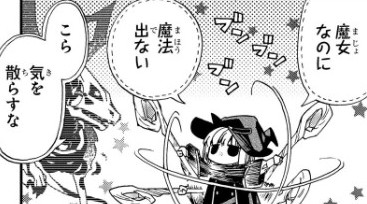
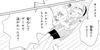
In order to make money to survive and continue her path of becoming a mage, Eve takes on a request to defeat a fanged lynx that has been attacking a merchant in the forest. She attempts to use her new magick staff against the beast, but no magick materializes from it.
- イブ:
- 「魔女なのに 魔法出ない」
- “Even though I'm a mage, magick won't come out.”
- ネム:
- 「こら 気を散らすな」
- “Hey now, don't lose focus!”
An Invitation in Disguise
A negative question offers rather than denies.
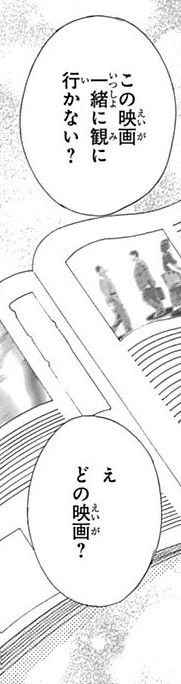
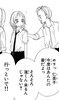
After talking with her boyfriend in the hall, Futaba returns to her classroom and walks over to her friends.
- 双葉:
- 「この映画一緒に観に行かない?」
- “How about going to see this movie?”
- 悠里:
- 「え どの映画?」
- “Oh, which movie?”
Rough ねえ
Tough characters flatten ない into ねえ (or ねー) across the board. Don’t confuse this with an extended sentence-ending ね, which is used to seek agreement.
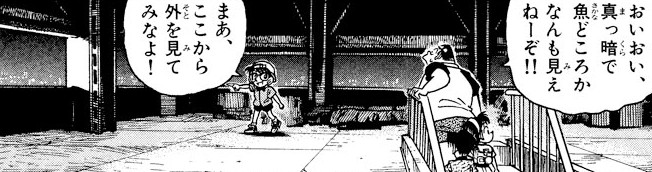
The Detective Boys follow what appears to be an encoded treasure map. They’re able to locate each symbol from the map except for what appears to be a fish. Conan figures it out, and leads the group up a fire escape to the top floor of a nearby building.
- 元太:
- 「おいおい、真っ暗で魚どころかなんも見えねーぞ!!」
- “Hey, it's pitch black. Far from a fish, I can't even see anything!!”
- コナン:
- 「まあ、ここから外を見てみなよ!」
- “Well, try looking outside from here!”
Related Grammar
-
Not at all with 全然〜ない
- 全然 amplifies the negative into "not at all".
-
Not necessarily with 〜わけではない
- A pattern that negates an implication rather than a fact.
-
The prohibitive な
- Negative commands use な after the dictionary form, not ない.
-
Contracting 〜らない to 〜んない
- A common casual contraction inside negative verbs.
-
Hypothetical condition with 〜ば
- The negative conditional なければ underlies obligation patterns.
Examples
Not able to swim with 泳がれへん
Grammar Explanation: Negation with 〜ない
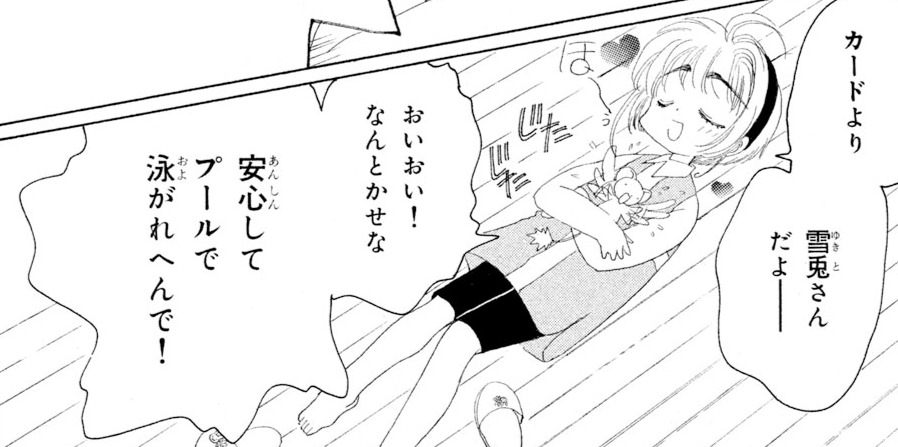
Sakura and Kero are supposed to discuss a Clow Card causing problems at the elementary school school. After taking her homemade pancakes to her brother and Yukito, Sakura’s happiness over making something for Yukito overtakes her concern of Clow Cards. Kero tries to get her back on track.
- 桜:
- 「カードより雪兎だよーーー」
- “Forget the cards, Yukito's way more important!”
- ケロ:
- 「おいおい!なんとかせな」
- “Hey hey! You've gotta do something about it!”
- 「安心してプールで泳がれへんで!」
- “The pool can't be swam in safely!”
Supplemental Examples

高木さん/thumbnail/からかい上手の(元)高木さん-volume-13-page-44-panel-3.jpg)